1995 Lincoln Penny Value Guide: D, S, No Mint Mark, Rare Errors, and How Much Each Coin Is Worth

1995 Lincoln Penny Value Guide: D, S, No Mint Mark, Rare Errors, and How Much Each Coin Is Worth

1995 Lincoln Penny Value Guide: The 1995 Lincoln Penny remains one of the most collected modern U.S. coins. While millions were struck and most examples are only worth one cent, certain varieties, high-grade coins, proof editions, and rare mint errors can command surprisingly strong prices. Many collectors search through old coin jars, inherited collections, and pocket change hoping to discover a valuable 1995 penny.

Understanding the value of a 1995 Lincoln cent requires more than checking the date. The mint mark, overall condition, strike quality, and the presence of mint errors all play a major role in determining its market value. A worn circulation coin may only be worth face value, while a flawless Mint State example or an unusual error coin could sell for hundreds—or even thousands—of dollars.

This guide explains everything you need to know about the 1995 Lincoln Penny, including values for No Mint Mark, Denver, and San Francisco issues, the most valuable error varieties, grading tips, and practical advice for identifying coins that deserve closer inspection.

History of the 1995 Lincoln Penny

The Lincoln cent has been part of American coinage since 1909, introduced to celebrate the 100th anniversary of Abraham Lincoln’s birth. It was the first regular U.S. coin to feature the portrait of a real historical figure.

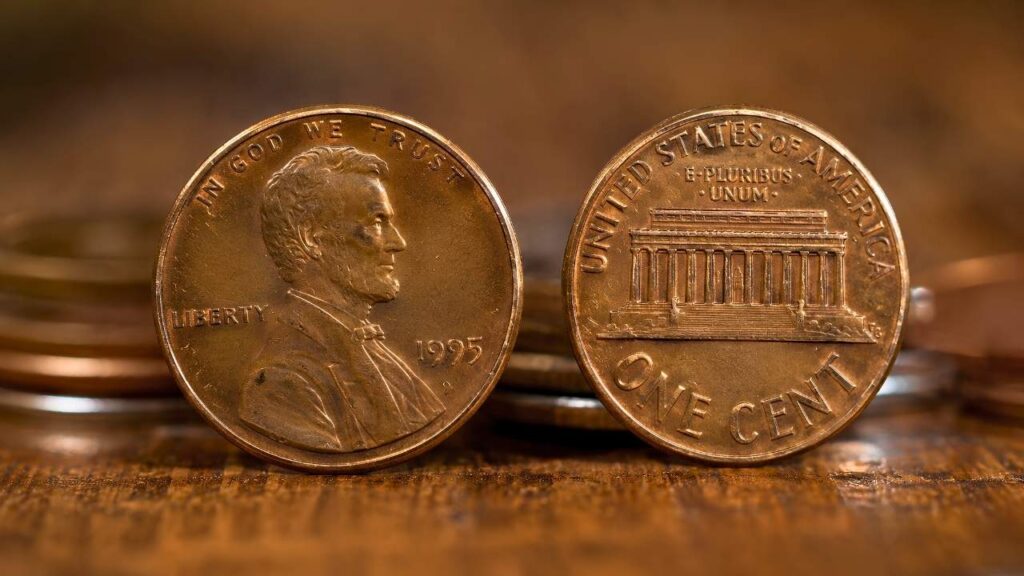
By 1995, the Lincoln Memorial reverse had been in use for more than three decades. The obverse featured Victor David Brenner’s famous portrait of Lincoln, while the reverse displayed the Lincoln Memorial designed by Frank Gasparro.

The 1995 issue was struck at three different facilities:

  • Philadelphia (No Mint Mark)
  • Denver (D Mint Mark)
  • San Francisco (S Mint Mark for Proof Coins)

Millions of these coins entered circulation, making them easy to find today. However, only a small percentage survive in exceptional condition or with collectible mint errors.

1995 Lincoln Penny Specifications

FeatureDetails
CountryUnited States
Year1995
Coin TypeLincoln Memorial Cent
Face Value1 Cent
Composition97.5% Zinc, 2.5% Copper
Weight2.50 grams
Diameter19.05 mm
Thickness1.52 mm
EdgePlain
Designer (Obverse)Victor David Brenner
Designer (Reverse)Frank Gasparro

Understanding Mint Marks

Before determining the value of your penny, identify the mint mark.

No Mint Mark indicates Philadelphia.

D represents the Denver Mint.

S represents the San Francisco Mint, which produced proof coins for collectors.

The mint mark appears below the date on the obverse of the coin.

1995 No Mint Mark Lincoln Penny Value

Philadelphia produced billions of Lincoln cents during 1995. Because of the enormous mintage, circulated examples remain extremely common today.

Most circulated coins still trade for face value.

Approximate values include:

ConditionEstimated Value
Circulated$0.01
About Uncirculated$0.10–$0.30
MS63$1–$3
MS65 Red$8–$20
MS67 Red$100–$300+

Collectors pay premiums for bright original red surfaces. Coins that have turned brown or show heavy spotting are generally less valuable.

1995-D Lincoln Penny Value

The Denver Mint also produced billions of Lincoln cents during 1995.

Most examples remain inexpensive because so many survive.

Typical market values are:

GradeValue
CirculatedFace Value
AU$0.10–$0.25
MS63 Red$2–$4
MS65 Red$10–$25
MS67 Red$150–$400+

Top-quality Denver coins are surprisingly difficult to locate because many entered circulation immediately after production.

1995-S Proof Lincoln Penny Value

Unlike Philadelphia and Denver coins, San Francisco produced proof cents intended for collectors rather than circulation.

Proof coins feature:

  • Mirror-like fields
  • Frosted devices
  • Sharper details
  • Special handling

Typical proof values include:

GradeValue
PR65$2–$4
PR67$3–$8
PR69 Deep Cameo$10–$20
PR70 Deep Cameo$40–$100+

Proof coins that remain inside their original government packaging often command stronger prices.

What Makes a 1995 Penny Valuable?

Several factors influence value.

Mint State Condition

The fewer marks and scratches a coin has, the more collectors are willing to pay.

Original Red Color

Copper-plated zinc cents lose their bright red appearance over time.

Collectors generally classify color as:

  • Red
  • Red Brown
  • Brown

Red examples are usually worth the most.

Certified Grades

Professional grading companies increase buyer confidence.

Higher certified grades typically bring much higher prices.

Rare Mint Errors

Mint errors are among the most valuable modern Lincoln cents.

Even common dates become desirable when unusual production mistakes occur.

Rare 1995 Lincoln Penny Errors

Error coins attract strong demand because every mistake occurred accidentally during production.

Below are some of the most popular varieties.

Doubled Die Obverse

The most famous 1995 Lincoln cent error is the Doubled Die Obverse.

Collectors can see noticeable doubling on:

  • LIBERTY
  • IN GOD WE TRUST
  • Date

Depending on grade, values may range from:

GradeValue
XF$25–$50
AU$50–$100
MS63$150–$250
MS65+$400–$1,000+

This is the best-known collectible variety from 1995.

Off-Center Strike

Off-center coins occur when the planchet is not correctly positioned during striking.

Value depends on:

  • Percentage off center
  • Whether the full date is visible
  • Overall condition

Typical prices:

ErrorValue
10% Off Center$20–$50
25% Off Center$60–$150
50% Off Center$150–$400

Broadstrike Error

Broadstruck coins were struck without the retaining collar.

These coins appear wider than normal.

Most examples sell for:

$20 to $80

Die Crack Error

Overused dies sometimes develop cracks that appear as raised lines on finished coins.

Minor cracks may sell for only a few dollars.

Major dramatic cracks can bring:

$25–$150

Die Clash

When the dies strike one another without a blank planchet between them, faint design elements transfer from one die to another.

Collectors enjoy dramatic die clashes.

Typical values range between:

$15 and $100.

Clipped Planchet

A clipped planchet results from improper blank cutting.

Depending on clip size:

$10–$100

Wrong Planchet Error

Extremely rare examples struck on incorrect metal blanks may sell for hundreds or even thousands of dollars after authentication.

How Coin Grading Affects Value

Condition is often the biggest factor in pricing.

GradeDescription
GoodHeavy wear
FineModerate detail
Extremely FineMinor wear
About UncirculatedNearly Mint State
MS60-MS63Uncirculated with marks
MS64-MS65Attractive Mint State
MS66-MS67Premium quality
MS68+Exceptional rarity

Even one grade difference can significantly change value.

How to Identify a Valuable 1995 Penny

Look carefully using a magnifying glass.

Check for:

  • Bright original red color
  • Strong strike
  • Sharp lettering
  • Doubled letters
  • Off-center strike
  • Missing design elements
  • Die cracks
  • Unusual weight

Never clean a coin before evaluation.

Cleaning almost always lowers collector value.

Should You Get Your Coin Professionally Graded?

Professional grading is recommended if your coin:

  • Appears flawless
  • Has a major error
  • Shows doubled die features
  • Looks unusual compared to normal examples

Certification provides authentication and helps maximize resale value.

Where to Sell a 1995 Lincoln Penny

Collectors have several options.

  • Local coin shops
  • Coin shows
  • Online auction platforms
  • Certified coin dealers
  • Collector forums

Research recent selling prices before accepting an offer.

Tips for Beginning Collectors

Building a valuable collection takes patience.

Helpful tips include:

  • Store coins in protective holders.
  • Avoid touching coin surfaces.
  • Keep coins dry.
  • Learn basic grading.
  • Compare your coins with certified examples.
  • Purchase reference books.
  • Join collector communities.

Small details often separate ordinary pennies from valuable collectibles.

Is the 1995 Lincoln Penny a Good Investment?

Most ordinary 1995 cents will never become expensive because of their enormous production numbers.

However, exceptional examples continue to gain interest.

Collectors especially seek:

  • MS67 Red coins
  • Proof 70 examples
  • Doubled Die Obverse
  • Major mint errors
  • Certified high-grade coins

These categories have shown stronger long-term demand than average circulated coins.

Price Summary Table

VarietyTypical Value
No Mint Mark Circulated$0.01
D Circulated$0.01
S Proof$2–$20
MS65 Red$8–$25
MS67 Red$100–$400+
Doubled Die$25–$1,000+
Off-Center Error$20–$400
Wrong PlanchetHundreds to Thousands

Common Mistakes to Avoid

Many new collectors accidentally reduce the value of their coins.

Avoid these mistakes:

  • Cleaning coins with chemicals or polish.
  • Storing coins in humid environments.
  • Scratching surfaces while examining them.
  • Assuming every old penny is valuable.
  • Ignoring small mint errors.
  • Selling without researching current market prices.

Proper storage and careful handling preserve long-term value.

Frequently Asked Questions

Is a 1995 Lincoln penny rare?

Most regular circulation coins are common, but high-grade examples and error varieties are considerably scarcer.

How much is a 1995 penny worth today?

Most circulated coins are worth one cent, while Mint State, proof, and error coins can range from a few dollars to several hundred dollars or more.

Which 1995 penny is the most valuable?

The 1995 Doubled Die Obverse is one of the most valuable and popular varieties. High-grade certified examples have sold for hundreds of dollars.

Does the mint mark affect value?

Yes. Philadelphia, Denver, and San Francisco coins have different mintages and collector demand, with proof coins from San Francisco generally carrying higher values.

Should I clean my 1995 penny?

No. Cleaning usually damages the surface and lowers the coin’s collectible value.

How can I tell if my coin has a doubled die?

Use a magnifying glass to inspect the date, LIBERTY, and IN GOD WE TRUST. Clear separation in the lettering may indicate the famous doubled die variety.

Where can I have my penny evaluated?

Reputable coin dealers, major coin shows, and professional grading services can provide authentication and value estimates.

Key Highlights

  • The 1995 Lincoln Penny was struck at Philadelphia, Denver, and San Francisco.
  • Most circulated coins are worth face value.
  • High-grade Red Mint State coins can sell for hundreds of dollars.
  • The 1995 Doubled Die Obverse is the most sought-after variety.
  • Proof coins from San Francisco are popular with collectors.
  • Mint errors such as off-center strikes, die cracks, and clipped planchets increase value.
  • Original surfaces and proper storage are essential for preserving collector demand.
  • Professional grading can significantly improve marketability for valuable examples.

Final Words

The 1995 Lincoln Penny demonstrates that even modern coins can become exciting collectibles when they possess exceptional quality or unusual mint errors. While the average coin found in circulation is unlikely to be worth more than its face value, collectors continue searching for pristine Mint State examples, proof issues, and the famous Doubled Die Obverse that can command impressive premiums.

If you own several 1995 pennies, take the time to inspect each one carefully under good lighting. Pay close attention to the mint mark, overall condition, color, and any unusual striking characteristics. A careful examination could reveal a hidden collectible that stands out from the billions of ordinary cents produced that year. With patience, proper storage, and a basic understanding of grading and error varieties, even a common-looking penny can become a rewarding addition to any coin collection.

Leave a Comment

Your email address will not be published. Required fields are marked *

Scroll to Top