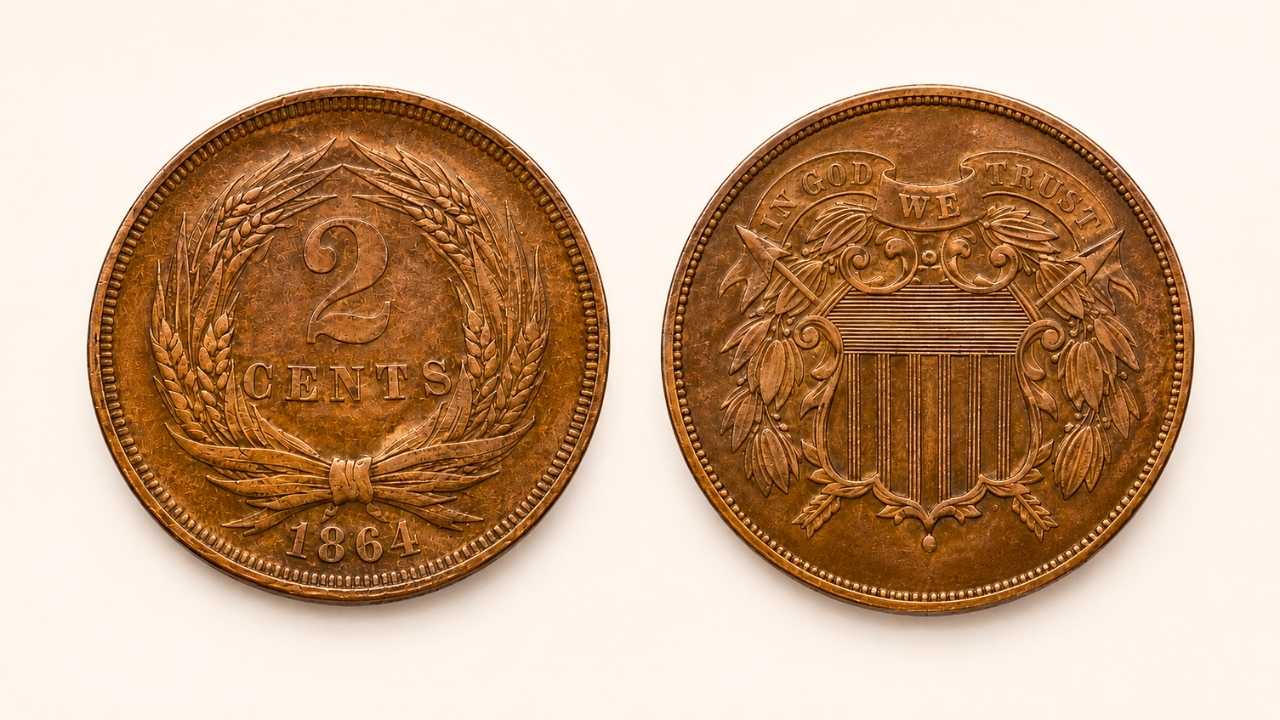
1864 2-Cent Coin Value Guide: The 1864 2-Cent Coin holds a special place in American numismatic history. Introduced during the height of the Civil War, this coin was the first United States coin to feature the famous motto “In God We Trust.” While it may seem like a small denomination by modern standards, the 1864 2-Cent Piece has become a favorite among collectors due to its historical significance, unique design, scarce varieties, and valuable mint errors.
Today, some examples can be purchased for only a few dollars, while rare varieties and high-grade specimens can command thousands of dollars at auctions. Understanding the different types, conditions, and errors associated with the 1864 2-Cent Coin is essential for anyone interested in collecting or evaluating these historic pieces.
History of the 1864 2-Cent Coin
The United States faced a severe coin shortage during the Civil War. Citizens began hoarding gold, silver, and even copper coins because of economic uncertainty. To address the shortage of small change, Congress authorized the creation of the 2-Cent Piece in April 1864.
Designed by James B. Longacre, the coin featured a shield on the obverse and a wheat wreath on the reverse. Most importantly, it became the first U.S. coin to display the motto “In God We Trust,” a phrase that would later appear on many American coins.
Production began at the Philadelphia Mint, the only mint that struck 2-Cent coins during their circulation lifespan.
1864 2-Cent Coin Specifications
| Feature | Details |
|---|---|
| Year | 1864 |
| Denomination | 2 Cents |
| Country | United States |
| Composition | 95% Copper, 5% Tin and Zinc |
| Weight | 6.22 Grams |
| Diameter | 23 mm |
| Edge | Plain |
| Mint | Philadelphia |
| Mint Mark | None |
| Designer | James B. Longacre |
Understanding the Two Major 1864 Varieties
One of the most fascinating aspects of the 1864 2-Cent Coin is the existence of two major varieties.
Small Motto Variety
The earliest version of the coin featured a smaller version of the phrase “In God We Trust.” The lettering appears compact, and the motto occupies less space above the shield.
Collectors often seek this variety because it represents the first version of the coin ever produced.
Large Motto Variety
Later in 1864, the design was modified to make the motto larger and easier to read. This Large Motto variety became the standard design used in subsequent years.
Although both varieties are collectible, the Small Motto version is generally scarcer and more valuable.
1864 2-Cent Coin Mintage Figures
| Variety | Estimated Mintage |
|---|---|
| Small Motto | Approximately 19,822,500 |
| Large Motto | Approximately 19,294,500 |
| Total 1864 Production | Around 39 Million |
While the total mintage appears high, many coins were heavily circulated, making high-grade examples considerably harder to find today.
How to Identify Small Motto and Large Motto Coins
Collectors can distinguish between the two varieties by examining the motto above the shield.
| Feature | Small Motto | Large Motto |
|---|---|---|
| Letter Size | Smaller | Larger |
| Motto Placement | Compact | Wider |
| Visibility | Less prominent | More noticeable |
| Collector Demand | Higher | Moderate |
| Value Potential | Greater | Lower |
A magnifying glass can help reveal the differences more clearly.
Current 1864 2-Cent Coin Values
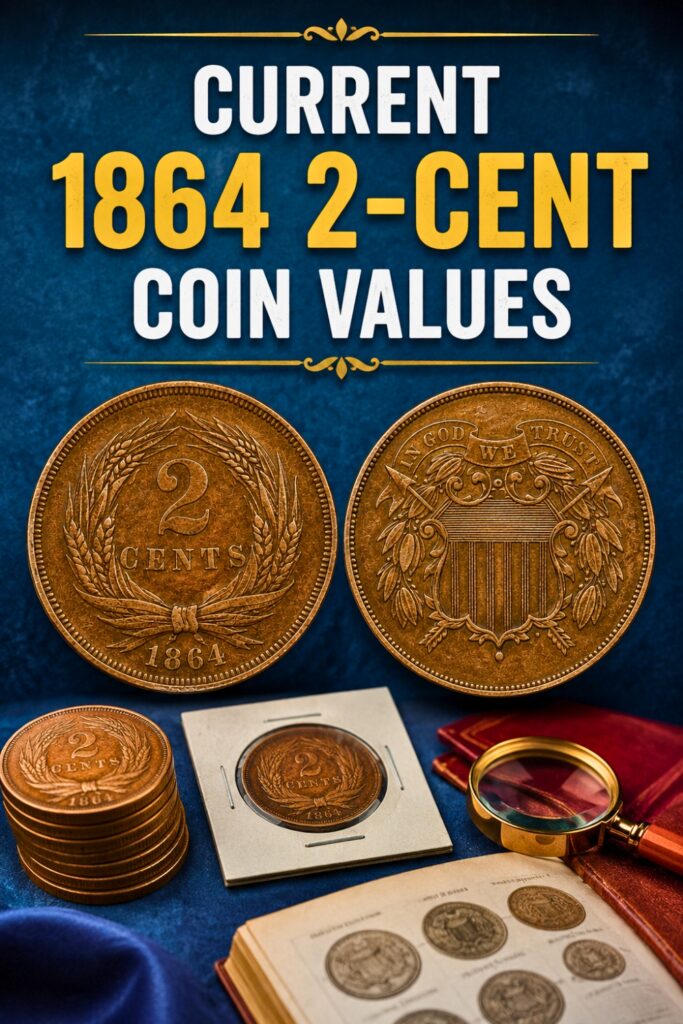
Coin value depends heavily on condition, rarity, and collector demand.
Small Motto Value Chart
| Condition | Estimated Value |
|---|---|
| Good (G-4) | $50 – $80 |
| Fine (F-12) | $90 – $150 |
| Very Fine (VF-20) | $180 – $300 |
| Extremely Fine (EF-40) | $350 – $700 |
| About Uncirculated (AU-50) | $800 – $1,500 |
| Mint State (MS-63+) | $2,000 – $10,000+ |
Large Motto Value Chart
| Condition | Estimated Value |
|---|---|
| Good (G-4) | $15 – $25 |
| Fine (F-12) | $25 – $50 |
| Very Fine (VF-20) | $50 – $90 |
| Extremely Fine (EF-40) | $90 – $200 |
| About Uncirculated (AU-50) | $250 – $500 |
| Mint State (MS-63+) | $800 – $5,000+ |
Market prices fluctuate based on auction activity and collector demand.
Why Some 1864 2-Cent Coins Are Worth Thousands
Several factors can dramatically increase a coin’s value.
Rare Small Motto Examples
Collectors actively compete for high-quality Small Motto specimens because they are significantly scarcer in top grades.
Exceptional Preservation
Coins with original mint luster and minimal wear often sell for premium prices.
Certified High Grades
Coins graded by professional services such as PCGS or NGC can achieve substantially higher values than uncertified examples.
Rare Mint Errors
Error coins often attract specialized collectors willing to pay significant premiums.
Valuable Mint Errors Found on 1864 2-Cent Coins
Mint errors are among the most exciting discoveries in coin collecting.
Double Strike Error
A double strike occurs when a coin is struck twice by the dies. This can create overlapping images and distorted designs.
Potential Value: $200 to $3,000+
Off-Center Strike
An off-center strike happens when the blank planchet is not properly aligned during minting.
Potential Value: $100 to $2,500+
Die Crack Error
Cracks in the minting die can leave raised lines across the coin’s surface.
Potential Value: $50 to $500+
Clipped Planchet Error
A clipped planchet results when part of the metal blank is missing before striking.
Potential Value: $150 to $1,500+
Repunched Date Features
Some examples show unusual date characteristics resulting from die preparation issues.
Potential Value: Varies significantly depending on rarity.
Highest Auction Sales for 1864 2-Cent Coins
Several remarkable specimens have achieved impressive auction prices.
| Variety | Grade | Approximate Auction Value |
|---|---|---|
| Small Motto | MS-65 Red | $20,000+ |
| Small Motto | MS-64 Red Brown | $10,000+ |
| Large Motto | MS-66 Red | $8,000+ |
| Error Coin | Various Grades | $2,000 – $15,000+ |
Premium examples with strong eye appeal consistently attract collector interest.
Factors That Affect Coin Value
Coin Grade
The better the condition, the higher the value.
Original Color
Copper coins are categorized as:
| Color Designation | Description |
|---|---|
| Red (RD) | Original mint red color |
| Red Brown (RB) | Partial red color remaining |
| Brown (BN) | Mostly brown surfaces |
Red examples generally command the highest prices.
Surface Quality
Coins free from scratches, corrosion, and cleaning damage are more desirable.
Historical Appeal
As the first coin featuring “In God We Trust,” the 1864 2-Cent Piece carries significant historical importance.
Tips for Collectors
Examine the Motto Carefully
Always determine whether the coin is a Small Motto or Large Motto variety.
Look for Errors
Mint errors can substantially increase value.
Check for Cleaning
Improperly cleaned coins often lose collector appeal and market value.
Consider Professional Grading
Certification can authenticate and protect valuable coins.
Store Properly
Use archival-quality holders and avoid excessive handling.
How to Sell an 1864 2-Cent Coin
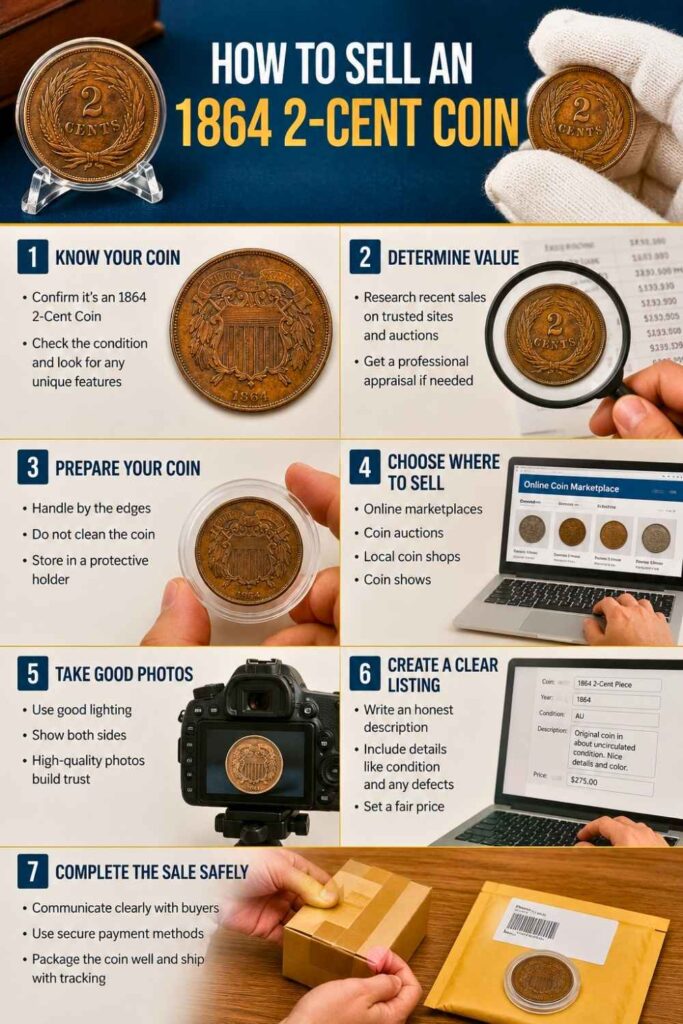
Collectors have several options when selling.
| Selling Method | Advantages |
|---|---|
| Coin Dealers | Fast transactions |
| Auctions | Potentially higher prices |
| Online Marketplaces | Large audience |
| Coin Shows | Direct interaction with buyers |
| Grading Before Sale | May increase value |
Obtaining multiple opinions before selling can help maximize returns.
Is the 1864 2-Cent Coin a Good Investment?
Many collectors consider the 1864 2-Cent Piece an attractive long-term collectible because of its:
- Historical significance
- First appearance of “In God We Trust”
- Rare Small Motto variety
- Growing collector demand
- Limited supply of high-grade examples
While no investment is guaranteed, quality specimens have shown strong long-term collector interest.
Key Highlights
| Highlight | Details |
|---|---|
| First U.S. Coin with “In God We Trust” | Yes |
| Most Valuable Variety | Small Motto |
| Rare Error Types | Double Strike, Off-Center, Clipped Planchet |
| Highest Value Range | $20,000+ |
| Mint Location | Philadelphia |
| Composition | 95% Copper |
| Collector Demand | Strong |
FAQs
How can I tell if my 1864 2-Cent Coin is a Small Motto?
Look at the phrase “In God We Trust” above the shield. Small Motto coins have noticeably smaller and tighter lettering compared to the Large Motto version.
Which 1864 2-Cent Coin is worth the most?
The Small Motto variety in high Mint State grades generally commands the highest prices.
Are all 1864 2-Cent Coins valuable?
Yes, even circulated examples have collector value, though prices vary significantly based on condition and variety.
What is the rarest error on an 1864 2-Cent Coin?
Major off-center strikes, dramatic double strikes, and unusual planchet errors are among the most sought-after.
Does cleaning reduce a coin’s value?
Yes. Cleaning can damage the surface and significantly lower collector demand and market value.
Where can I get my coin authenticated?
Professional grading companies such as PCGS and NGC are widely respected for authentication and grading services.
Final Words
The 1864 2-Cent Coin is much more than an old piece of copper. It represents a pivotal moment in American history, marking the introduction of the national motto “In God We Trust” during one of the country’s most challenging periods. Whether you own a common Large Motto example, a scarce Small Motto variety, or a rare mint error, these coins continue to fascinate collectors and historians alike.
For collectors, the key to unlocking value lies in understanding the coin’s variety, condition, color designation, and any unique minting characteristics. With some specimens selling for thousands of dollars, carefully examining your 1864 2-Cent Coin could reveal a surprisingly valuable treasure hiding in plain sight.