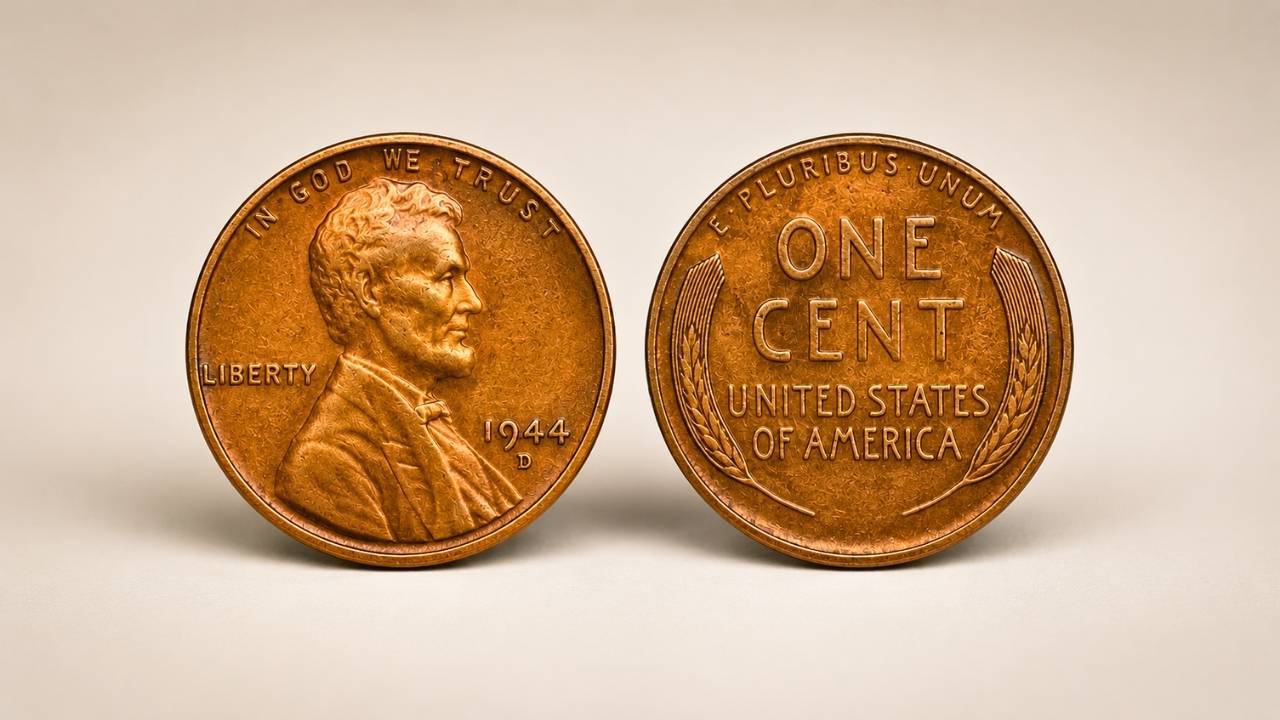
1944 Wheat Penny Value Guide: The 1944 Wheat Penny is one of the most collected Lincoln cents in American coin history. While millions of these coins were produced during World War II, certain varieties, mint marks, and rare error coins can be worth far more than their face value. Many collectors and coin enthusiasts are surprised to learn that some 1944 Wheat Pennies have sold for thousands—or even hundreds of thousands—of dollars at auction.
If you have a 1944 penny sitting in a coin jar, inherited collection, or old piggy bank, it may be worth taking a closer look. The coin’s mint mark, condition, and any unusual errors can significantly affect its value. Understanding these factors can help you determine whether your penny is a common circulation coin or a highly desirable collector’s item.
In this comprehensive guide, we’ll explore the history of the 1944 Wheat Penny, examine values for Philadelphia, Denver, and San Francisco mint issues, discuss rare errors, and explain how much these coins are worth in today’s market.
History of the 1944 Wheat Penny
The Lincoln Wheat Penny was first introduced in 1909 to commemorate the 100th anniversary of Abraham Lincoln’s birth. Designed by Victor David Brenner, the coin features Lincoln’s portrait on the obverse and two wheat stalks on the reverse.
The year 1944 was particularly important in the history of U.S. coinage. During World War II, copper was needed for military equipment and ammunition. As a result, the U.S. Mint produced steel pennies in 1943. However, public dissatisfaction with the steel cents led the Mint to return to copper-based coins in 1944.
Interestingly, the copper used in 1944 pennies came largely from recycled wartime shell casings. This unique wartime connection makes the 1944 Wheat Penny especially fascinating to collectors.
1944 Wheat Penny Specifications
| Feature | Details |
|---|---|
| Coin Type | Lincoln Wheat Penny |
| Year | 1944 |
| Composition | 95% Copper, 5% Zinc |
| Weight | 3.11 grams |
| Diameter | 19 mm |
| Thickness | 1.52 mm |
| Edge | Plain |
| Designer | Victor David Brenner |
| Reverse Design | Wheat Ears |
| Mint Locations | Philadelphia, Denver, San Francisco |
Understanding these specifications can help identify genuine coins and detect potential errors.
1944 Wheat Penny Mint Marks Explained
Three U.S. Mint facilities produced Lincoln Wheat Pennies in 1944.
| Mint | Mint Mark | Location |
|---|---|---|
| Philadelphia | No Mint Mark | Philadelphia, Pennsylvania |
| Denver | D | Denver, Colorado |
| San Francisco | S | San Francisco, California |
The mint mark is located below the date on the obverse side of the coin.
1944 No Mint Mark Wheat Penny Value
The Philadelphia Mint produced more than 1.4 billion pennies in 1944, making it one of the most common Wheat Cents.
Despite its large mintage, coin condition plays a significant role in determining value.
| Condition | Estimated Value |
|---|---|
| Good | $0.15 – $0.50 |
| Fine | $0.50 – $1 |
| Extremely Fine | $2 – $5 |
| Uncirculated MS60 | $8 – $15 |
| Gem MS65 | $20 – $60 |
| MS67 Red | $250 – $1,500+ |
Most circulated examples are worth only a small premium over face value, but high-grade red specimens can command impressive prices.
1944-D Wheat Penny Value
The Denver Mint produced approximately 430 million pennies in 1944.
Collectors often seek well-preserved examples because high-grade coins become increasingly scarce.
| Condition | Estimated Value |
|---|---|
| Good | $0.20 – $0.75 |
| Fine | $0.75 – $1.50 |
| Extremely Fine | $2 – $6 |
| Uncirculated MS60 | $10 – $20 |
| MS65 Red | $25 – $80 |
| MS67 Red | $500 – $3,000+ |
The 1944-D Wheat Penny is generally affordable in lower grades but becomes much more valuable in exceptional condition.
1944-S Wheat Penny Value
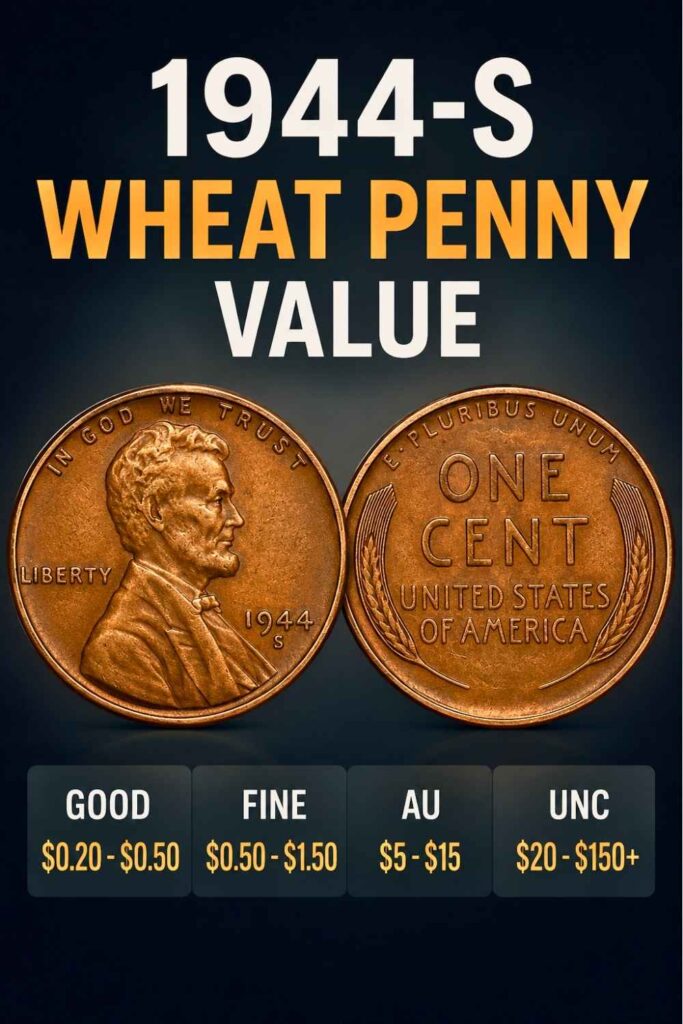
The San Francisco Mint produced around 282 million Wheat Pennies in 1944.
Although not extremely rare, the 1944-S is often found with weaker strikes, making sharply struck examples highly desirable.
| Condition | Estimated Value |
|---|---|
| Good | $0.20 – $1 |
| Fine | $1 – $2 |
| Extremely Fine | $3 – $8 |
| Uncirculated MS60 | $12 – $25 |
| MS65 Red | $40 – $150 |
| MS67 Red | $1,000 – $7,500+ |
Collectors frequently pay premiums for coins displaying strong details and vibrant red color.
What Does “Red”, “Red-Brown”, and “Brown” Mean?
Copper coins naturally change color over time due to oxidation.
| Color Designation | Description |
|---|---|
| Red (RD) | Original bright copper color |
| Red-Brown (RB) | Mix of red and brown tones |
| Brown (BN) | Fully toned brown appearance |
Red coins are usually worth significantly more than brown examples because they retain their original mint luster.
Rare 1944 Wheat Penny Errors Worth Money
Error coins are among the most exciting finds for collectors. Certain 1944 Wheat Penny errors are extremely valuable.
1944 Steel Wheat Penny Error
The most famous 1944 Wheat Penny error is the 1944 Steel Cent.
A small number of leftover steel planchets from 1943 accidentally entered production in 1944. As a result, a few steel pennies were struck with the 1944 date.
These coins are among the rarest Lincoln cents ever produced.
| Variety | Estimated Value |
|---|---|
| 1944 Steel Philadelphia | $75,000 – $200,000+ |
| 1944-D Steel Penny | $100,000 – $300,000+ |
| 1944-S Steel Penny | $150,000 – $400,000+ |
Authenticity is critical because many counterfeits exist.
How to Identify a 1944 Steel Penny
- Coin appears silver-gray instead of copper.
- Magnet sticks to the coin.
- Weight is approximately 2.7 grams.
- Professional authentication is recommended.
1944 Double Die Error
Double die errors occur when the coin die receives multiple impressions at slightly different angles.
Signs include:
- Doubling in lettering.
- Doubling in numbers.
- Visible duplication of design elements.
Depending on severity and condition, values range from $50 to several thousand dollars.
1944 Off-Center Strike Error
Off-center strikes happen when the planchet is not properly positioned during minting.
| Off-Center Percentage | Value Range |
|---|---|
| 5%–10% | $10 – $50 |
| 20%–40% | $75 – $300 |
| 50%+ with visible date | $500 – $2,000+ |
Coins with clearly visible dates tend to attract the highest prices.
1944 Clipped Planchet Error
A clipped planchet occurs when part of the metal blank is missing before striking.
| Clip Size | Estimated Value |
|---|---|
| Small Clip | $10 – $40 |
| Medium Clip | $40 – $150 |
| Large Clip | $150 – $500+ |
Collectors appreciate these errors because they are easy to identify.
1944 Die Crack Error
Die cracks develop when mint dies begin to wear out and crack under pressure.
These raised lines appear on the finished coin.
Values generally range from:
- Minor cracks: $5–$25
- Moderate cracks: $25–$100
- Major cracks: $100–$500+
1944 Repunched Mint Mark (RPM)
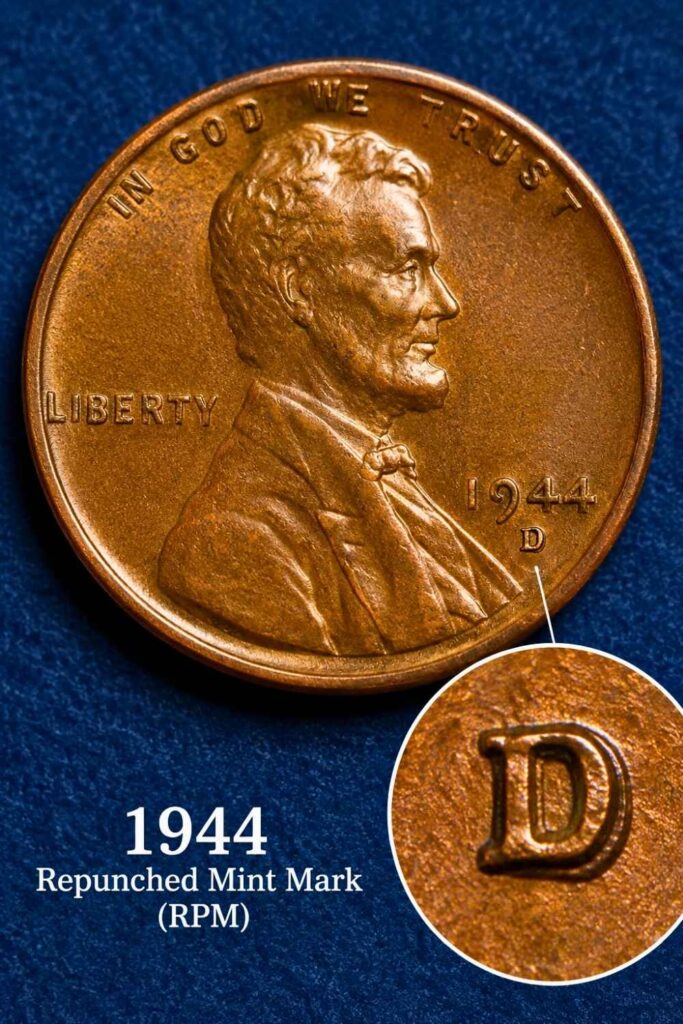
RPM varieties occur when the mint mark is punched more than once.
Collectors often search for:
- 1944-D RPM
- 1944-S RPM
Depending on visibility and rarity, values may range from $20 to several hundred dollars.
Most Valuable 1944 Wheat Penny Sales
Some exceptional examples have achieved remarkable auction results.
| Coin Type | Approximate Sale Price |
|---|---|
| 1944 Steel Penny | $180,000+ |
| 1944-S Steel Penny | $370,000+ |
| 1944-D Steel Penny | $115,000+ |
| High Grade 1944-S MS67 Red | $7,000+ |
| Premium Error Variety | $10,000+ |
Market values fluctuate based on collector demand and coin quality.
Factors That Determine 1944 Wheat Penny Value
Several important factors influence value.
Mint Mark
Coins from different mints may have varying rarity levels.
Condition
The better the condition, the higher the value.
Color
Red copper coins command stronger premiums.
Errors
Rare minting mistakes often multiply value dramatically.
Certification
Coins graded by professional services typically sell for more.
Coin Grading Scale Explained
| Grade | Description |
|---|---|
| Good (G) | Heavy wear |
| Fine (F) | Moderate wear |
| Very Fine (VF) | Light wear |
| Extremely Fine (XF) | Minor wear |
| About Uncirculated (AU) | Nearly mint state |
| Mint State (MS) | No wear from circulation |
Professional grading services use numerical scores ranging from MS60 to MS70.
How to Check If Your 1944 Penny Is Valuable
Follow these steps:
- Examine the date carefully.
- Check for a mint mark.
- Look for unusual colors.
- Test with a magnet.
- Weigh the coin.
- Search for visible errors.
- Compare condition.
- Consider professional grading.
Even common Wheat Pennies can become valuable in exceptional condition.
Common Mistakes Collectors Make
Many beginners overlook important details.
Cleaning Coins
Cleaning can significantly reduce value.
Ignoring Errors
Small minting errors can be surprisingly valuable.
Improper Storage
Humidity and environmental damage can hurt coin quality.
Selling Too Quickly
Researching values before selling often results in better offers.
Best Places to Sell a 1944 Wheat Penny
Several options are available.
| Selling Method | Pros | Cons |
|---|---|---|
| Coin Dealers | Fast payment | Lower offers |
| Auctions | High potential prices | Fees apply |
| Online Marketplaces | Large audience | Risk of scams |
| Coin Shows | Expert buyers | Travel required |
| Collector Forums | Direct sales | Slower process |
The best method depends on the coin’s rarity and condition.
How to Store Wheat Pennies Properly
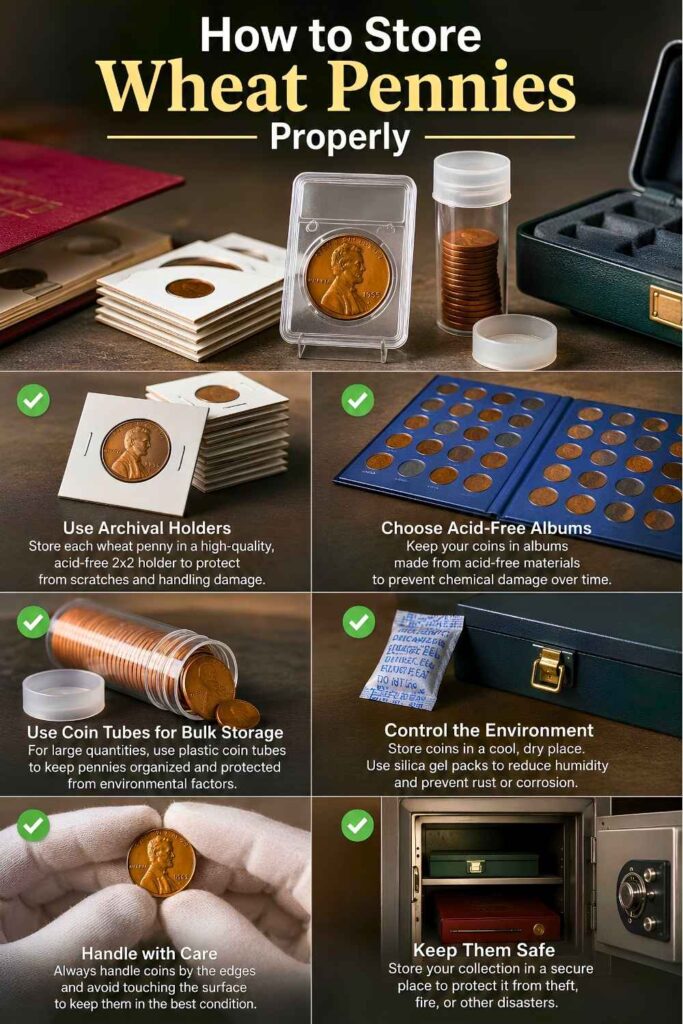
Proper storage helps preserve value.
Recommended options include:
- Coin flips
- Coin albums
- Hard plastic holders
- Airtight capsules
- Climate-controlled storage
Avoid touching coins with bare fingers whenever possible.
Are 1944 Wheat Pennies Rare?
Most standard 1944 Wheat Pennies are not rare because billions were produced.
However, several categories remain highly collectible:
- High-grade red examples
- Rare mint errors
- Steel cents
- Major doubled dies
- Significant strike errors
These coins can be worth substantially more than ordinary circulated specimens.
Why Collectors Love the 1944 Wheat Penny
The 1944 Wheat Penny combines historical significance with collecting excitement.
Reasons collectors appreciate these coins include:
- World War II connection
- Recycled shell-casing composition
- Numerous error varieties
- Affordable entry-level pricing
- Potential for valuable discoveries
Few Lincoln cents offer such an interesting blend of history and rarity.
Key Highlights
- The 1944 Wheat Penny was struck using copper recycled from wartime shell casings.
- Philadelphia coins have no mint mark.
- Denver coins carry a D mint mark.
- San Francisco coins carry an S mint mark.
- Most circulated examples are worth between a few cents and several dollars.
- High-grade red coins can be worth hundreds or thousands of dollars.
- The rare 1944 Steel Penny is among the most valuable Lincoln cents ever produced.
- Double dies, off-center strikes, clipped planchets, and RPM varieties are highly collectible.
- Condition, color, mint mark, and rarity significantly affect value.
- Professional grading can increase buyer confidence and selling price.
FAQs
How much is a 1944 Wheat Penny worth today?
Most circulated 1944 Wheat Pennies are worth between $0.15 and $5 depending on condition and mint mark. High-grade examples can be worth hundreds or even thousands of dollars.
Is a 1944 Wheat Penny made of silver?
No. Standard 1944 Wheat Pennies are made primarily of copper. If a 1944 penny appears silver-colored, it may be a rare steel cent or an altered coin.
How can I tell if my 1944 penny is steel?
A genuine 1944 steel penny will stick to a magnet, weigh about 2.7 grams, and have a silver-gray appearance rather than a copper color.
Which 1944 Wheat Penny is the most valuable?
The 1944-S Steel Wheat Penny is generally considered one of the most valuable varieties and has sold for hundreds of thousands of dollars.
What does the D mint mark mean?
The D mint mark indicates that the coin was produced at the Denver Mint.
What does the S mint mark mean?
The S mint mark shows that the coin was struck at the San Francisco Mint.
Should I clean my 1944 Wheat Penny?
No. Cleaning almost always reduces collector value and can damage the coin’s surface.
Are all 1944 Wheat Pennies valuable?
Not all are highly valuable. Common circulated examples are usually worth modest amounts, while rare errors and high-grade coins can be worth significantly more.
Can a 1944 Wheat Penny be worth thousands of dollars?
Yes. Rare steel cents, major error coins, and top-grade certified specimens can sell for thousands or even hundreds of thousands of dollars.
Where can I get my 1944 Wheat Penny evaluated?
You can consult professional coin dealers, attend coin shows, or submit the coin to a reputable grading service for authentication and valuation.
Final Words
The 1944 Wheat Penny remains one of the most fascinating coins in American numismatics. Although billions were produced, certain varieties continue to capture the attention of collectors around the world. Whether you own a common Philadelphia issue, a desirable San Francisco example, or a rare mint error, understanding the factors that influence value is essential.
Most 1944 Wheat Pennies are affordable collectibles, but hidden treasures do exist. Rare steel cents, dramatic mint errors, and pristine red specimens can command impressive prices in today’s coin market. If you discover a 1944 Wheat Penny in exceptional condition or notice something unusual about it, taking the time to research and authenticate the coin could prove highly rewarding.
For collectors, the 1944 Wheat Penny offers the perfect combination of history, affordability, and the excitement of potentially uncovering a valuable rarity.