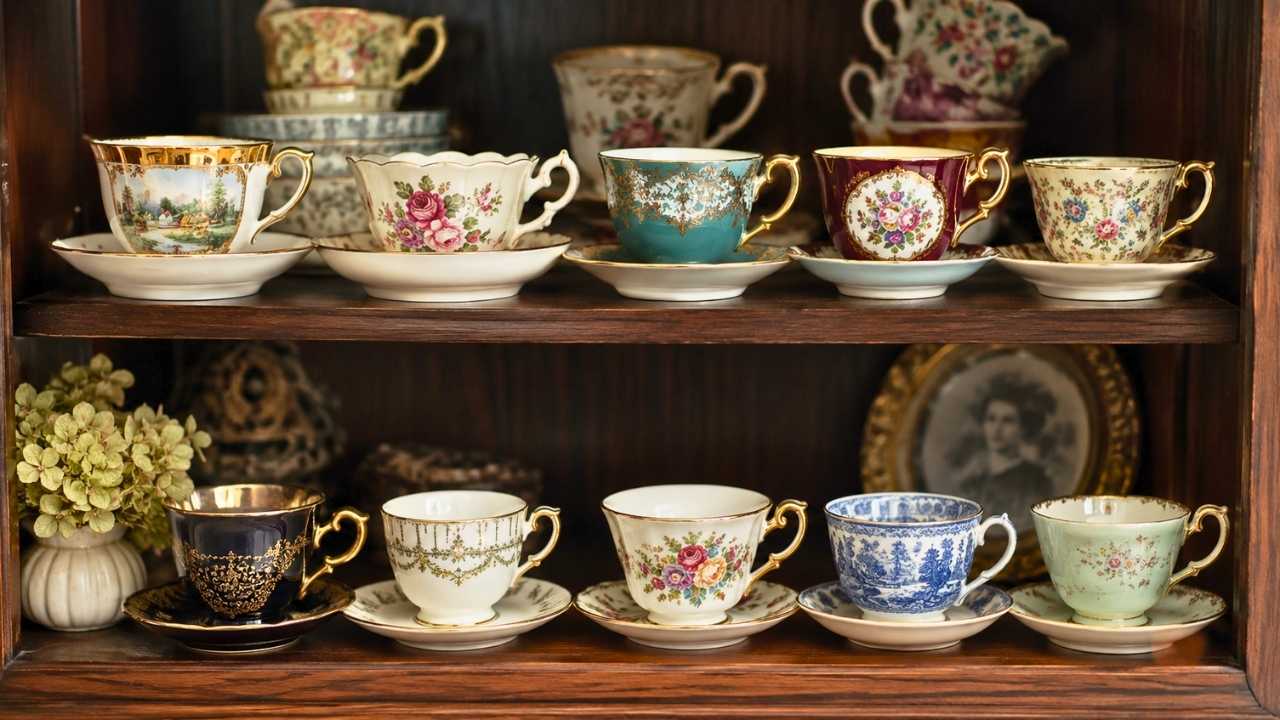
12 Rare Vintage Tea Cups : Vintage tea cups have long been admired for their beauty, craftsmanship, and connection to history. What many collectors do not realize is that some tea cups sitting quietly in cabinets, antique stores, or family heirloom collections may be worth far more than expected. Over the decades, certain manufacturers created limited-production tea cups, hand-painted masterpieces, and highly collectible patterns that have become increasingly valuable among antique enthusiasts.
The appeal of vintage tea cups extends beyond their decorative charm. They represent a glimpse into different eras, from Victorian elegance to Art Deco sophistication. Collectors often seek rare examples because of their historical significance, unique artistry, and scarcity in today’s market. As demand continues to rise, some tea cups have transformed from everyday household items into highly sought-after collectibles.
Whether you are a seasoned collector or someone who recently inherited a tea set, understanding which vintage tea cups hold significant value can help you identify hidden treasures. This guide explores twelve rare vintage tea cups that could dramatically increase the worth of your collection.
Why Vintage Tea Cups Have Become So Valuable
Several factors influence the value of vintage tea cups. Unlike modern mass-produced pieces, older tea cups often feature hand-painted details, fine porcelain construction, and exceptional craftsmanship.
Collectors generally evaluate tea cups based on:
| Value Factor | Importance |
|---|---|
| Age | Older pieces are often more desirable |
| Manufacturer | Famous brands command higher prices |
| Condition | Chips and cracks reduce value |
| Rarity | Limited production increases demand |
| Pattern | Certain designs attract collectors |
| Historical Significance | Connection to specific periods adds value |
| Completeness | Matching saucers improve worth |
Tea cups meeting multiple criteria often achieve impressive prices at auctions and antique markets.
Royal Albert Old Country Roses Tea Cups
Among the most recognizable patterns in the world, Royal Albert’s Old Country Roses remains a favorite among collectors.
Introduced during the 1960s, the design features vibrant red, pink, and yellow roses accented by luxurious gold trim. While many examples are common, early production pieces and special edition variations can command significantly higher prices.
Collectors particularly seek:
- Early English-made versions
- Limited anniversary editions
- Rare color variations
- Complete tea service sets
Well-preserved examples continue to appreciate due to enduring popularity and global recognition.
Shelley Dainty Shape Tea Cups
Shelley tea cups are celebrated for their delicate construction and elegant designs. Produced in England during the early twentieth century, these pieces showcase exceptional artistry.
The Dainty Shape collection became especially famous because of its graceful form and intricate floral motifs.
Popular Shelley patterns include:
- Blue Rock
- Wild Flowers
- Rosebud
- Melody
Because Shelley production ceased decades ago, surviving pieces in excellent condition have become increasingly difficult to find.
Paragon Floral Tea Cups
Paragon was known for creating some of the most luxurious tea cups ever produced in Britain. The company earned royal recognition and supplied fine china to members of the royal family.
Collectors often pursue Paragon tea cups featuring:
- Hand-painted flowers
- Heavy gold embellishments
- Cobalt blue backgrounds
- Commemorative editions
The combination of royal associations and superior craftsmanship makes Paragon one of the most respected names in antique china collecting.
Aynsley Orchard Gold Tea Cups
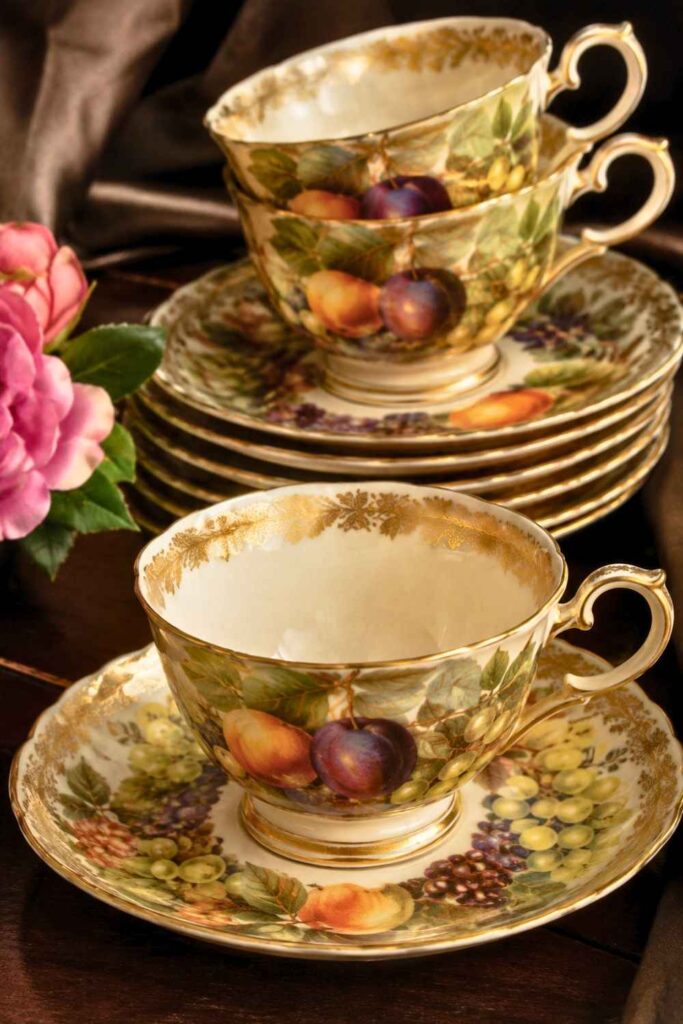
Aynsley has maintained a reputation for quality porcelain since the eighteenth century. Among its most valuable creations is the Orchard Gold pattern.
These tea cups feature vividly hand-painted fruit arrangements on rich backgrounds. The detailed artwork requires tremendous skill and often distinguishes genuine examples from reproductions.
The value of Orchard Gold tea cups depends on:
| Feature | Impact on Value |
|---|---|
| Hand-painted fruit | High |
| Gold detailing | High |
| Artist signature | Very High |
| Rare background color | High |
| Original saucer | Moderate |
Collectors often pay premium prices for pieces displaying exceptional painting quality.
Meissen Porcelain Tea Cups
German-made Meissen porcelain is among the most prestigious ceramic collectibles in the world.
Founded in the early eighteenth century, Meissen pioneered European hard-paste porcelain production. Their tea cups are renowned for exquisite detailing, elaborate painting, and extraordinary craftsmanship.
Common valuable features include:
- Crossed swords mark
- Hand-painted scenes
- Gilded borders
- Rare figurative motifs
Authentic antique Meissen tea cups often attract international collectors and can achieve substantial auction prices.
Coalport Batwing Tea Cups
Coalport’s Batwing design is one of the most recognizable and collectible patterns in antique English porcelain.
The distinctive wing-shaped panels are often decorated with:
- Rich cobalt blue
- Deep pink
- Turquoise
- Elaborate gold work
The level of artistry required to create Batwing pieces makes them highly desirable among collectors.
Many examples remain in museum collections, while surviving pieces in private hands continue to appreciate in value.
Wedgwood Fairyland Lustre Tea Cups
Created during the 1920s by designer Daisy Makeig-Jones, Fairyland Lustre remains one of the most enchanting ceramic collections ever produced.
The tea cups feature imaginative scenes filled with:
- Fairies
- Castles
- Exotic landscapes
- Vibrant lustre glazes
Collectors admire these pieces not only for their beauty but also for their rarity.
Because production lasted for a relatively short period, authentic examples have become increasingly scarce.
Crown Staffordshire Hand-Painted Tea Cups
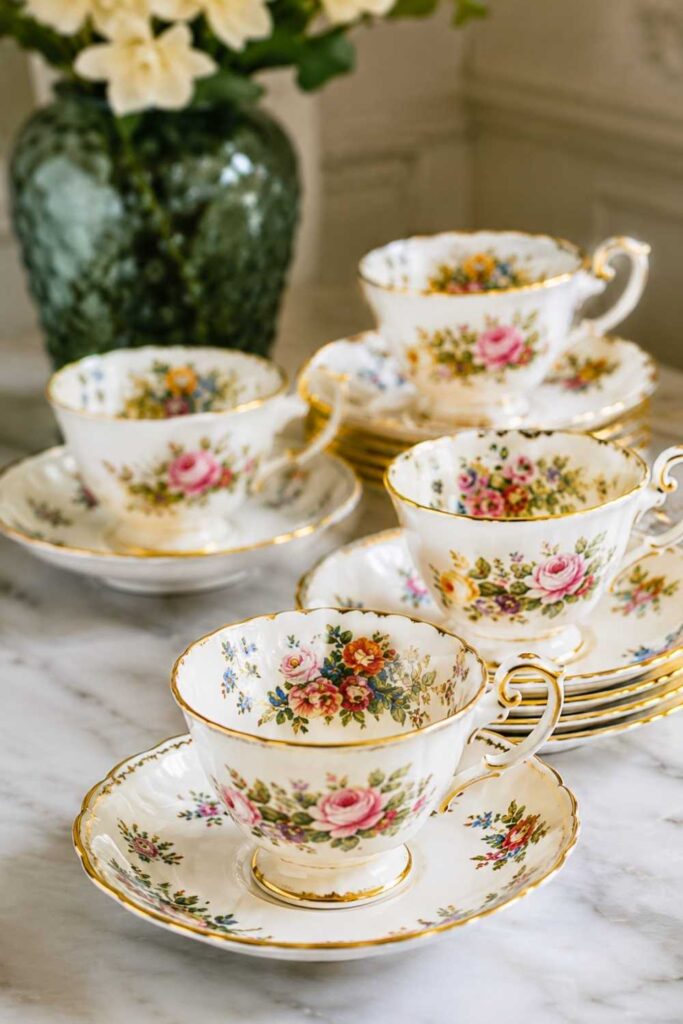
Crown Staffordshire produced many exceptional tea cups during the twentieth century. Their finest examples feature intricate hand-painted floral arrangements and lavish gold decoration.
Characteristics collectors value include:
- Signed artwork
- Unusual flower combinations
- Rich color palettes
- Excellent preservation
Many Crown Staffordshire tea cups remain affordable compared to other premium brands, making them attractive entry points for new collectors.
Noritake Occupied Japan Tea Cups
Tea cups produced during the Occupied Japan period hold special historical significance.
Manufactured between 1945 and 1952, these pieces often bear markings indicating their unique place in post-war history.
Collectors seek examples featuring:
- Detailed floral designs
- Gold accents
- Occupied Japan markings
- Complete matching sets
While not all Occupied Japan tea cups are rare, unusual patterns and pristine examples can command impressive prices.
Limoges Hand-Painted Tea Cups
Limoges porcelain from France has long been associated with elegance and refinement.
Many Limoges tea cups were decorated by skilled artists who transformed blank porcelain into miniature works of art.
Highly collectible examples often include:
| Design Feature | Collector Demand |
|---|---|
| Hand-painted roses | High |
| Portrait scenes | Very High |
| Gold interiors | High |
| Signed artwork | Very High |
| Rare shapes | High |
Authentic Limoges tea cups continue to attract strong interest worldwide.
Haviland Limoges Tea Cups
Haviland became one of the most respected names in fine porcelain during the nineteenth century.
The company’s tea cups often feature:
- Delicate floral patterns
- Elegant gold trim
- Superior porcelain quality
- Rare discontinued motifs
Collectors frequently search for complete sets, though individual tea cups can also carry significant value.
The variety of Haviland patterns creates endless opportunities for specialized collecting.
Royal Worcester Cabinet Tea Cups
Royal Worcester produced some of the finest decorative porcelain in England.
Cabinet tea cups were never intended for everyday use. Instead, they showcased the highest level of artistic achievement.
Many examples feature:
- Hand-painted birds
- Exotic flowers
- Raised gold decoration
- Artist signatures
Because these tea cups were luxury items from the beginning, surviving specimens often retain considerable value today.
How to Identify a Valuable Vintage Tea Cup
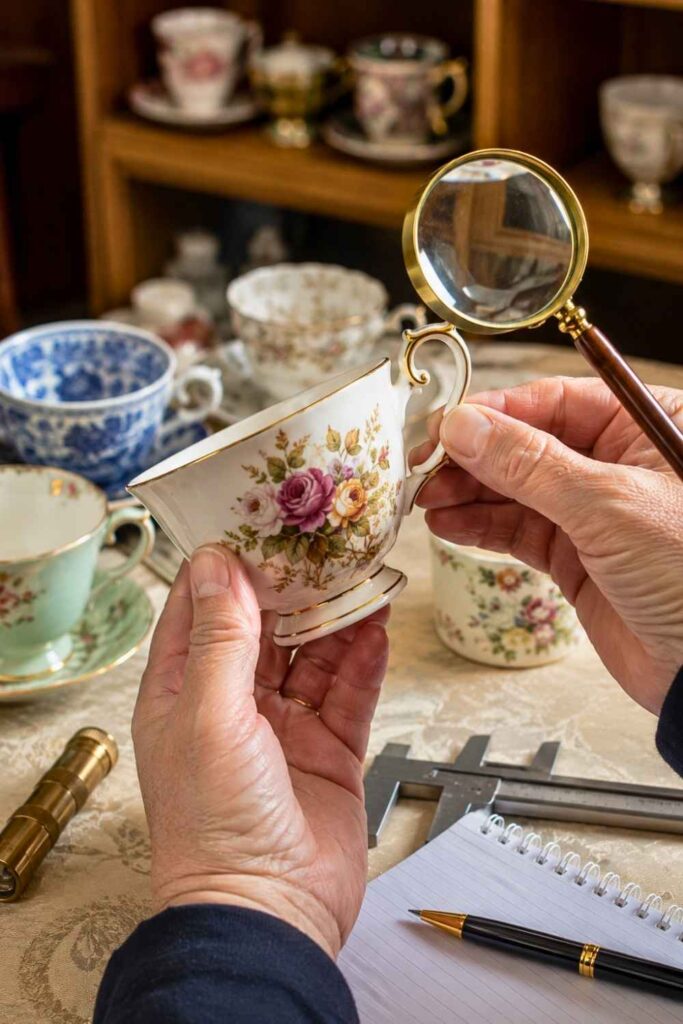
Determining whether a tea cup is valuable requires careful examination.
Start by checking:
- Manufacturer’s mark on the base
- Pattern name or number
- Signs of hand painting
- Gold embellishments
- Condition
- Production date
- Rarity of design
Reference books, collector guides, and professional appraisers can provide additional insight into specific pieces.
Caring for Rare Tea Cups
Proper care helps preserve both beauty and value.
Follow these guidelines:
- Wash gently by hand
- Avoid harsh chemicals
- Store securely in padded cabinets
- Keep away from direct sunlight
- Handle gold-trimmed pieces carefully
- Inspect regularly for damage
Maintaining excellent condition is one of the most important factors in protecting collectible value.
Key Highlights
- Rare vintage tea cups can be surprisingly valuable.
- Royal Albert, Shelley, Paragon, and Meissen remain among the most collectible manufacturers.
- Hand-painted artwork significantly increases worth.
- Original markings help verify authenticity.
- Complete sets often command higher prices than individual pieces.
- Condition plays a major role in determining market value.
- Historical significance can boost collector demand.
- Proper storage and care help preserve long-term value.
FAQs
How can I tell if my vintage tea cup is valuable?
Check the manufacturer’s mark, age, rarity, condition, and pattern. Rare designs from respected makers often hold greater value.
Are chipped tea cups still worth collecting?
Some rare examples retain value despite minor damage, but chips and cracks usually reduce prices considerably.
Which tea cup brands are most collectible?
Royal Albert, Shelley, Paragon, Meissen, Limoges, Coalport, Aynsley, and Royal Worcester are among the most sought-after brands.
Do matching saucers increase value?
Yes. Tea cups sold with their original saucers generally command higher prices than cups sold alone.
Where can I sell valuable tea cups?
Collectors often sell through antique dealers, auction houses, online marketplaces, and specialty porcelain auctions.
What makes hand-painted tea cups special?
Hand-painted pieces showcase individual artistry, making each example unique and often more valuable than transfer-printed designs.
Final Words
Vintage tea cups are more than decorative collectibles—they are tangible pieces of history that reflect the artistry and craftsmanship of past generations. Whether inherited from family members or discovered during antique hunting adventures, certain rare tea cups can significantly enhance the value of a collection. From the timeless beauty of Royal Albert to the extraordinary prestige of Meissen porcelain, these treasured pieces continue to captivate collectors around the world.
By learning how to identify rarity, evaluate condition, and recognize respected manufacturers, collectors can uncover hidden gems that may be worth far more than they initially appear. As interest in antique porcelain continues to grow, the right vintage tea cup could become one of the most valuable and cherished items in any collection.