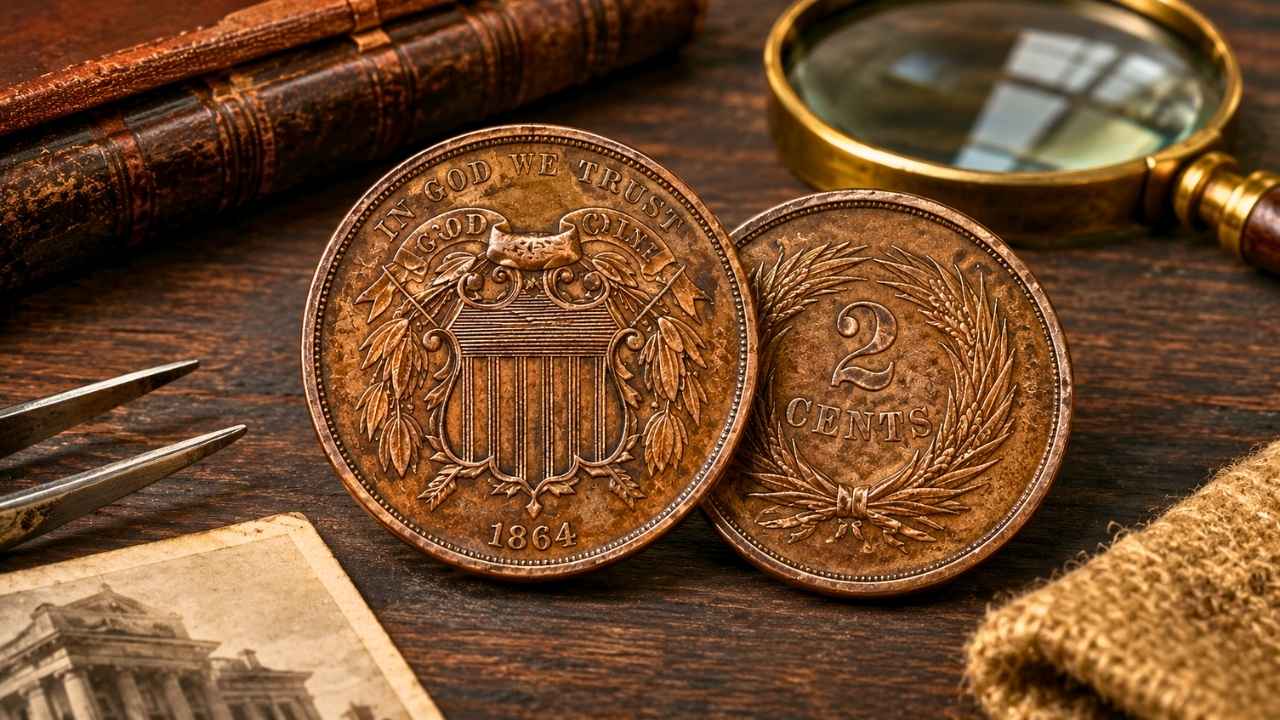
1864 2-Cent Coin Value Guide: The 1864 2-Cent Coin holds a special place in American numismatic history. As the first U.S. coin to feature the famous motto “In God We Trust,” this historic piece attracts collectors from around the world. Whether you discovered one in an old collection, inherited it from a family member, or are considering buying one for your collection, understanding its value is essential.
The value of an 1864 2-Cent Coin depends on several factors, including its condition, variety, rarity, minting errors, and market demand. Some examples are worth only a few dollars, while rare varieties and high-grade specimens can sell for thousands of dollars at auction.
In this comprehensive guide, you’ll learn everything about the 1864 2-Cent Coin, including its history, specifications, value chart, rare varieties, notable mint errors, grading standards, and tips for determining its worth.
History of the 1864 2-Cent Coin
The United States introduced the 2-cent coin in 1864 during the Civil War. At the time, coin shortages affected commerce across the country. Many people hoarded silver and gold coins, creating a need for additional small-denomination currency.
Congress authorized the new two-cent denomination to help ease circulation problems. James B. Longacre, the Chief Engraver of the U.S. Mint, designed the coin featuring a shield on the obverse and a wreath surrounding the denomination on the reverse.
Most importantly, the 1864 issue became the first American coin to display the phrase “In God We Trust.” This addition reflected the religious sentiment prevalent during the Civil War and eventually became a standard feature on U.S. coinage.
1864 2-Cent Coin Specifications
Understanding the physical characteristics of the coin helps collectors identify genuine examples.
| Specification | Value |
|---|---|
| Year | 1864 |
| Denomination | 2 Cents |
| Country | United States |
| Designer | James B. Longacre |
| Metal Content | Copper Alloy |
| Weight | 6.22 Grams |
| Diameter | 23 mm |
| Edge | Plain |
| Mint | Philadelphia |
| Mint Mark | None |
Understanding the Two Major Varieties
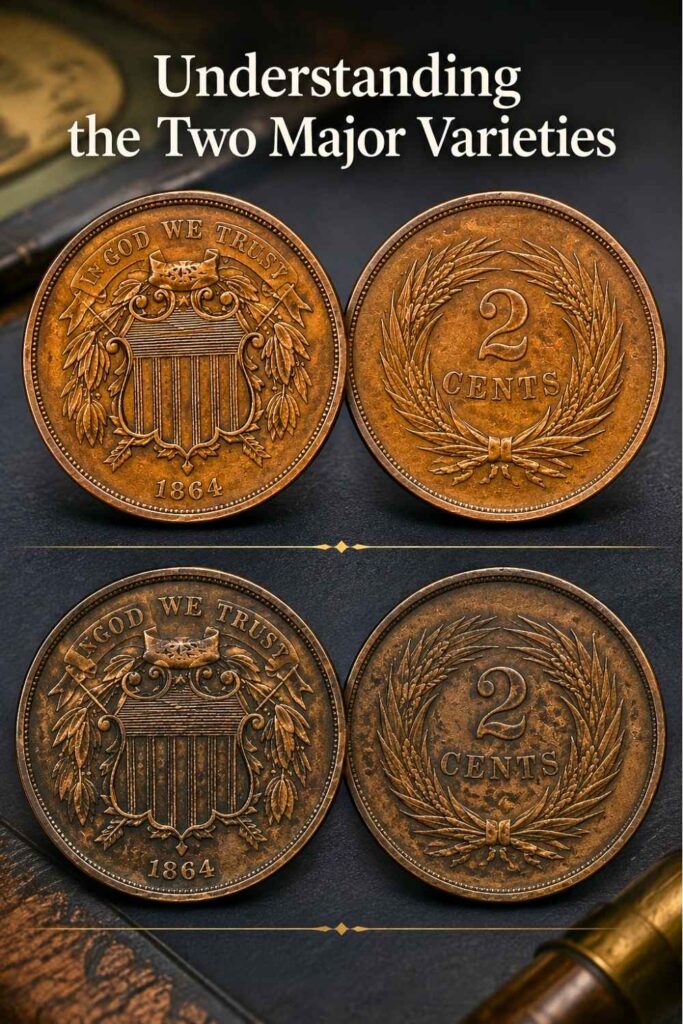
One of the most important factors affecting value is the coin’s motto variety.
Small Motto Variety
The Small Motto variety was struck earlier in 1864. The words “In God We Trust” appear smaller and more compact.
Collectors highly value this variety because fewer were produced compared to the Large Motto version.
Key identification points include:
- Smaller lettering in the motto
- Narrow spacing between words
- Less prominent appearance above the shield
Large Motto Variety
Later in 1864, the Mint modified the design and enlarged the motto.
The Large Motto variety became the standard design for subsequent years.
Characteristics include:
- Larger, bolder lettering
- Wider spacing
- Easier visibility
Because more Large Motto coins were produced, they are generally less valuable than Small Motto examples in similar condition.
1864 2-Cent Coin Value Chart
The following values represent approximate market ranges.
1864 Small Motto Value Chart
| Grade | Value Range |
|---|---|
| Good (G-4) | $100 – $150 |
| Fine (F-12) | $180 – $250 |
| Very Fine (VF-20) | $300 – $500 |
| Extremely Fine (EF-40) | $700 – $1,200 |
| About Uncirculated (AU-50) | $1,500 – $3,000 |
| Mint State (MS-63) | $4,000 – $8,000+ |
1864 Large Motto Value Chart
| Grade | Value Range |
|---|---|
| Good (G-4) | $15 – $30 |
| Fine (F-12) | $35 – $60 |
| Very Fine (VF-20) | $60 – $120 |
| Extremely Fine (EF-40) | $125 – $250 |
| About Uncirculated (AU-50) | $250 – $600 |
| Mint State (MS-63) | $800 – $2,000+ |
Why the Small Motto Variety Is More Valuable
Collectors place a premium on rarity. The Small Motto variety had a relatively limited production run before the design was altered.
As a result:
- Fewer examples survive today
- High-grade specimens are extremely scarce
- Collector demand remains strong
These factors combine to create significantly higher prices compared to Large Motto examples.
Most Valuable 1864 2-Cent Coins Ever Sold
Exceptional specimens can command impressive prices at major auctions.
| Variety | Grade | Auction Price |
|---|---|---|
| Small Motto | MS-65 Red Brown | $15,000+ |
| Small Motto | MS-64 Brown | $10,000+ |
| Large Motto | MS-67 Red | $8,000+ |
| Large Motto | MS-66 Red Brown | $5,000+ |
Auction prices fluctuate based on market conditions and collector demand.
Rare 1864 2-Cent Coin Errors
Mint errors can dramatically increase a coin’s value.
Doubled Die Error
A doubled die occurs when the design is impressed more than once at slightly different angles.
Collectors often find doubling on:
- Letters
- Numbers
- Motto inscriptions
Strong examples may sell for hundreds or even thousands of dollars.
Off-Center Strike
Off-center strikes happen when the planchet is not properly positioned during striking.
Value depends on:
- Percentage off-center
- Visibility of the date
- Overall eye appeal
Examples can sell for $100 to over $1,000.
Die Crack Error
As dies wear out, cracks may develop and transfer raised lines onto coins.
Major die cracks are popular among error collectors.
Repunched Date Features
Some collectors seek unusual date characteristics caused by die preparation issues.
Distinct examples often carry premiums over normal specimens.
Clipped Planchet Error
A clipped planchet occurs when a portion of the metal blank is missing before striking.
Depending on severity, values can range from modest premiums to substantial collector interest.
How Coin Grading Affects Value
Condition is one of the most important pricing factors.
Good (G)
Heavy wear covers most design details.
Fine (F)
Moderate wear is visible, but major design elements remain identifiable.
Very Fine (VF)
Many finer details remain visible despite circulation wear.
Extremely Fine (EF)
Light wear appears only on the highest points.
About Uncirculated (AU)
Minimal wear with nearly full mint detail.
Mint State (MS)
No circulation wear. These examples command the highest prices.
Brown, Red-Brown, and Red Color Designations
Copper coins receive color classifications from grading services.
Brown (BN)
Most original mint color has faded.
Typically the least valuable designation.
Red-Brown (RB)
A mixture of original red and brown surfaces.
Often worth more than Brown examples.
Red (RD)
Retains most original mint luster and color.
Usually commands the highest premium.
How to Identify a Genuine 1864 2-Cent Coin
Counterfeit coins exist, especially for valuable varieties.
Look for:
- Correct weight
- Proper diameter
- Sharp design details
- Consistent lettering
- Authentic surface texture
Professional authentication is recommended for expensive examples.
Factors That Determine Value
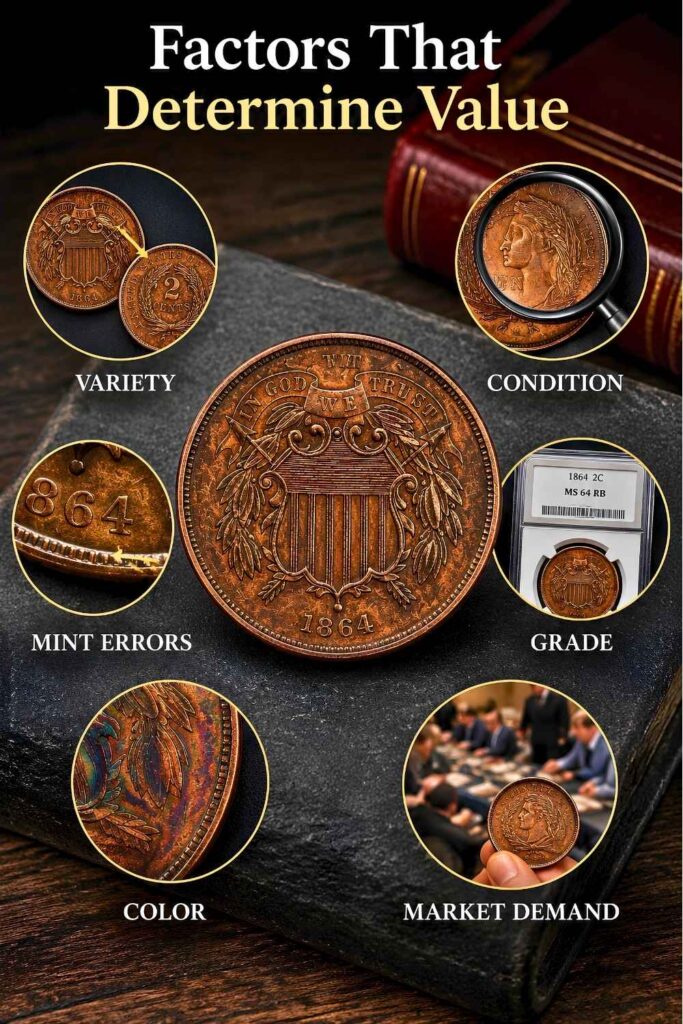
Several elements influence market prices.
Variety
Small Motto coins are generally worth much more.
Grade
Higher grades lead to dramatically higher prices.
Surface Quality
Coins free from damage, corrosion, and cleaning are preferred.
Color
Red specimens bring stronger premiums.
Collector Demand
Market trends can influence values over time.
Tips for Finding Valuable Examples
Many collectors overlook important details.
When examining a coin:
- Check the motto size first
- Look for mint errors
- Inspect surfaces carefully
- Verify authenticity
- Compare with certified examples
These steps can help identify hidden value.
Proper Storage Methods
Proper storage protects long-term value.
Recommended options include:
- Coin capsules
- Mylar holders
- Certified grading slabs
- Dry storage environments
Avoid touching surfaces directly with bare fingers.
Should You Get Your Coin Professionally Graded?
Professional grading can increase buyer confidence.
Benefits include:
- Authentication
- Accurate grading
- Marketability
- Protection
High-value Small Motto coins are especially strong candidates for certification.
Investment Potential of the 1864 2-Cent Coin
The 1864 issue remains one of the most popular coins in the two-cent series.
Reasons collectors continue buying include:
- Historic significance
- First use of “In God We Trust”
- Civil War connection
- Limited supply of premium examples
Although no investment is guaranteed, quality examples have maintained strong collector interest for decades.
Common Mistakes Collectors Make
Avoid these frequent errors:
- Cleaning coins
- Ignoring variety identification
- Buying unverified expensive examples
- Improper storage
- Overestimating condition
Knowledge and patience are essential in coin collecting.
Building a Complete Two-Cent Coin Collection
Many collectors start with the 1864 issue and later pursue the entire series.
The series includes:
- 1864 Small Motto
- 1864 Large Motto
- 1865
- 1866
- 1867
- 1868
- 1869
- 1870
- 1871
- 1872
- 1873
Completing the set can be a rewarding numismatic challenge.
Key Highlights
| Feature | Details |
|---|---|
| Coin Name | 1864 2-Cent Coin |
| Designer | James B. Longacre |
| Composition | 95% Copper, 5% Tin and Zinc |
| Weight | 6.22 Grams |
| Diameter | 23 mm |
| Mint Location | Philadelphia |
| Mint Mark | None |
| Historical Significance | First U.S. Coin with “In God We Trust” |
| Key Varieties | Small Motto and Large Motto |
| Highest Values | Several thousand dollars in top grades |
Final Words
The 1864 2-Cent Coin is one of the most historically significant coins ever produced by the United States Mint. Its status as the first coin bearing the motto “In God We Trust” makes it especially appealing to collectors and historians alike.
Among all varieties, the Small Motto version stands out as the most desirable and valuable. While common Large Motto examples can often be purchased for modest amounts, rare Small Motto coins in high grades may be worth thousands of dollars.
Collectors should pay close attention to variety identification, grading, color designation, and potential mint errors when determining value. Whether you own a well-worn circulated example or a pristine Mint State specimen, the 1864 2-Cent Coin remains a fascinating piece of American history and an important addition to any coin collection.
Frequently Asked Questions (FAQs)
How much is an 1864 2-Cent Coin worth today?
Most Large Motto examples range from $15 to several hundred dollars depending on condition. Small Motto coins can range from over $100 to several thousand dollars.
Which 1864 2-Cent Coin is the rarest?
The Small Motto variety is significantly rarer and more valuable than the Large Motto variety.
How can I tell if my coin is Small Motto or Large Motto?
Compare the size of the “In God We Trust” inscription above the shield. Small Motto coins have noticeably smaller lettering.
Does an 1864 2-Cent Coin contain silver?
No. The coin is made primarily of copper alloy and contains no silver.
Are 1864 2-Cent Coin errors valuable?
Yes. Doubled dies, off-center strikes, die cracks, and clipped planchet errors can increase value substantially.
What is the highest value recorded for an 1864 2-Cent Coin?
Exceptional Small Motto specimens in top Mint State grades have sold for well over $10,000 at auction.
Should I clean my 1864 2-Cent Coin?
No. Cleaning almost always reduces collector value and may permanently damage the coin.
Is professional grading worth it?
For rare varieties, high-grade examples, or suspected error coins, professional grading is often a worthwhile investment.
Why is the 1864 2-Cent Coin important?
It was the first United States coin to feature the motto “In God We Trust,” making it a landmark issue in American coinage history.
Where can I sell an 1864 2-Cent Coin?
You can sell through coin dealers, auctions, online marketplaces, and certified coin exchanges. Certified coins typically attract stronger buyer interest.