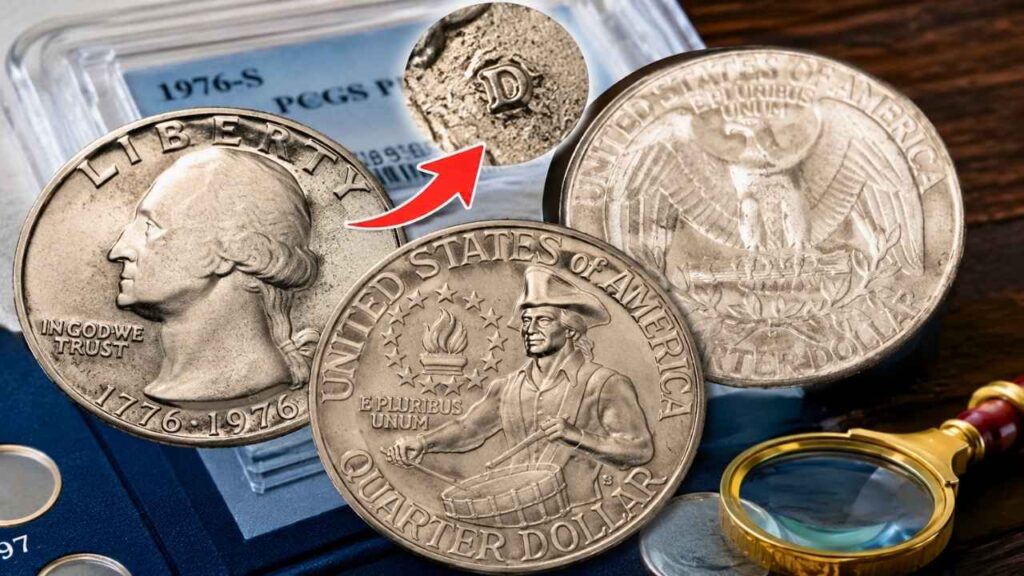
1973 Washington Quarter Value Guide: The 1973 Washington Quarter remains one of the most collected modern U.S. coins among numismatists and casual collectors alike. While millions of these quarters were produced for circulation, certain examples have become surprisingly valuable due to their condition, rarity, mint mark, and minting errors. Many people still find 1973 quarters in old coin jars, inherited collections, and pocket change, making them an exciting coin to examine closely.
Although most 1973 Washington quarters are worth only their face value, some high-grade examples and rare error coins have sold for hundreds or even thousands of dollars. Understanding what makes a 1973 quarter valuable can help collectors identify hidden treasures sitting unnoticed in their collections.
This comprehensive guide explores the history, specifications, mint varieties, values, grading factors, and rare errors associated with the 1973 Washington Quarter.
History of the 1973 Washington Quarter
The Washington Quarter was first introduced in 1932 to commemorate the 200th anniversary of George Washington’s birth. Designed by sculptor John Flanagan, the coin quickly became a permanent fixture in American coinage.
By 1973, the Washington Quarter had already become one of the most widely circulated coins in the United States. The coin continued to feature Washington’s portrait on the obverse and the iconic eagle design on the reverse.
The year 1973 was notable because the U.S. Mint produced hundreds of millions of quarters across multiple facilities to meet increasing demand from commerce and circulation.
1973 Washington Quarter Specifications
| Specification | Details |
|---|---|
| Country | United States |
| Denomination | Quarter Dollar |
| Year | 1973 |
| Composition | Copper-Nickel Clad |
| Copper Content | 91.67% |
| Nickel Content | 8.33% |
| Weight | 5.67 grams |
| Diameter | 24.3 mm |
| Thickness | 1.75 mm |
| Edge | Reeded |
| Designer | John Flanagan |
Because the 1973 quarter is made from a copper-nickel clad composition, it does not contain any silver. Silver Washington Quarters were last produced for circulation in 1964.
Understanding 1973 Quarter Mint Marks

The 1973 Washington Quarter was struck at three U.S. Mint facilities:
| Mint | Mint Mark | Location |
| Philadelphia | No Mint Mark | Philadelphia, Pennsylvania |
| Denver | D | Denver, Colorado |
| San Francisco | S | San Francisco, California |
Each mint produced coins with different mintages and collector demand, influencing their value today.
1973 No Mint Mark Quarter Value
Philadelphia produced an enormous quantity of quarters in 1973. Because of the large mintage, circulated examples remain extremely common.
1973 No Mint Mark Quarter Values
| Grade | Estimated Value |
| Good (G-4) | $0.25 |
| Fine (F-12) | $0.25 |
| Extremely Fine (XF-40) | $0.25 to $1 |
| About Uncirculated (AU-50) | $1 to $3 |
| Mint State 63 | $5 to $12 |
| Mint State 65 | $15 to $40 |
| Mint State 67 | $400 to $1,500+ |
Most Philadelphia quarters found in circulation have little premium. However, coins preserved in exceptional condition can command significant prices.
1973-D Quarter Value
The Denver Mint struck hundreds of millions of quarters during 1973. Like the Philadelphia issue, most examples are common.
1973-D Quarter Values

| Grade | Estimated Value |
| Circulated | $0.25 |
| AU-50 | $1 to $3 |
| MS63 | $5 to $15 |
| MS65 | $20 to $50 |
| MS67 | $500 to $2,000+ |
Gem-quality examples are considerably scarcer than lower-grade coins and attract serious collector interest.
1973-S Quarter Value
The San Francisco Mint produced quarters primarily for collectors rather than circulation.
Two major types exist:
- Proof Quarter
- Silver Proof Quarter
These special collector coins often have much higher values than circulation strikes.
1973-S Proof Quarter Values
| Grade | Estimated Value |
| PR63 | $3 to $5 |
| PR65 | $5 to $10 |
| PR68 | $10 to $25 |
| PR70 Deep Cameo | $100 to $500+ |
Perfect proof examples can bring substantial premiums, especially those certified by major grading services.
1973-S Silver Proof Quarter Value
Special silver proof sets were also issued in 1973.
Silver Proof Specifications
| Specification | Details |
| Silver Content | 40% |
| Weight | 5.75 grams |
| Type | Proof Only |
Silver Proof Values
| Grade | Estimated Value |
| PR65 | $5 to $10 |
| PR68 | $15 to $30 |
| PR69 | $35 to $75 |
| PR70 | $150 to $500+ |
Collectors particularly seek flawless silver proof examples.
What Makes a 1973 Quarter Valuable?
Several factors determine the value of a 1973 quarter.
Condition
Coin condition remains the most important value factor. A worn coin may be worth only face value, while a pristine example can sell for hundreds or thousands of dollars.
Strike Quality
Sharp details, strong luster, and attractive surfaces increase desirability.
Certification
Coins graded by professional services often receive higher prices due to authenticity and grading confidence.
Mint Errors
Rare minting mistakes can dramatically increase a coin’s value.
Most Valuable 1973 Quarter Error Coins

Mint errors are among the most exciting discoveries for collectors.
1973 Double Die Quarter
A doubled die occurs when the design is impressed multiple times at slightly different angles.
Identification Features
- Doubling on lettering
- Distorted date
- Extra thickness in inscriptions
Potential Value
| Condition | Value Range |
| Minor Doubling | $25 to $100 |
| Strong Doubling | $200 to $1,500+ |
1973 Off-Center Quarter
Off-center strikes occur when the blank planchet is not properly aligned during striking.
Value Based on Off-Center Percentage
| Off-Center Amount | Value |
| 5% | $10 to $25 |
| 10% | $25 to $75 |
| 25% | $100 to $300 |
| 50% or More | $300 to $2,000+ |
The more dramatic the error while retaining the date, the more valuable the coin becomes.
1973 Clipped Planchet Error
A clipped planchet results when a section of the coin blank is missing before striking.
Value Range
| Clip Type | Value |
| Minor Clip | $20 to $50 |
| Moderate Clip | $50 to $150 |
| Large Clip | $150 to $500+ |
Collectors often pay premiums for visually dramatic clips.
1973 Broadstrike Error
Broadstrike errors happen when the retaining collar fails during striking.
Characteristics
- Larger diameter
- Missing reeded edge
- Expanded appearance
Value
Most broadstrike 1973 quarters sell between $50 and $300 depending on condition and eye appeal.
1973 Wrong Planchet Error
One of the rarest and most valuable errors occurs when a quarter is struck on a planchet intended for another denomination.
Examples
- Struck on a dime planchet
- Struck on a nickel planchet
- Struck on foreign coin blanks
Potential Value
| Error Type | Value Range |
| Dime Planchet | $500 to $3,000+ |
| Nickel Planchet | $500 to $2,500+ |
| Foreign Planchet | $1,000 to $10,000+ |
These errors are highly sought after by advanced collectors.
How to Identify a Valuable 1973 Quarter

Follow these steps when examining a 1973 quarter:
Step 1: Check the Mint Mark
Look beneath the date area for a D or S mint mark. No mint mark indicates Philadelphia production.
Step 2: Examine the Coin’s Condition
Higher-grade coins with little wear generally carry greater value.
Step 3: Search for Errors
Use a magnifying glass to inspect:
- Date
- Lettering
- Edge
- Surface
- Design details
Step 4: Verify Weight
A digital scale can help detect wrong-planchet errors.
Step 5: Consider Professional Grading
Rare or valuable examples should be authenticated and graded by reputable services.
Highest Auction Prices for 1973 Quarters
Exceptional examples have achieved impressive prices in the collector market.
| Coin Type | Grade | Approximate Value |
| 1973 No Mint Mark | MS67+ | $1,000+ |
| 1973-D Quarter | MS67+ | $2,000+ |
| 1973-S Proof | PR70 | $500+ |
| Major Error Quarter | Various | $1,000 to $10,000+ |
Auction results vary depending on demand and market conditions.
Tips for Collectors
Collectors searching for valuable 1973 quarters should focus on:
- Uncirculated bank rolls
- Estate collections
- Proof sets
- Mint sets
- Error coin varieties
Preserving coins properly can help maintain their value over time.
Key Highlights
- Most circulated 1973 quarters are worth face value.
- Philadelphia coins have no mint mark.
- Denver coins carry the D mint mark.
- San Francisco produced proof and silver proof versions.
- High-grade examples can sell for hundreds or thousands of dollars.
- Error coins often command significant premiums.
- Wrong-planchet and major off-center strikes are among the most valuable varieties.
- Professional grading can substantially increase collector confidence and market value.
Final Words
The 1973 Washington Quarter may appear common at first glance, but hidden within the millions produced are valuable treasures that continue to excite collectors. While most examples remain worth only twenty-five cents, exceptional mint-state coins, flawless proofs, and rare mint errors can be worth far more.
Whether you are a beginner checking pocket change or an experienced numismatist searching for investment-grade coins, the 1973 quarter offers numerous opportunities for discovery. Careful examination, proper grading, and knowledge of key varieties can help uncover coins worth significantly more than their face value.
FAQs
Is a 1973 quarter made of silver?
Most 1973 quarters are copper-nickel clad coins and contain no silver. However, certain 1973-S silver proof quarters contain 40% silver.
How much is a 1973 quarter worth today?
Most circulated examples are worth $0.25, while high-grade uncirculated coins may be worth hundreds or even thousands of dollars.
Where is the mint mark on a 1973 quarter?
The mint mark appears on the obverse side of the coin near the date. Philadelphia coins have no mint mark.
What is the rarest 1973 quarter error?
Wrong-planchet errors and major off-center strikes are among the rarest and most valuable 1973 quarter errors.
Are 1973 proof quarters valuable?
Yes. Standard proof quarters generally sell for a few dollars, while perfect PR70 examples can be worth hundreds of dollars.
Can a 1973-D quarter be valuable?
Yes. Although common in circulation, high-grade certified examples can command significant premiums.
Should I get my 1973 quarter graded?
If your coin appears uncirculated, has a major error, or may qualify for a high mint-state grade, professional grading is often worthwhile.
How can I tell if my 1973 quarter has an error?
Look for doubling, off-center strikes, clipped planchets, broadstrikes, unusual weight, or missing design elements. A magnifying glass and digital scale can help identify potential errors.