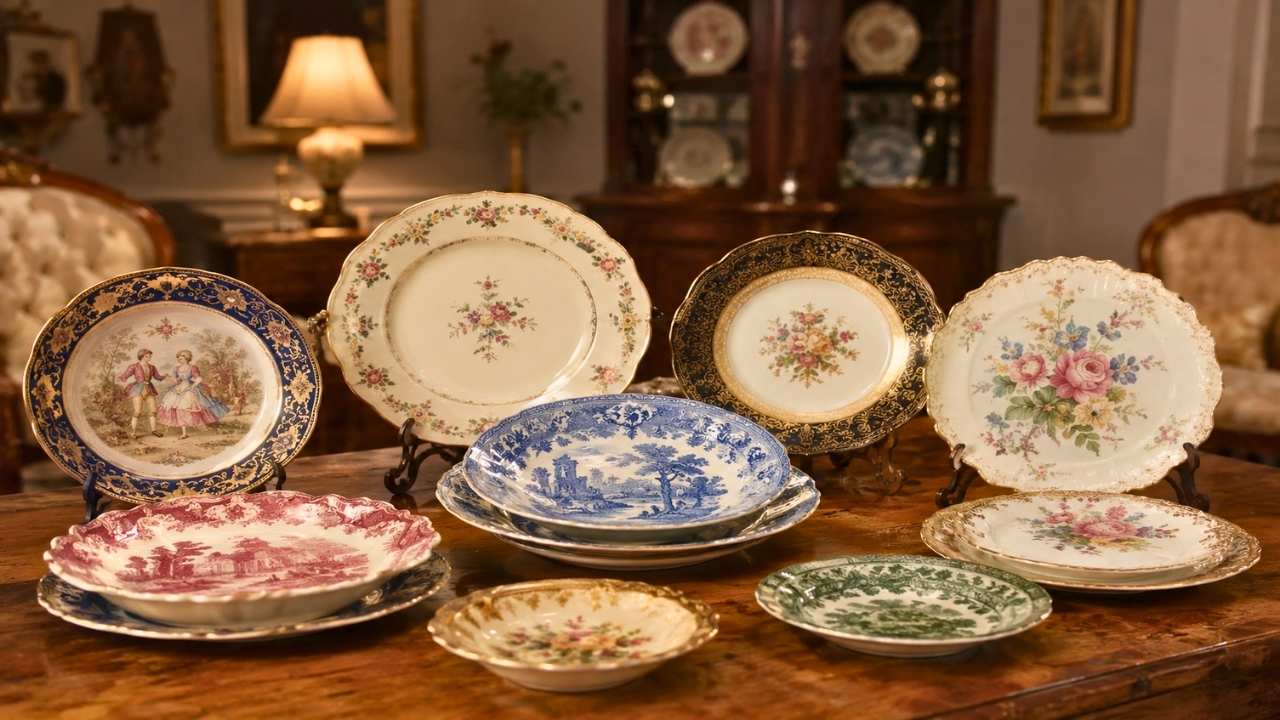
11 Rare Limited Edition Vintage : Vintage dishes are much more than ordinary kitchenware. For many collectors, they represent history, craftsmanship, and memories from different eras. Limited edition dish sets and special patterns often become highly desirable because they were produced in small quantities or featured unique designs that are no longer available.
Today, collectors actively search estate sales, antique shops, flea markets, and online auctions looking for rare pieces that can be worth hundreds or even thousands of dollars. Some dishes that once sat in kitchen cabinets are now prized collectibles.
Whether you’re a seasoned collector or someone who recently inherited old dishes, understanding which pieces are valuable can help you uncover hidden treasures.
Why Limited Edition Vintage Dishes Are Valuable
Collectors appreciate limited edition dishes for several reasons. Their value often depends on rarity, age, condition, manufacturer, and demand.
Some dishes were produced for only a few years, while others celebrated anniversaries or special events. When production stopped, surviving pieces became increasingly difficult to find.
Factors affecting value include:
- Original condition
- Complete sets versus individual pieces
- Manufacturer reputation
- Hand-painted details
- Gold trim or unique artwork
- Limited production numbers
- Current collector demand
Quick Value Guide for Rare Vintage Dishes
| Vintage Dish Pattern | Manufacturer | Years Produced | Estimated Value |
|---|---|---|---|
| Fiesta Medium Green | Homer Laughlin | 1930s-1940s | $200-$1,500 |
| Blue Willow Early Sets | Various Makers | 1800s-1900s | $150-$2,000 |
| Franciscan Apple | Franciscan Ware | 1940s-1960s | $100-$1,200 |
| Pyrex Lucky in Love | Pyrex | 1959 | $3,000-$6,000 |
| Fire-King Jadeite | Anchor Hocking | 1940s-1970s | $100-$2,500 |
| Lenox Presidential Collection | Lenox | Limited Editions | $300-$2,000 |
| Wedgwood Fairyland Lustre | Wedgwood | 1920s-1930s | $1,000-$15,000 |
| Royal Copenhagen Flora Danica | Royal Copenhagen | Ongoing Limited Production | $500-$10,000 |
| Spode Christmas Tree Early Sets | Spode | 1938-Present | $100-$3,000 |
| Haviland Limoges | Haviland | Late 1800s | $500-$5,000 |
| Noritake Occupied Japan Sets | Noritake | 1945-1952 | $150-$2,500 |
Fiesta Ware Medium Green Pieces
Fiesta Ware remains one of the most recognizable names among collectors. The medium green color, introduced during the 1930s, became highly sought after after production ended.
Collectors especially value:
- Dinner plates
- Mixing bowls
- Covered casseroles
- Teapots
Complete sets in excellent condition can command impressive prices. Rare serving pieces often bring even higher values because fewer survived.
Some mint-condition examples have sold for over $1,500.
Early Blue Willow Dishes
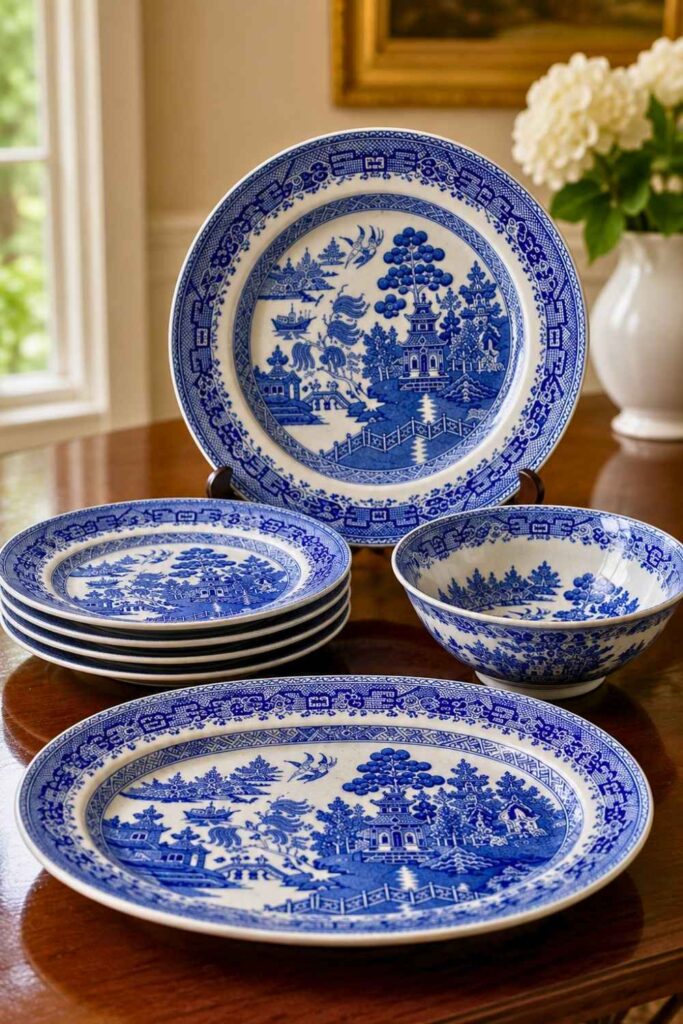
Blue Willow patterns have fascinated collectors for generations. The famous blue-and-white landscape design tells a romantic story that has remained popular since the 18th century.
Early English examples are especially valuable. Marks from makers such as:
- Johnson Brothers
- Royal Doulton
- Booths
can significantly increase value.
Collectors look for:
- Crisp blue designs
- No cracks or chips
- Matching sets
- Original maker’s marks
Large complete sets may reach several thousand dollars.
Franciscan Apple Pattern Sets
Introduced in the 1940s, Franciscan Apple dinnerware became one of America’s favorite patterns. Hand-painted apples and leaves gave the dishes a charming appearance.
Collectors appreciate:
- Serving platters
- Salt and pepper shakers
- Covered vegetable bowls
- Pitchers
Pieces in excellent condition continue to rise in value due to increasing collector demand.
Complete collections often sell for over $1,000.
Pyrex Lucky in Love
Among all vintage kitchen collectibles, Pyrex Lucky in Love remains one of the rarest.
Released in 1959, this pattern featured:
- Green grass
- Pink hearts
- Clover leaves
Very few examples survived, making it one of the most sought-after Pyrex patterns.
Collectors have paid more than $5,000 for authentic pieces in excellent condition.
Because reproductions exist, buyers should carefully verify markings and authenticity.
Fire-King Jadeite Dinnerware
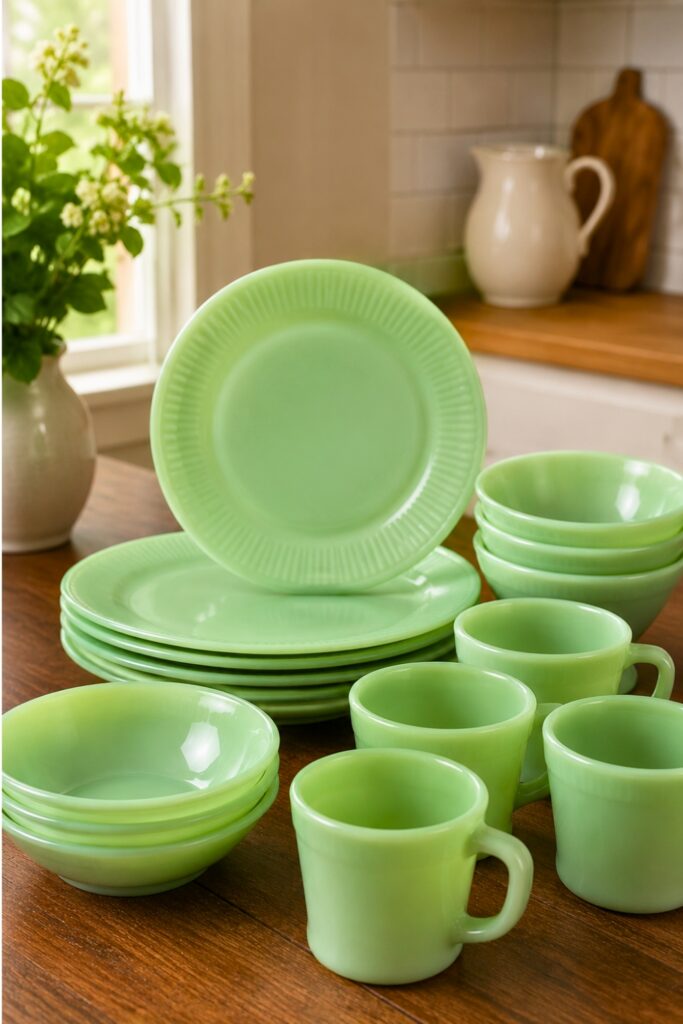
Anchor Hocking’s Fire-King Jadeite dishes became kitchen staples during the 1940s and 1950s.
Today, collectors love the soft green color and durability.
Rare pieces include:
- Restaurant ware
- Mixing bowls
- Coffee mugs
- Batter bowls
Restaurant pieces often command premium prices because they were produced in smaller numbers.
Exceptional collections can exceed $2,500.
Lenox Presidential Collection
Lenox produced several limited edition collections featuring presidential themes and commemorative designs.
Collectors prize:
- Fine gold trim
- Detailed artwork
- Certificates of authenticity
- Complete boxed sets
Special editions honoring American presidents or historical events continue to attract strong interest.
Depending on rarity, some sets are valued at more than $2,000.
Wedgwood Fairyland Lustre
Among elite porcelain collectibles, Wedgwood Fairyland Lustre stands near the top.
Created by designer Daisy Makeig-Jones, these pieces feature:
- Vibrant colors
- Fantasy scenes
- Elaborate gold details
Because production numbers were relatively small, surviving examples are extremely valuable.
Individual plates and bowls regularly bring thousands of dollars, while exceptional examples have exceeded $15,000.
Royal Copenhagen Flora Danica
Flora Danica is considered one of the world’s most luxurious porcelain collections.
Each piece showcases hand-painted botanical illustrations inspired by Danish plant studies.
Collectors admire:
- Fine craftsmanship
- Gold accents
- Historical importance
Even single plates can sell for several hundred dollars.
Complete services are worth tens of thousands of dollars.
Spode Christmas Tree Patterns
Introduced in 1938, the Christmas Tree design became one of Spode’s most famous patterns.
Early examples remain highly collectible because:
- Older pieces feature different backstamps.
- Production methods changed over time.
- Some pieces were made in limited quantities.
Collectors particularly seek:
- Cookie jars
- Tea sets
- Serving bowls
Rare examples can exceed $3,000.
Haviland Limoges China
French-made Haviland Limoges china is admired worldwide.
Late 19th-century pieces often display:
- Hand-painted flowers
- Delicate gold borders
- Elegant craftsmanship
Collectors pay premium prices for complete matching services.
Rare patterns can bring more than $5,000, especially if they include serving pieces.
Noritake Occupied Japan Sets
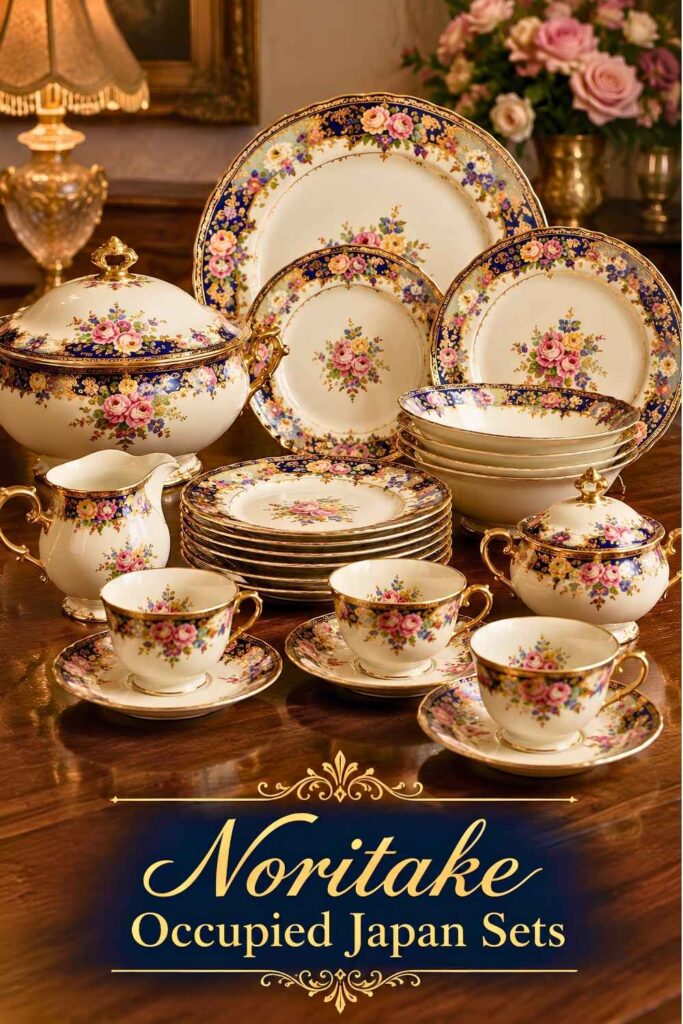
Pieces marked “Occupied Japan” were produced between 1945 and 1952.
These sets have become increasingly collectible because they represent a unique historical period.
Collectors favor:
- Tea sets
- Dinner plates
- Serving dishes
- Coffee cups
Well-preserved complete sets often sell between $500 and $2,500.
How to Identify Valuable Vintage Dishes
Before selling or buying, examine several important details.
Look for Manufacturer Marks
Most companies stamped logos, symbols, or names on the bottom of dishes. These markings help determine age and authenticity.
Check Condition Carefully
Collectors prefer pieces without:
- Chips
- Hairline cracks
- Repairs
- Heavy scratches
Minor wear is expected, but severe damage lowers value significantly.
Research Pattern Names
Pattern names are often more important than age alone. Rare patterns may command higher prices than older common designs.
Search Auction Results
Completed sales offer realistic estimates of current market values.
Best Places to Sell Rare Vintage Dishes
Several marketplaces attract collectors:
- eBay
- Etsy
- Ruby Lane
- Antique malls
- Estate auctions
- Facebook collector groups
- Local antique dealers
Professional appraisals are recommended for exceptionally rare items.
Key Highlights
- Limited edition vintage dishes can be worth hundreds or thousands of dollars.
- Pyrex Lucky in Love remains one of the rarest collectible patterns.
- Wedgwood Fairyland Lustre pieces can exceed $15,000.
- Fire-King Jadeite continues to grow in popularity.
- Royal Copenhagen Flora Danica is among the world’s most prestigious porcelain collections.
- Condition and rarity play major roles in determining value.
- Manufacturer marks help authenticate collectible dishes.
- Complete sets generally command higher prices than individual pieces.
Final Words
Vintage dishes are treasured for their beauty, craftsmanship, and history. Many pieces that once served everyday meals have transformed into valuable collectibles sought by enthusiasts around the world. Whether you inherited family china or discovered unusual dishes at an estate sale, understanding rarity and condition can reveal surprising value. As collector demand continues to grow, many limited edition patterns remain strong investments and cherished pieces of history.
FAQs
Which vintage dishes are worth the most?
Pyrex Lucky in Love, Wedgwood Fairyland Lustre, and Royal Copenhagen Flora Danica are among the most valuable examples.
How do I know if my dishes are collectible?
Check the manufacturer marks, pattern names, age, and overall condition. Rare patterns and complete sets usually have greater value.
Are chipped dishes still valuable?
Minor chips reduce value, but extremely rare pieces may still attract collectors.
Where can I identify a vintage dish pattern?
Manufacturer marks, collector books, and online databases can help identify patterns and production years.
Do complete sets sell for more than single pieces?
Yes. Matching sets are usually more valuable because collectors prefer complete collections.
Are vintage dishes a good investment?
Rare and limited edition pieces have shown strong collector demand and may continue appreciating over time.
(Ask for Part 2 to complete the remaining 2,500+ words with additional collector tips, pricing factors, famous manufacturers, preservation methods, and expanded FAQs.)