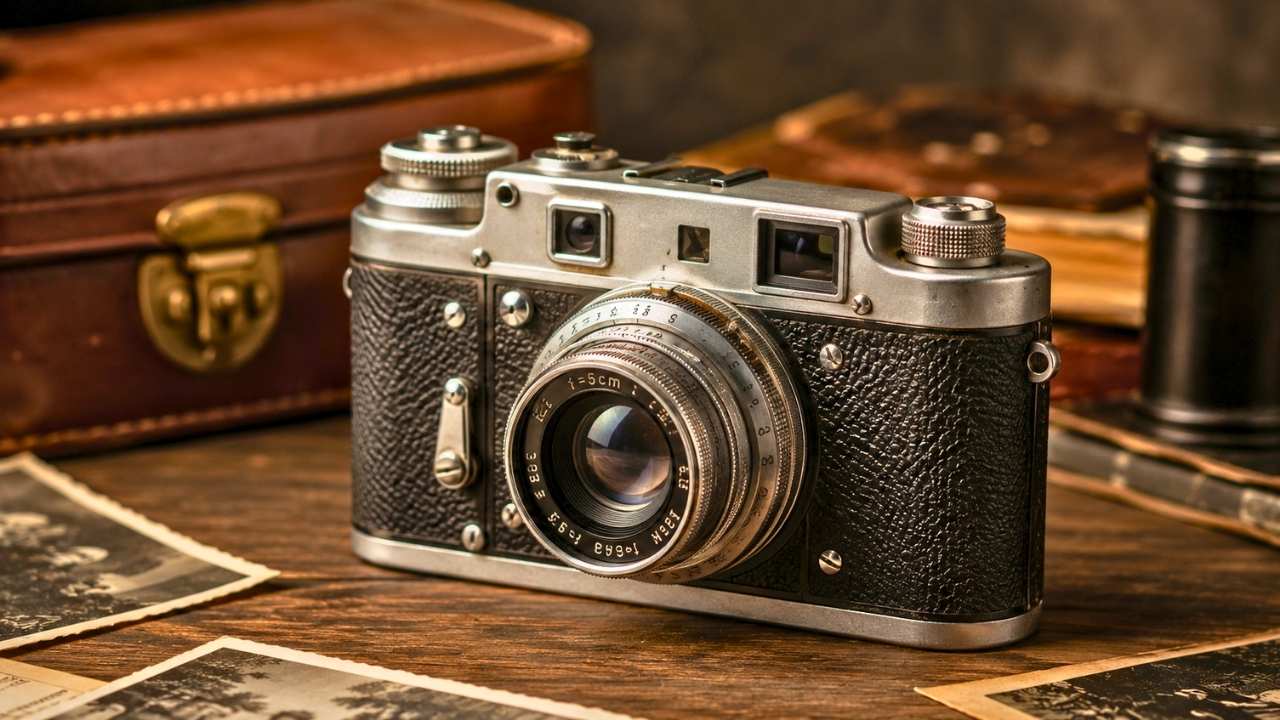
Is Your Old Vintage Camera Worth Money? Vintage cameras are more than old photography tools collecting dust on a shelf. In recent years, the market for classic cameras has grown significantly as collectors, photographers, and history enthusiasts search for rare and iconic models. Some cameras that were once forgotten in attics, basements, or storage boxes are now worth hundreds or even thousands of dollars.
Whether you inherited an old camera from a family member, discovered one at a garage sale, or simply want to know if your collection has hidden value, understanding how to identify rare and valuable vintage cameras can help you make informed decisions.
This guide explores the factors that determine a camera’s value, the most sought-after models, common mistakes owners make, and practical steps for evaluating your vintage equipment.
Why Vintage Cameras Are Becoming More Valuable
The growing popularity of film photography has revived interest in vintage cameras. While digital cameras dominate modern photography, many enthusiasts appreciate the unique character, craftsmanship, and shooting experience offered by older models.
Several factors have contributed to increasing prices:
- Film photography has become trendy among younger generations.
- Collectors seek historically significant models.
- Certain cameras were produced in limited quantities.
- Well-preserved cameras become rarer over time.
- Mechanical cameras often remain functional decades later.
As supply decreases and demand grows, prices for desirable vintage cameras continue to rise.
What Makes a Vintage Camera Valuable?
Not every old camera is worth a fortune. Several important factors influence market value.
Rarity
Rare cameras are often the most valuable. Limited production runs, discontinued models, and cameras with unique features tend to attract collectors.
Examples include:
- Leica prototypes
- Limited-edition Nikon cameras
- Early Rolleiflex models
- Special military-issued cameras
The fewer examples that exist, the higher the potential value.
Brand Reputation
Some manufacturers are highly respected in the collector market.
| Brand | Collector Demand | Typical Value Range |
|---|---|---|
| Leica | Extremely High | $500 – $50,000+ |
| Hasselblad | Very High | $800 – $15,000+ |
| Rolleiflex | High | $300 – $8,000+ |
| Nikon | High | $200 – $10,000+ |
| Canon | Moderate to High | $100 – $5,000+ |
| Pentax | Moderate | $50 – $2,500+ |
| Minolta | Moderate | $50 – $2,000+ |
Collectors often pay premium prices for cameras from legendary brands.
Condition
Condition can dramatically affect value.
Cameras are generally categorized as:
| Condition | Description |
|---|---|
| Mint | Looks almost new |
| Excellent | Minor wear only |
| Very Good | Visible use but fully functional |
| Good | Cosmetic wear present |
| Fair | Significant wear or issues |
| Poor | Broken or heavily damaged |
A mint-condition camera may sell for several times more than the same model in poor condition.
Original Accessories
Original accessories increase collectability.
Important accessories include:
- Original box
- User manuals
- Lens caps
- Camera cases
- Flash units
- Straps
- Warranty cards
Collectors often pay extra for complete sets.
Historical Significance
Cameras connected to important events or technological milestones can command exceptional prices.
Examples include:
- Early Leica rangefinders
- Cameras used during major historical events
- First-generation SLR models
- Limited wartime production units
Historical importance often outweighs practical functionality.
How to Identify Your Vintage Camera
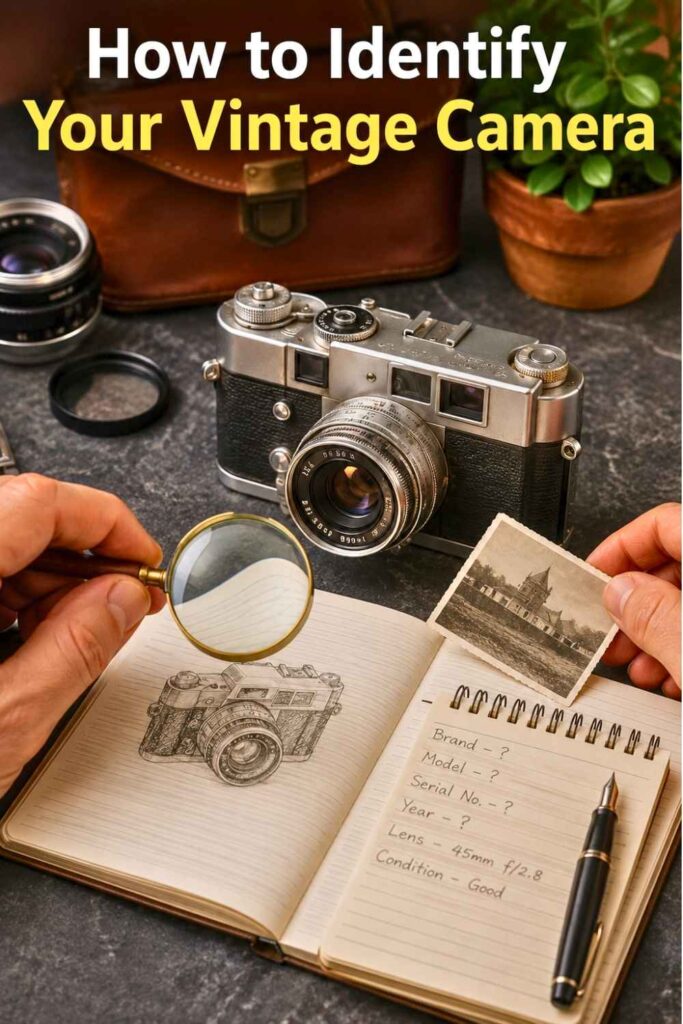
Before determining value, you must identify the exact model.
Locate the Brand Name
Most cameras display the manufacturer’s name prominently on the front or top.
Common brands include:
- Leica
- Nikon
- Canon
- Pentax
- Minolta
- Kodak
- Rolleiflex
- Hasselblad
- Yashica
- Olympus
Find the Model Number
The model name is often engraved near the lens, top plate, or body.
Examples:
- Leica M3
- Nikon F
- Canon AE-1
- Pentax Spotmatic
- Rolleiflex 2.8F
Accurate identification is essential because small model differences can significantly impact value.
Check the Serial Number
Serial numbers help determine:
- Production year
- Production batch
- Authenticity
- Limited-edition status
Many collector databases can identify manufacturing details using serial numbers.
Most Valuable Vintage Cameras Ever Sold
Some vintage cameras have achieved astonishing prices at auctions.
| Camera Model | Approximate Sale Price |
|---|---|
| Leica O-Series Prototype | Over $15 Million |
| Leica MP Black Paint | Over $500,000 |
| Hasselblad Lunar Surface Camera | Over $200,000 |
| Rolleiflex Original Models | Up to $50,000 |
| Nikon One Rangefinder | Up to $25,000 |
While these figures represent exceptional cases, they demonstrate the potential value hidden in rare cameras.
Valuable Vintage Cameras You Might Actually Find
Many valuable cameras remain relatively accessible.
Leica M3
Introduced in 1954, the Leica M3 is widely regarded as one of the greatest rangefinder cameras ever made.
Typical value:
$800 to $8,000 depending on condition and accessories.
Nikon F
The Nikon F revolutionized professional photography.
Typical value:
$200 to $3,000+
Canon AE-1
One of the most popular film cameras ever produced.
Typical value:
$100 to $800
Pentax Spotmatic
A favorite among film enthusiasts.
Typical value:
$100 to $1,000
Rolleiflex Twin Lens Reflex Cameras
Known for exceptional craftsmanship.
Typical value:
$300 to $5,000+
Signs Your Camera Could Be Rare
Several clues may indicate rarity.
Limited Production Numbers
Models produced in small quantities often attract collector interest.
Unusual Colors
Black paint versions often command higher prices than chrome versions.
Special Editions
Look for:
- Anniversary editions
- Military editions
- Commemorative releases
Prototype Features
Rare design differences can dramatically increase value.
Matching Components
Collectors value cameras whose body and lens serial numbers remain original and matching.
How Lens Value Affects Camera Worth
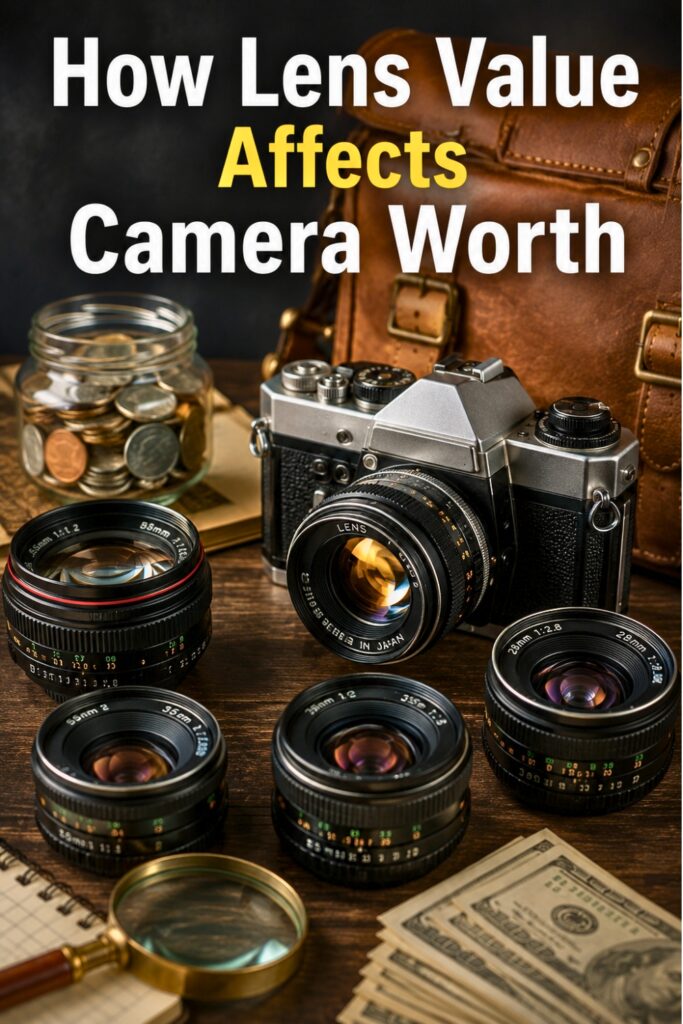
Sometimes the lens is worth more than the camera body.
Popular collectible lenses include:
| Lens | Potential Value |
|---|---|
| Leica Summicron | $500 – $10,000+ |
| Leica Noctilux | $2,000 – $20,000+ |
| Nikon Noct-Nikkor | $1,500 – $8,000+ |
| Canon FD L-Series | $500 – $5,000+ |
| Zeiss Vintage Lenses | $300 – $15,000+ |
Always inspect both the camera and attached lens separately.
How to Evaluate Camera Condition
Carefully inspect the following areas.
Exterior Body
Check for:
- Dents
- Corrosion
- Deep scratches
- Missing parts
Lens Quality
Look for:
- Fungus
- Haze
- Scratches
- Separation
Clean lenses significantly improve value.
Mechanical Functions
Test:
- Shutter speeds
- Focus mechanism
- Film advance
- Aperture controls
Working cameras generally sell for much higher prices.
Common Vintage Cameras That Usually Aren’t Worth Much
Many people assume every old camera is valuable.
Unfortunately, mass-produced models often have limited collector demand.
Examples include:
| Camera Type | Typical Value |
|---|---|
| Basic Kodak Instamatics | $5 – $50 |
| Plastic Point-and-Shoots | $10 – $75 |
| Common Polaroid Models | $20 – $100 |
| Entry-Level Film Cameras | $20 – $150 |
Age alone does not create value.
Where to Check Current Market Prices
Several platforms can help estimate value.
Online Auctions
Review completed sales rather than active listings.
Collector Forums
Experienced collectors often provide accurate assessments.
Camera Dealers
Specialized dealers can offer professional appraisals.
Photography Communities
Film photography groups frequently discuss market trends and values.
Comparing multiple sources provides a more realistic estimate.
Best Places to Sell a Valuable Vintage Camera
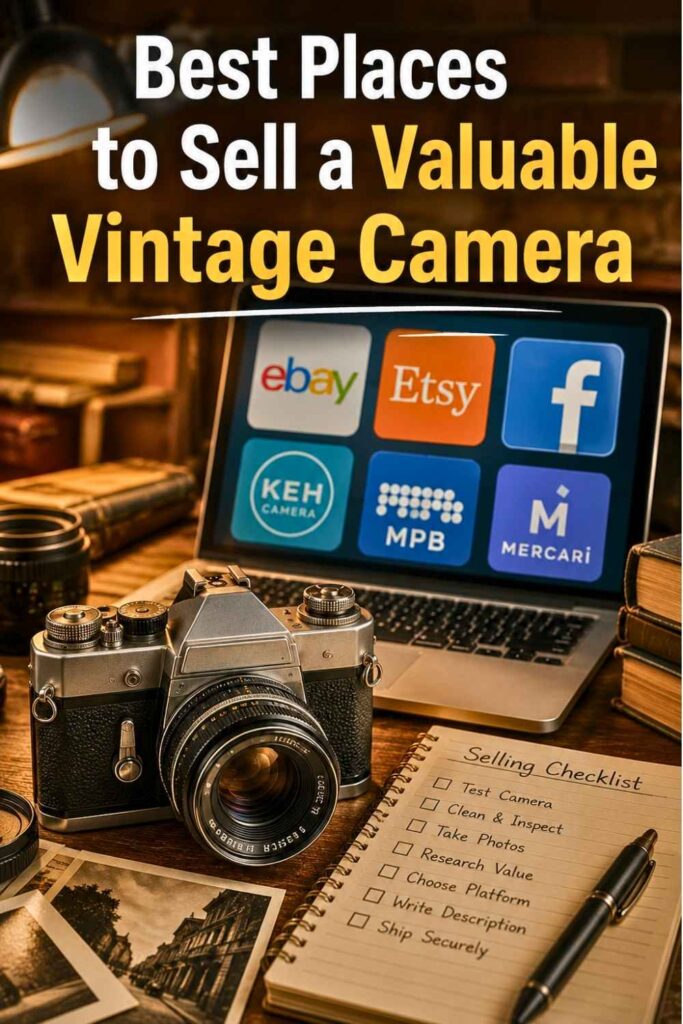
Once you’ve identified a valuable camera, choosing the right marketplace matters.
Auction Houses
Ideal for:
- Rare Leica cameras
- Prototypes
- Historical pieces
Collector Communities
Great for knowledgeable buyers willing to pay fair prices.
Photography Stores
Convenient but may offer lower payouts.
Online Marketplaces
Provide wider exposure but require careful listing and shipping.
Mistakes That Reduce Camera Value
Many owners unknowingly damage collectible cameras.
Avoid:
- Aggressive cleaning
- Repainting surfaces
- Replacing original parts
- Discarding boxes and manuals
- Improper storage
Original condition often matters more than cosmetic perfection.
How to Store Vintage Cameras Properly
Good storage preserves value.
Recommended practices:
- Store in a dry environment.
- Use silica gel packs.
- Avoid direct sunlight.
- Keep lenses capped.
- Exercise mechanical shutters periodically.
Proper care can preserve value for decades.
Are Vintage Cameras a Good Investment?
Some collectors purchase cameras as investments.
Advantages include:
- Limited supply
- Growing interest in film photography
- Historical significance
- Potential appreciation
However, values fluctuate based on collector demand and market trends.
Buying solely for investment carries risk, but iconic models often retain strong value.
Key Highlights
- Vintage cameras can range from a few dollars to millions.
- Leica, Nikon, Hasselblad, and Rolleiflex remain highly collectible.
- Condition significantly impacts value.
- Original accessories increase selling prices.
- Rare versions and limited editions command premiums.
- Valuable lenses may exceed the value of the camera body.
- Proper identification requires model and serial numbers.
- Historical significance can dramatically boost worth.
- Online sales records provide the best pricing guidance.
- Careful storage helps preserve long-term value.
FAQs
How old does a camera need to be to be considered vintage?
Most collectors consider cameras over 20 to 30 years old to be vintage, although desirability depends more on rarity and significance than age.
Are old Kodak cameras worth money?
Some rare Kodak models have collector value, but many mass-produced Kodak cameras sell for modest amounts.
How can I tell if my Leica camera is valuable?
Check the model number, serial number, production year, condition, and whether it includes original accessories.
Do broken vintage cameras have value?
Yes. Rare or collectible models may still be valuable even if they are not functioning.
Is the lens more important than the camera body?
In many cases, yes. Certain vintage lenses can be worth significantly more than the camera body.
Should I clean my vintage camera before selling?
Light dust removal is fine, but aggressive cleaning can reduce collector value.
What is the most expensive camera ever sold?
A Leica O-Series prototype currently holds records for selling at more than $15 million at auction.
Where can I get a vintage camera appraised?
Specialized camera dealers, auction houses, collector forums, and photography experts can provide appraisals.
Final Words
If you have an old camera tucked away in a closet, attic, or family collection, it may be worth taking a closer look. While many vintage cameras have only modest value, rare models from respected manufacturers such as Leica, Nikon, Hasselblad, and Rolleiflex can command surprisingly high prices. Factors like rarity, condition, historical significance, and original accessories all play a major role in determining worth.
Before selling, carefully identify the model, verify the serial number, inspect the lens, and compare recent market sales. Even if your camera is not worth a fortune, it may still hold historical, photographic, or sentimental value. In a world increasingly dominated by digital technology, vintage cameras continue to capture the imagination of collectors and photographers alike, making them treasured pieces of photographic history.