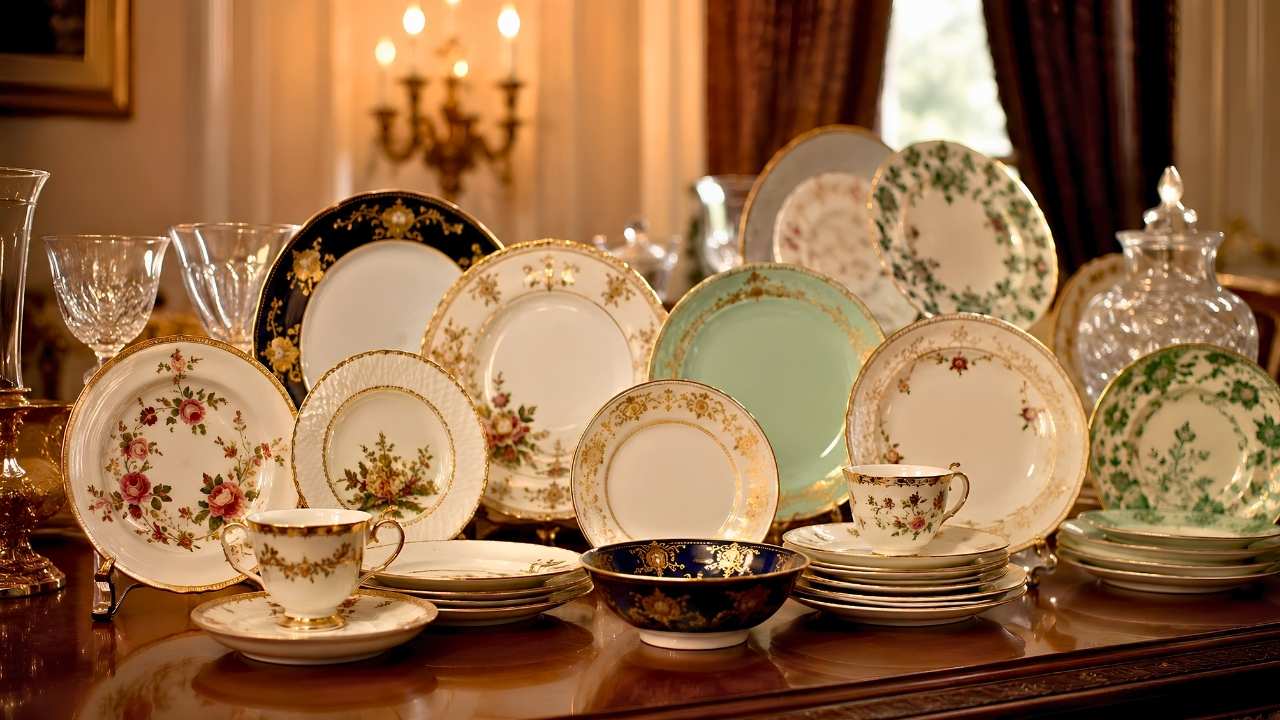
10 Highly Collectible Porcelain Dinnerware Sets: Porcelain dinnerware has long been admired for its elegance, craftsmanship, and timeless appeal. While many people view fine china simply as tableware, collectors understand that certain porcelain dinnerware sets represent history, artistry, and significant investment value. From royal dining tables to prestigious European factories, porcelain dinnerware has evolved into one of the most fascinating collectible categories in the antiques and home décor market.
Today, collectors actively seek rare porcelain dinnerware sets from renowned manufacturers known for exceptional craftsmanship, hand-painted details, and limited production runs. Whether inherited through generations or discovered at estate sales and auctions, these pieces continue to captivate enthusiasts worldwide.
This guide explores ten highly collectible porcelain dinnerware sets, the manufacturers behind them, and the iconic patterns that have earned legendary status among collectors.
Why Porcelain Dinnerware Is Highly Collectible
Porcelain dinnerware is valued for much more than its practical function. Collectors are drawn to several factors that influence desirability and market value:
- Historical significance
- Prestigious manufacturers
- Limited production periods
- Hand-painted artistry
- Rare patterns and colors
- Excellent condition
- Complete set availability
- Provenance and ownership history
Many of the world’s finest porcelain manufacturers have centuries of history, making their creations important cultural artifacts as well as decorative treasures.
Quick Comparison of Famous Collectible Porcelain Dinnerware Sets
| Manufacturer | Famous Pattern | Country of Origin | Production Start | Collector Demand |
|---|---|---|---|---|
| Meissen | Blue Onion | Germany | 18th Century | Very High |
| Royal Copenhagen | Flora Danica | Denmark | 1790 | Exceptional |
| Wedgwood | Columbia Powder Blue | England | 20th Century | High |
| Herend | Rothschild Bird | Hungary | 1860s | Very High |
| Limoges | Various Hand-Painted Sets | France | 19th Century | High |
| Royal Worcester | Evesham Gold | England | 1960s | Strong |
| Spode | Blue Italian | England | 1816 | Excellent |
| Noritake | Azalea | Japan | 1930s | Strong |
| Haviland | Schleiger Patterns | France | 19th Century | Very High |
| Rosenthal | Sanssouci | Germany | Early 20th Century | High |
Meissen Blue Onion
Meissen is often considered the pioneer of European porcelain manufacturing. Founded in Germany in 1710, the company revolutionized the porcelain industry after successfully replicating the secrets of Chinese hard-paste porcelain.
Among all Meissen creations, the Blue Onion pattern remains one of the most recognizable. Despite its name, many of the decorative elements are actually stylized pomegranates, peaches, and floral motifs inspired by East Asian designs.
Collectors value early examples featuring hand-painted cobalt blue decoration. Antique Meissen pieces bearing the crossed swords mark are particularly desirable. Complete dinner services can command impressive prices at auctions, especially when preserved in excellent condition.
The enduring popularity of Blue Onion ensures strong collector demand worldwide.
Royal Copenhagen Flora Danica
Few porcelain patterns rival the prestige of Flora Danica. Produced by Royal Copenhagen, this remarkable collection is considered one of the finest examples of botanical porcelain art ever created.
The pattern originated in the late eighteenth century and was inspired by the comprehensive botanical encyclopedia “Flora Danica.” Every piece features meticulously hand-painted illustrations of actual plant species found in Denmark.
What makes Flora Danica extraordinary is the level of craftsmanship involved. Artists spend countless hours painting each botanical specimen with scientific accuracy and artistic beauty.
Collectors appreciate not only the rarity of these pieces but also the fact that production remains extremely labor-intensive. Complete Flora Danica services are often considered museum-quality treasures and frequently sell for substantial sums.
Wedgwood Columbia Powder Blue
Wedgwood has earned a reputation for innovation and elegance since its founding by Josiah Wedgwood in the eighteenth century.
The Columbia Powder Blue pattern stands among the company’s most luxurious creations. Characterized by rich blue backgrounds, intricate gold embellishments, and classical motifs, this pattern reflects the grandeur associated with formal dining traditions.
Collectors seek early editions and complete place settings. Gold detailing and craftsmanship quality significantly influence value. Because many examples were reserved for affluent households, well-preserved sets are highly desirable in today’s market.
The combination of British heritage and refined artistry continues to attract collectors worldwide.
Herend Rothschild Bird
Herend porcelain has been synonymous with luxury since the nineteenth century. The Hungarian manufacturer gained international recognition for producing fine porcelain for European royalty and aristocracy.
The Rothschild Bird pattern is among Herend’s most famous designs. According to legend, the pattern commemorates a necklace lost by Baroness Rothschild and later discovered in a bird’s nest.
Each piece features colorful birds surrounded by delicate butterflies, flowers, and foliage. The intricate hand-painted decoration demonstrates the exceptional skill of Herend artisans.
Collectors value complete dining sets, serving pieces, and rare decorative accessories within the Rothschild Bird collection. The pattern remains one of the most sought-after in the world of fine porcelain.
Limoges Hand-Painted Dinnerware
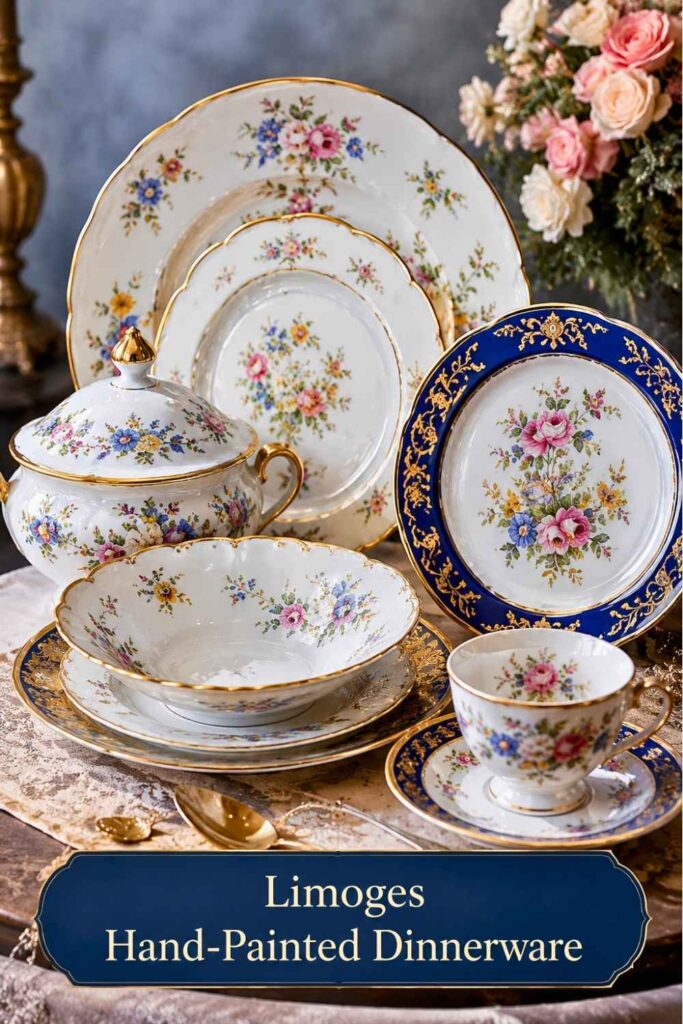
Limoges is not a single company but rather a porcelain-producing region in France famous for its exceptional kaolin clay deposits.
Beginning in the nineteenth century, numerous manufacturers produced exquisite Limoges dinnerware known for translucent porcelain and elaborate hand-painted decoration.
Popular themes include:
- Floral bouquets
- Gold-encrusted borders
- Romantic landscapes
- Fruit motifs
- Art Nouveau designs
Collectors often focus on specific manufacturers, artist signatures, or rare decorative styles. Because many Limoges pieces were individually painted, no two examples are exactly alike.
This uniqueness contributes significantly to their collectible appeal.
Royal Worcester Evesham Gold
Royal Worcester has long been respected for producing elegant English porcelain. Among its most recognizable patterns is Evesham Gold.
Inspired by the fruit-growing region of Evesham in England, the pattern features realistic depictions of fruits such as apples, plums, pears, and cherries.
The addition of gold trim elevated the collection’s appeal among collectors seeking both practicality and beauty. Unlike many formal porcelain services, Evesham Gold became popular for everyday use, resulting in strong market demand for replacement pieces.
Collectors frequently search for complete sets and discontinued serving items that have become increasingly difficult to find.
Spode Blue Italian
Introduced in 1816, Blue Italian remains one of the longest-running and most beloved porcelain patterns ever produced.
The pattern combines romantic Italian landscapes with intricate oriental-inspired borders. Its distinctive blue-and-white color palette reflects the influence of traditional Chinese export porcelain.
Collectors admire Blue Italian for several reasons:
- Historic significance
- Continuous production history
- Versatile design
- Strong market recognition
- Extensive range of pieces
Older examples with early marks often command higher values. Complete antique services are particularly desirable among serious collectors.
The pattern’s enduring popularity ensures continued interest from both new and experienced enthusiasts.
Noritake Azalea
Noritake emerged as one of Japan’s leading porcelain manufacturers during the twentieth century. The Azalea pattern remains among its most iconic creations.
Originally produced for international markets, Azalea features vibrant pink flowers accented by green foliage and gold trim. The cheerful design became especially popular in North America.
Collectors appreciate Azalea for its combination of beauty, affordability, and historical significance. Vintage examples from early production periods often attract considerable interest.
Because many pieces were used regularly, complete sets in excellent condition are becoming increasingly scarce.
Haviland Schleiger Patterns
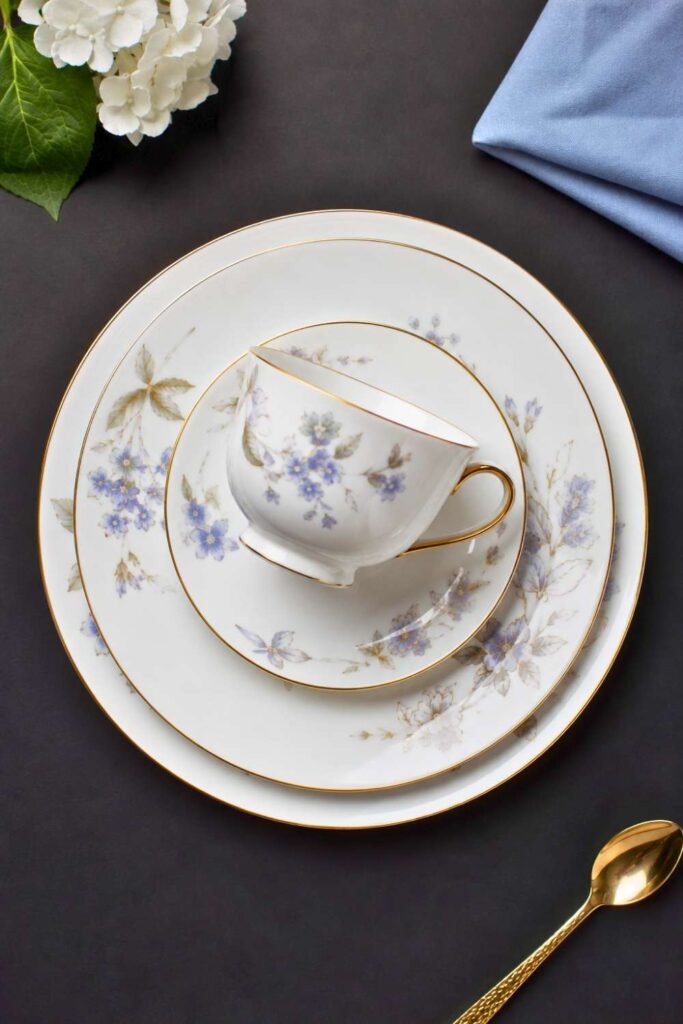
Haviland occupies a special place in the history of French porcelain. Established in Limoges, the company became famous for producing elegant dinnerware favored by wealthy families and prestigious institutions.
Collectors often refer to Haviland patterns by their Schleiger numbers, a classification system developed to identify thousands of design variations.
Some characteristics that make Haviland highly collectible include:
- Extensive pattern variety
- Hand-painted details
- Historical significance
- Exceptional craftsmanship
- Strong collector community
Rare Schleiger patterns can command impressive prices, particularly when complete services become available.
Many collectors dedicate years to assembling matching sets due to the vast number of pattern variations.
Rosenthal Sanssouci
German manufacturer Rosenthal introduced the Sanssouci pattern as a tribute to the rococo elegance of Sanssouci Palace in Potsdam.
The design features graceful scrollwork, embossed ornamentation, and refined decorative details that evoke European aristocratic dining traditions.
Collectors admire Sanssouci for its sophisticated appearance and exceptional quality. The pattern remains popular among those seeking classic European luxury in their collections.
Complete sets and discontinued pieces continue to attract strong demand in the secondary market.
Factors That Increase the Value of Collectible Porcelain Dinnerware
Several characteristics influence the market value of porcelain dinnerware collections.
Manufacturer Reputation
Pieces produced by prestigious manufacturers generally command higher prices.
Age
Older examples often possess greater historical significance and rarity.
Condition
Chips, cracks, repairs, and staining can significantly reduce value.
Completeness
Complete services are usually worth more than individual pieces.
Pattern Rarity
Limited-production patterns often attract intense collector interest.
Provenance
Documented ownership history can enhance desirability and value.
How to Identify Authentic Porcelain Dinnerware
Collectors should carefully examine:
- Backstamps and maker’s marks
- Production dates
- Hand-painted details
- Porcelain translucency
- Weight and texture
- Decoration quality
Researching manufacturer records and consulting reference guides can help confirm authenticity.
Tips for Beginning Porcelain Collectors
Starting a porcelain collection can be both enjoyable and rewarding.
Some useful strategies include:
- Focus on one manufacturer initially.
- Study marks and identification guides.
- Purchase reference books.
- Attend antique fairs and auctions.
- Join collector organizations.
- Learn proper storage techniques.
- Buy the best condition you can afford.
Patience often leads to better acquisitions and a more valuable collection over time.
Caring for Collectible Porcelain Dinnerware
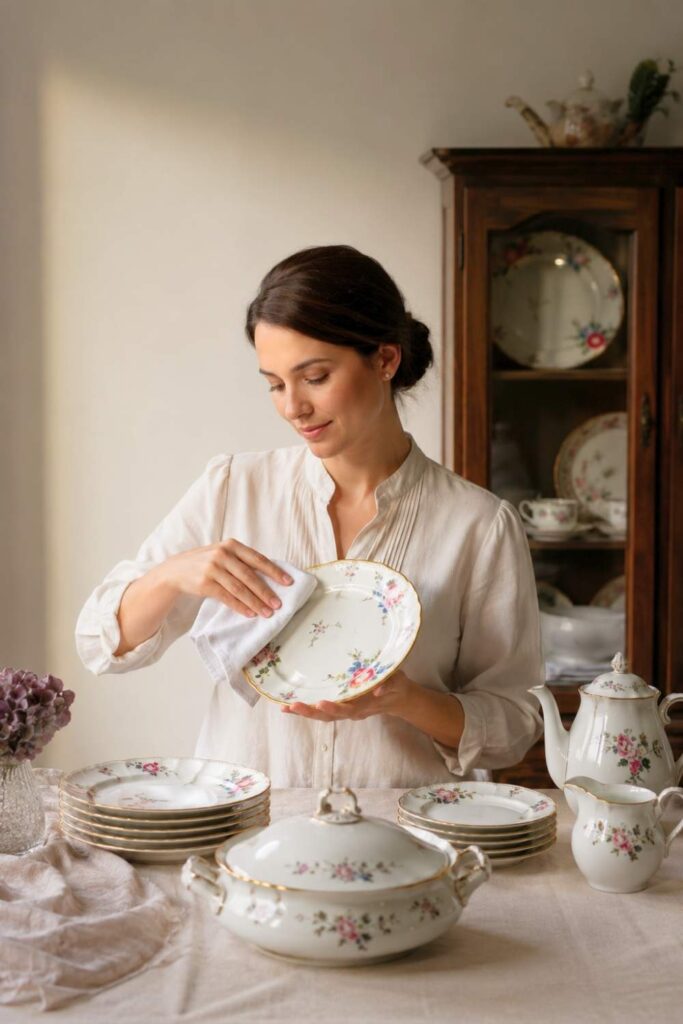
Proper care helps preserve both beauty and value.
Recommended practices include:
- Hand washing delicate pieces
- Avoiding sudden temperature changes
- Using protective storage materials
- Keeping items away from direct sunlight
- Handling with clean hands
- Inspecting regularly for damage
Well-maintained porcelain can remain beautiful for generations.
Key Highlights
- Meissen Blue Onion is one of the world’s most recognizable porcelain patterns.
- Royal Copenhagen Flora Danica is considered a masterpiece of botanical porcelain art.
- Wedgwood Columbia Powder Blue represents luxury British craftsmanship.
- Herend Rothschild Bird remains a favorite among collectors of European porcelain.
- Limoges porcelain offers exceptional variety and artistic individuality.
- Royal Worcester Evesham Gold combines beauty with everyday practicality.
- Spode Blue Italian has remained popular since 1816.
- Noritake Azalea is among the most collectible Japanese porcelain patterns.
- Haviland Schleiger patterns attract dedicated collectors worldwide.
- Rosenthal Sanssouci embodies classic European elegance and refinement.
Final Words
Collecting porcelain dinnerware is far more than acquiring beautiful tableware. Each pattern tells a story of artistic innovation, cultural influence, and exceptional craftsmanship. From the botanical precision of Flora Danica to the timeless elegance of Meissen Blue Onion, these porcelain treasures continue to inspire collectors around the world.
Whether you are an experienced collector or just beginning your journey, understanding the history, rarity, and significance of these renowned patterns can help you make informed decisions and build a collection that offers both personal enjoyment and long-term value. As demand for high-quality antique and vintage porcelain remains strong, these iconic dinnerware sets will likely continue to hold a special place in the world of collectibles.
FAQs
Which porcelain dinnerware brand is the most collectible?
Royal Copenhagen Flora Danica, Meissen, Herend, and Haviland are generally considered among the most collectible porcelain brands due to their craftsmanship, rarity, and historical significance.
How can I determine the age of my porcelain dinnerware?
Examine the backstamp or maker’s mark. Many manufacturers changed their marks over time, allowing collectors to estimate production dates accurately.
Does damaged porcelain still have value?
Yes, rare pieces may retain some value despite minor damage. However, chips, cracks, and repairs typically reduce market prices.
What is the difference between porcelain and china?
Porcelain is a type of ceramic made from refined clay and fired at high temperatures. Fine china is often considered a broader category that may include porcelain products.
Are complete dinnerware sets worth more than individual pieces?
In most cases, complete sets command higher prices because collectors and buyers prefer matching services.
Where can collectors buy authentic porcelain dinnerware?
Authentic pieces can be found through antique dealers, estate sales, auctions, collector clubs, and reputable online marketplaces specializing in antiques.
Which porcelain patterns are currently increasing in value?
Rare Haviland patterns, Meissen Blue Onion, Flora Danica, and certain Herend collections continue to experience strong collector demand and appreciation.
How should collectible porcelain be stored?
Store porcelain in a stable environment, use protective padding between stacked pieces, and avoid direct sunlight, moisture, and extreme temperature changes.