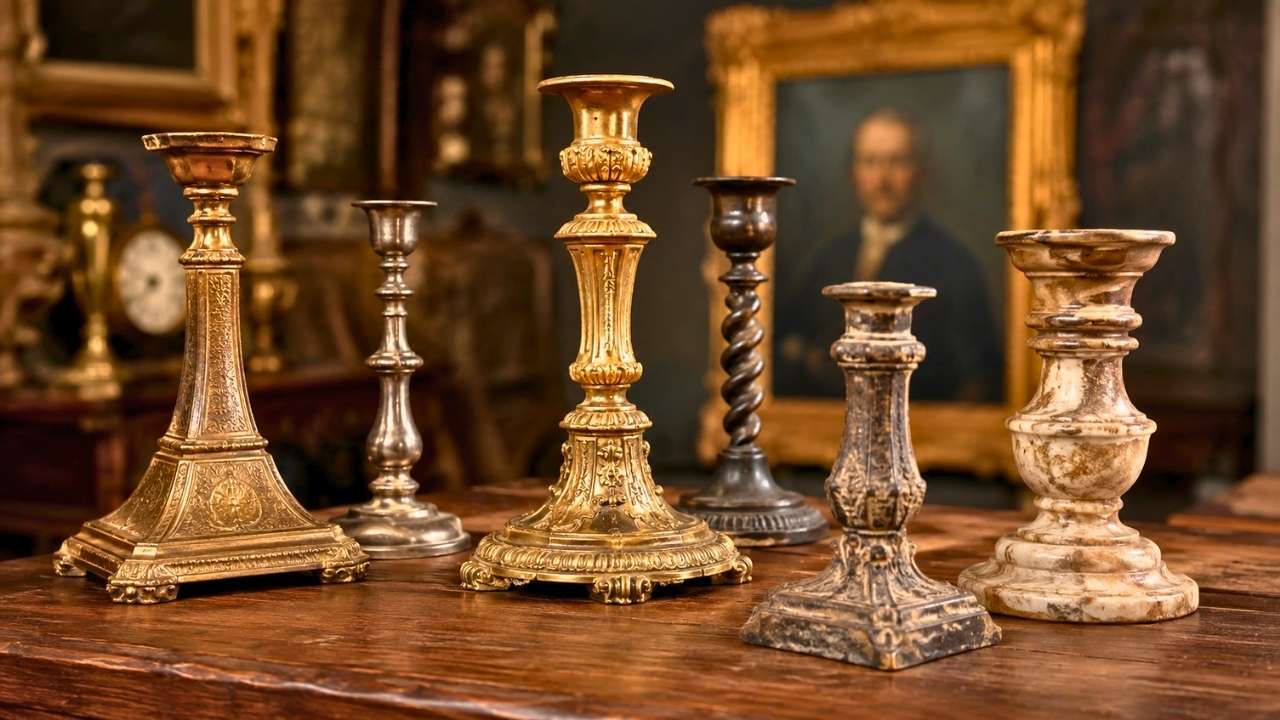
Antique Candlesticks Worth Money: Antique candlesticks are among the most fascinating collectibles in the antiques market. While many people view them simply as decorative household items, certain antique candlesticks can be worth hundreds or even thousands of dollars. Collectors, interior designers, and antique enthusiasts often seek rare examples crafted by renowned makers, produced from precious metals, or associated with significant historical periods.
Whether discovered in a family attic, inherited from relatives, or found at a flea market, antique candlesticks can hold remarkable value. Their worth depends on various factors, including age, condition, material, craftsmanship, rarity, and maker identification. Understanding what makes certain candlesticks valuable can help collectors make informed decisions and potentially uncover hidden treasures.
This guide explores the most valuable styles, sought-after makers, and key factors that influence antique candlestick values.
Why Antique Candlesticks Are Highly Collectible
Candlesticks have been used for centuries to provide light before electricity became common. Throughout history, they evolved from simple utilitarian objects into elaborate works of art. Wealthy families commissioned skilled craftsmen to create ornate candlesticks using silver, bronze, brass, and other premium materials.
Today, collectors appreciate antique candlesticks for several reasons:
| Reason | Explanation |
|---|---|
| Historical Value | They reflect specific periods and artistic movements. |
| Decorative Appeal | Antique candlesticks enhance both traditional and modern interiors. |
| Investment Potential | Rare examples often appreciate in value over time. |
| Craftsmanship | Many feature exceptional hand-crafted details. |
| Limited Availability | Genuine antique pieces become harder to find each year. |
The combination of history, beauty, and rarity continues to drive strong demand in the antiques market.
Factors That Determine the Value of Antique Candlesticks
Not every old candlestick is valuable. Several important characteristics determine market value.
Age
Generally, older candlesticks command higher prices, especially those dating back to the 17th, 18th, and early 19th centuries. Authentic examples from these periods are increasingly scarce.
However, age alone does not guarantee value. A rare 19th-century candlestick may be worth more than a common 18th-century example if collector demand is stronger.
Material
The material used in construction significantly impacts value.
| Material | Typical Value Potential |
|---|---|
| Sterling Silver | Very High |
| Bronze | High |
| Sheffield Plate | Medium to High |
| Brass | Medium |
| Pewter | Medium |
| Iron | Medium |
| Wood | Variable |
Sterling silver candlesticks often command the highest prices, especially when produced by respected silversmiths.
Condition
Condition is critical in determining value.
Collectors prefer candlesticks with:
- Original finish
- Minimal repairs
- No major dents
- No structural damage
- Complete components
Extensive restoration may reduce collector interest and market value.
Maker
Pieces made by famous manufacturers or silversmiths frequently sell for premium prices.
Recognized maker marks provide authentication and help establish provenance.
Rarity
Limited-production designs, unusual forms, and uncommon styles tend to attract stronger bidding among collectors.
The Most Valuable Antique Candlestick Styles
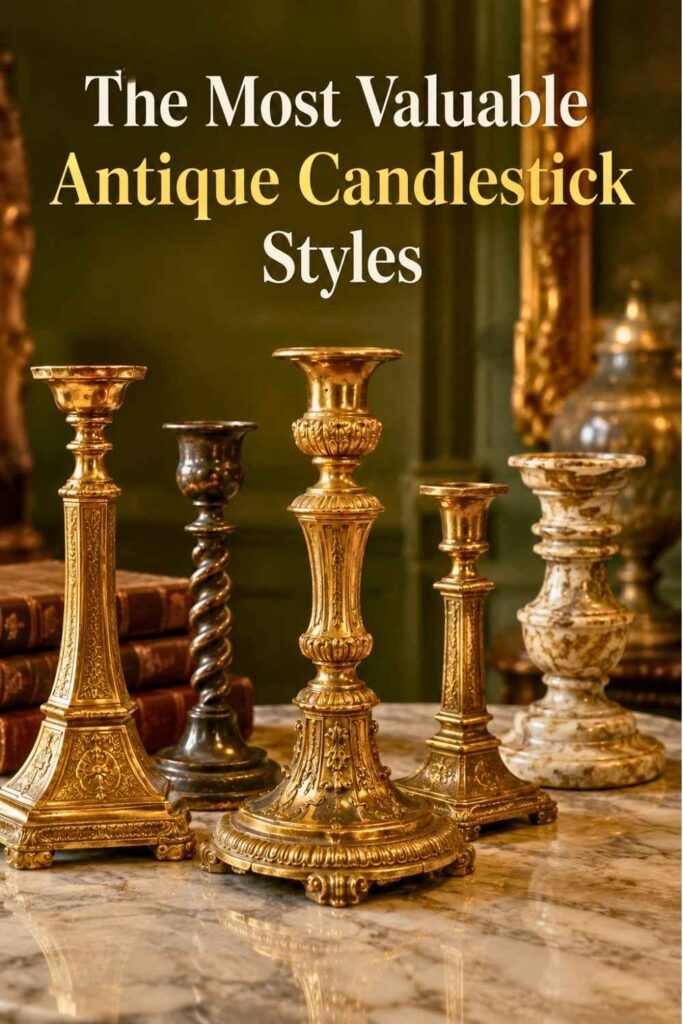
Certain styles consistently attract higher prices due to their beauty, rarity, and historical significance.
Georgian Candlesticks
Georgian candlesticks remain among the most desirable antique lighting accessories.
Produced during the Georgian era between 1714 and 1837, these candlesticks often feature elegant proportions and refined craftsmanship.
Characteristics include:
- Baluster stems
- Octagonal bases
- Hand-engraved decoration
- Sterling silver construction
High-quality Georgian silver candlesticks regularly sell for thousands of dollars at auction.
Collectors particularly value examples with clear hallmarks and matching pairs.
Victorian Candlesticks
Victorian candlesticks reflect the elaborate decorative tastes of the 19th century.
Popular motifs include:
- Floral engravings
- Gothic influences
- Classical figures
- Rococo-inspired ornamentation
Victorian silver and bronze candlesticks continue to perform well in the antiques market due to their decorative appeal.
Exceptional examples produced by leading manufacturers often exceed expectations at auction.
Baroque Candlesticks
Baroque candlesticks are known for dramatic forms and luxurious details.
Features commonly include:
- Scrollwork
- Cherubs
- Ornate bases
- Elaborate casting
Collectors prize authentic Baroque pieces because of their artistic complexity and historical significance.
Original examples from the 17th and early 18th centuries can command substantial prices.
Rococo Candlesticks
The Rococo style emerged during the 18th century and introduced a lighter, more playful decorative approach.
Typical features include:
- Curved asymmetrical designs
- Shell motifs
- Floral patterns
- Flowing decorative elements
Authentic Rococo candlesticks crafted in silver or gilt bronze remain highly collectible.
Empire Style Candlesticks
Empire-style candlesticks gained popularity during the Napoleonic era.
Common characteristics include:
- Classical motifs
- Eagles
- Columns
- Laurel wreaths
Their strong architectural appearance appeals to collectors who appreciate neoclassical design.
Art Nouveau Candlesticks
Art Nouveau transformed decorative arts at the end of the 19th century.
These candlesticks often feature:
- Flowing organic lines
- Botanical themes
- Female figures
- Nature-inspired forms
Collectors frequently pay premium prices for Art Nouveau examples created by notable designers.
Art Deco Candlesticks
Art Deco candlesticks are increasingly popular among modern collectors.
Key features include:
- Geometric shapes
- Symmetrical designs
- Streamlined forms
- Luxury materials
Demand for authentic Art Deco pieces has increased significantly over the last decade.
Antique Silver Candlesticks Worth the Most Money
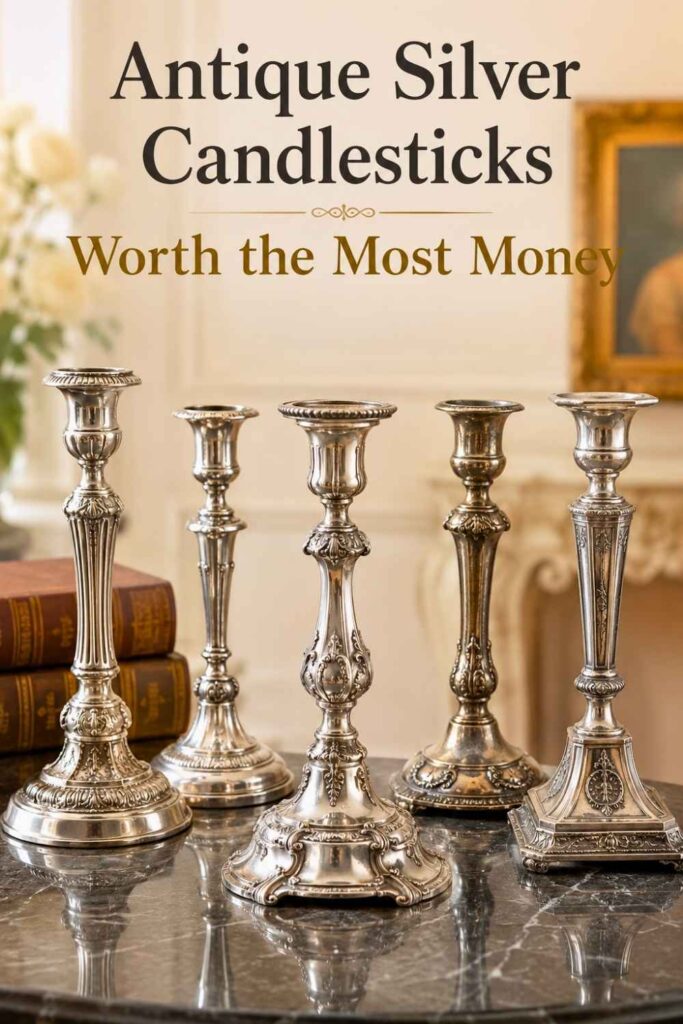
Silver remains the most sought-after material in the candlestick collecting world.
Several factors contribute to silver’s desirability:
- Precious metal content
- Historical significance
- Superior craftsmanship
- Strong collector demand
Sterling Silver
Sterling silver candlesticks are often the most valuable.
Collectors look for:
- Hallmarks
- Date letters
- Maker marks
- Original condition
Well-preserved sterling silver pairs can sell for several thousand dollars.
Sheffield Plate
Sheffield plate represents an important chapter in silver manufacturing history.
Produced by bonding silver to copper, Sheffield plate items offer antique charm at a more accessible price point.
Rare Sheffield plate candlesticks remain highly collectible.
Valuable Antique Brass Candlesticks
Although brass candlesticks are generally less valuable than silver examples, certain pieces command impressive prices.
Factors that increase brass candlestick value include:
- Early production dates
- Rare forms
- Historical significance
- Exceptional craftsmanship
Church candlesticks and colonial examples often attract strong collector interest.
Bronze Candlesticks That Command Premium Prices
Bronze has long been associated with luxury decorative arts.
Antique bronze candlesticks often feature:
- Fine casting
- Rich patina
- Sculptural details
French bronze candlesticks are particularly desirable among collectors.
Rare signed examples can reach thousands of dollars depending on condition and provenance.
Famous Antique Candlestick Makers to Watch For
Recognizing a respected maker’s mark can dramatically increase value.
Tiffany & Co.
Candlesticks produced by Tiffany & Co. are among the most sought-after collectibles in the decorative arts market.
Collectors value them for:
- Exceptional craftsmanship
- Premium materials
- Strong brand recognition
Authentic Tiffany silver candlesticks often command premium auction prices.
Gorham
Gorham became one of America’s most respected silver manufacturers.
Their candlesticks are known for:
- Detailed craftsmanship
- High-quality silver
- Elegant designs
Early Gorham pieces remain highly collectible.
Paul Storr
Paul Storr is considered one of the greatest English silversmiths.
Candlesticks bearing his mark often sell for substantial sums due to:
- Rarity
- Historical importance
- Superior workmanship
Collectors worldwide compete for authentic examples.
Elkington & Co.
Elkington revolutionized silver plating during the Victorian era.
Their decorative candlesticks remain popular among collectors today.
Walker & Hall
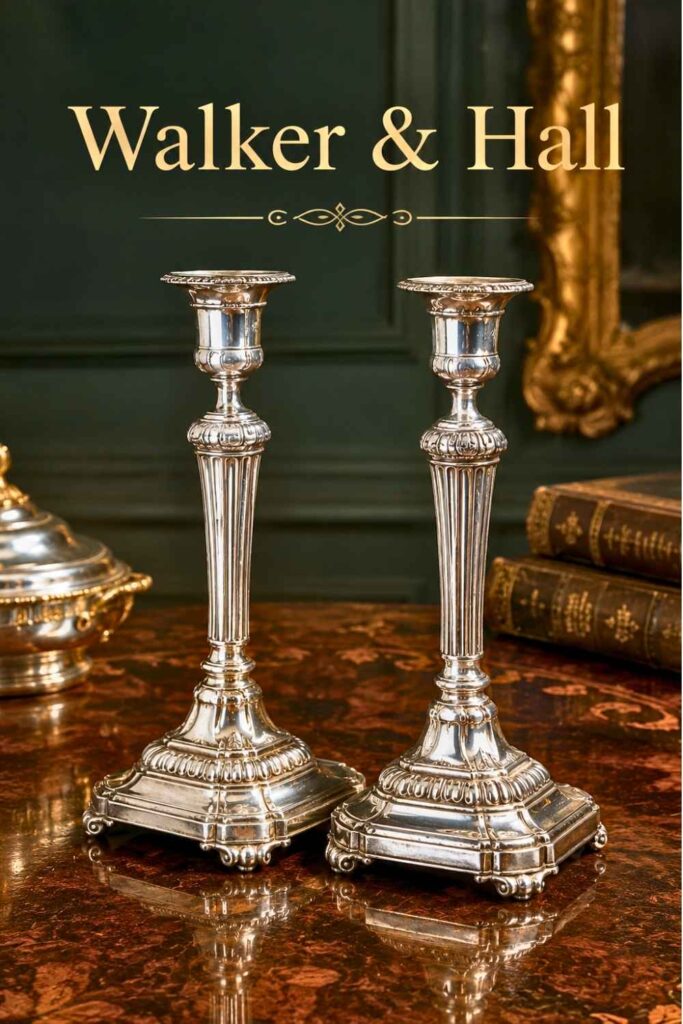
Walker & Hall produced a wide variety of quality silver and silver-plated candlesticks.
Their pieces frequently appear in antique shops and auctions.
Antique Candlestick Value Guide
The following table provides a general overview of market values.
| Type | Average Value Range |
|---|---|
| Common Brass Candlesticks | $25–$150 |
| Victorian Brass Pairs | $100–$500 |
| Sheffield Plate Candlesticks | $200–$1,000 |
| Sterling Silver Candlesticks | $500–$5,000+ |
| Georgian Silver Candlesticks | $2,000–$20,000+ |
| Tiffany Silver Candlesticks | $1,000–$15,000+ |
| Rare Baroque Examples | $5,000–$50,000+ |
Actual values vary depending on rarity, condition, and market demand.
How to Identify Valuable Antique Candlesticks
Successful identification requires careful examination.
Look for:
- Hallmarks
- Maker marks
- Date stamps
- Original patina
- Signs of hand craftsmanship
A magnifying glass can help reveal important details hidden beneath tarnish or wear.
Researching marks through antique reference books and auction archives can provide valuable information.
Common Mistakes That Reduce Value
Many collectors unknowingly damage antique candlesticks.
Avoid:
- Aggressive polishing
- Removing original patina
- Repainting metal surfaces
- Improper repairs
- Replacing original parts
Preserving originality often results in higher long-term value.
Key Highlights
- Georgian silver candlesticks rank among the most valuable antique styles.
- Sterling silver examples generally command higher prices than brass or pewter.
- Famous makers such as Tiffany & Co., Gorham, and Paul Storr significantly increase value.
- Condition, rarity, and provenance play major roles in determining worth.
- Original hallmarks and maker marks are essential for authentication.
- Antique bronze and Art Nouveau candlesticks have seen rising collector demand.
FAQs
How can I tell if my antique candlestick is valuable?
Check for hallmarks, maker marks, age, material, rarity, and overall condition. Silver examples from recognized makers typically have the highest value.
Are brass candlesticks worth collecting?
Yes. Early brass candlesticks, especially colonial, church, or hand-crafted examples, can be highly collectible.
Which antique candlesticks sell for the most money?
Georgian sterling silver candlesticks, rare Baroque pieces, and examples made by Tiffany & Co. or Paul Storr often achieve the highest prices.
Should I polish antique silver candlesticks?
Light cleaning is acceptable, but excessive polishing can remove desirable patina and reduce value.
Are matching pairs worth more than single candlesticks?
Yes. Matching pairs generally sell for significantly more than individual pieces.
Where can I sell valuable antique candlesticks?
Auction houses, antique dealers, online antique marketplaces, and specialized silver collectors are common options.