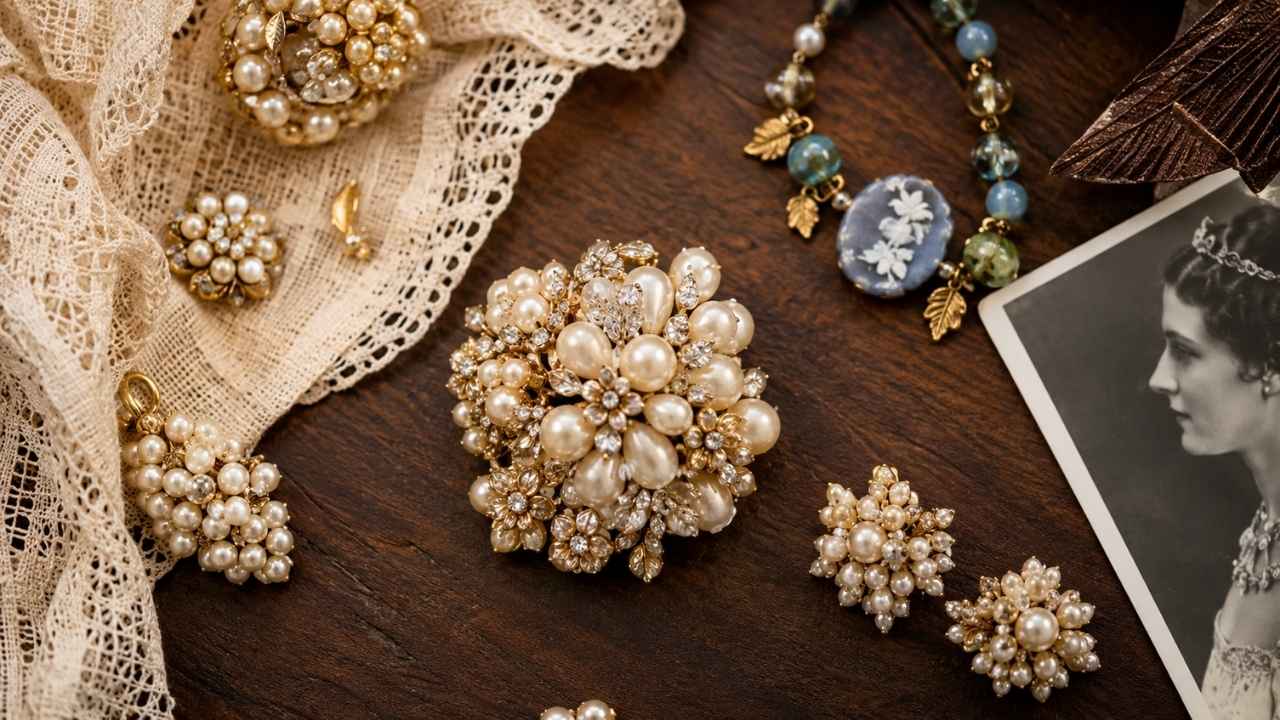
Vintage Miriam Haskell Jewelry Identification Guide: Among the most celebrated names in vintage costume jewelry, Miriam Haskell occupies a special place in the hearts of collectors, fashion historians, and antique jewelry enthusiasts. Known for intricate hand-assembled designs, exceptional craftsmanship, and luxurious materials, Miriam Haskell jewelry has remained highly collectible for nearly a century.
Unlike many costume jewelry manufacturers that focused on mass production, Miriam Haskell pieces were often handcrafted with remarkable attention to detail. The brand became famous for creating elegant jewelry that rivaled fine jewelry in appearance while remaining accessible to fashionable women of the era.
Today, vintage Miriam Haskell jewelry commands strong prices in the collectibles market. However, identifying authentic pieces requires knowledge of the company’s history, construction methods, hallmark variations, and design characteristics.
This guide explores everything collectors need to know about identifying vintage Miriam Haskell jewelry, understanding its signature styles, verifying authenticity, and evaluating current market values.
The History of Miriam Haskell Jewelry
Miriam Haskell founded her jewelry company in New York City in 1926. Despite having little formal jewelry-making experience, she possessed an exceptional eye for fashion and design.
Her first boutique opened in Manhattan’s McAlpin Hotel, where wealthy clients quickly embraced her unique creations. Rather than designing jewelry herself, Haskell collaborated with talented designers and artisans who transformed her creative vision into wearable art.
One of the most influential figures in the company’s early years was Frank Hess, who joined shortly after its founding. Hess helped establish the distinctive aesthetic that collectors now associate with vintage Miriam Haskell jewelry.
Throughout the 1930s, 1940s, and 1950s, the company gained widespread popularity. Hollywood stars, socialites, and fashion icons frequently wore Miriam Haskell pieces.
The brand became particularly known for:
| Feature | Description |
|---|---|
| Handcrafted Construction | Most pieces were assembled by hand |
| High-Quality Materials | Glass pearls, rhinestones, filigree metalwork |
| Floral Motifs | Signature flowers, leaves, and botanical themes |
| Elaborate Beadwork | Intricate arrangements of beads and faux pearls |
| Artistic Design | Sculptural and highly decorative styles |
These characteristics continue to distinguish authentic vintage pieces today.
What Makes Miriam Haskell Jewelry Special?
Many costume jewelry companies produced attractive designs, but Miriam Haskell stood apart for several reasons.
The company emphasized artistry rather than mass production. Every component was carefully selected and assembled to create a balanced and elegant finished piece.
Several qualities make Haskell jewelry particularly desirable:
Exceptional Craftsmanship
Many vintage Haskell pieces feature hand-wired beads rather than glued components. This labor-intensive process required skilled artisans and contributed to the durability of the jewelry.
Distinctive Faux Pearls
Miriam Haskell became famous for using high-quality faux pearls with rich nacre-like finishes. These pearls often develop a beautiful patina over time.
Complex Layering
Many designs incorporate multiple layers of beads, leaves, flowers, and rhinestones arranged in dimensional compositions.
Timeless Appeal
Unlike some jewelry trends that quickly faded, Haskell designs remain fashionable due to their artistic elegance and attention to detail.
Signature Styles of Vintage Miriam Haskell Jewelry
Recognizing signature design elements is one of the most effective ways to identify authentic pieces.
Baroque Pearl Designs
Baroque-style faux pearls appear frequently throughout Miriam Haskell collections.
Characteristics include:
- Irregular pearl shapes
- Creamy finishes
- Layered arrangements
- Floral-inspired compositions
These pieces remain among the most sought-after examples of vintage Haskell craftsmanship.
Floral Jewelry
Flowers are perhaps the most recognizable Haskell motif.
Common floral elements include:
- Rose clusters
- Petal arrangements
- Enamel flowers
- Metal leaves
- Rhinestone blossoms
Floral brooches and necklaces are especially popular among collectors.
Russian Gold Filigree
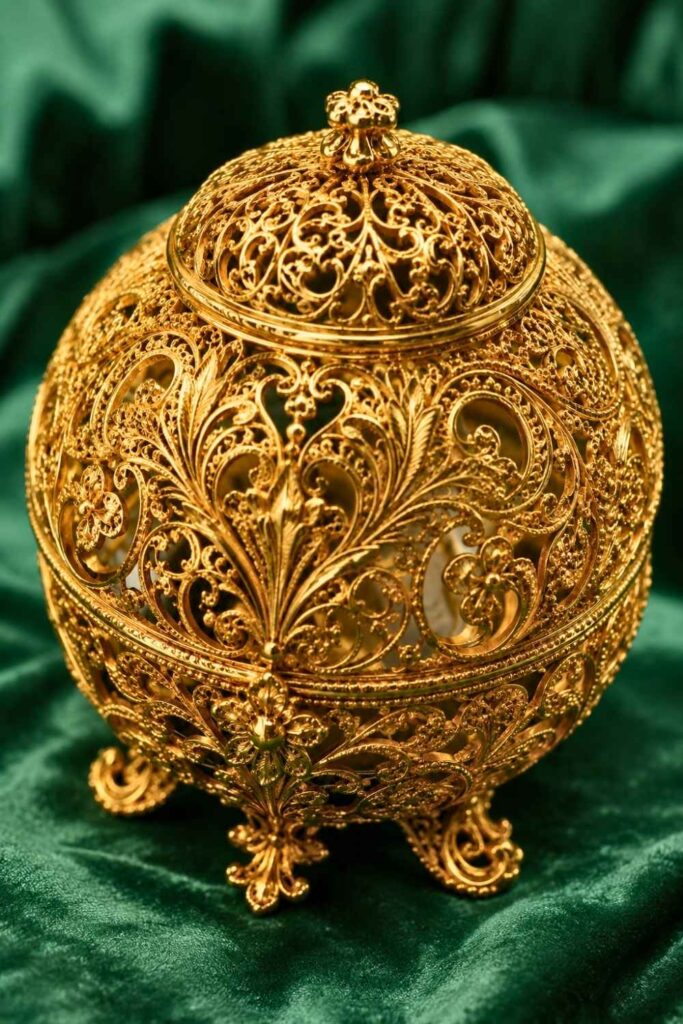
Many vintage Haskell designs feature intricate metalwork often referred to as Russian gold filigree.
Features include:
- Detailed openwork patterns
- Warm gold-tone finishes
- Ornamental metal findings
- Decorative leaf forms
These elements create a luxurious appearance without using precious metals.
Seed Bead Creations
Tiny glass seed beads appear in many signature designs.
These beads are often arranged to form:
- Flowers
- Fruit clusters
- Berries
- Decorative accents
Collectors often associate these detailed bead arrangements with early Haskell production.
Nature-Inspired Themes
Natural motifs appear throughout the company’s history.
Popular themes include:
- Leaves
- Vines
- Fruits
- Berries
- Garden flowers
The organic styling contributes significantly to the brand’s distinctive look.
Understanding Miriam Haskell Jewelry Marks
One of the first steps in identifying vintage Miriam Haskell jewelry is examining hallmarks.
However, not every authentic piece is signed.
Unsigned Early Pieces
Jewelry produced before the late 1940s was often unsigned.
Collectors identify these pieces through:
- Construction techniques
- Materials
- Design characteristics
- Historical references
Unsigned pieces can still be highly valuable.
Oval Cartouche Mark
One of the most recognizable Haskell marks is the oval cartouche.
Characteristics:
| Feature | Description |
|---|---|
| Shape | Oval |
| Material | Metal tag |
| Placement | Back of jewelry |
| Period | Mid-century production |
This hallmark is widely recognized among collectors.
Horseshoe Mark
Some pieces feature a horseshoe-shaped signature plaque.
These marks generally indicate mid-century production and are considered highly collectible.
Hang Tags
Vintage necklaces sometimes include hanging signature tags.
These tags may contain:
- Company name
- Logo
- Copyright information
Original hang tags can increase collectible value.
How to Identify Authentic Miriam Haskell Jewelry
Authenticity assessment involves more than checking signatures.
Experienced collectors examine several factors simultaneously.
Examine Construction Methods
Authentic vintage Haskell jewelry often shows evidence of hand assembly.
Look for:
- Hand-wired beads
- Complex layering
- Multiple construction techniques
- Careful finishing
Machine-made appearances may indicate later reproductions.
Inspect Faux Pearls
Haskell pearls are famous for their quality.
Characteristics include:
- Rich luster
- Slight aging patina
- Consistent finish
- Elegant coloration
Cheap-looking pearls are usually a warning sign.
Check the Metalwork
Authentic pieces often feature:
- Filigree findings
- Decorative stampings
- Detailed leaf forms
- Quality craftsmanship
Mass-produced metal components may indicate non-authentic items.
Evaluate Overall Design
Vintage Haskell jewelry generally exhibits strong visual balance.
Designs often appear:
- Sophisticated
- Layered
- Artistic
- Carefully proportioned
Authentic pieces rarely feel poorly designed.
Most Collectible Miriam Haskell Jewelry Categories
Certain categories consistently attract collector interest.
Brooches
Brooches remain among the most popular Haskell collectibles.
Highly desirable examples include:
- Floral brooches
- Rhinestone bouquets
- Botanical arrangements
- Multi-dimensional designs
Necklaces
Vintage necklaces often command premium prices.
Collectors particularly seek:
- Bib necklaces
- Pearl strands
- Multi-strand designs
- Beaded statement pieces
Earrings
Clip-on earrings from the mid-century period remain highly collectible.
Popular styles include:
- Floral clusters
- Pearl arrangements
- Rhinestone compositions
Bracelets
Bracelets featuring elaborate beadwork often achieve strong auction results.
Examples include:
- Charm bracelets
- Pearl bracelets
- Floral cuffs
Dating Vintage Miriam Haskell Jewelry
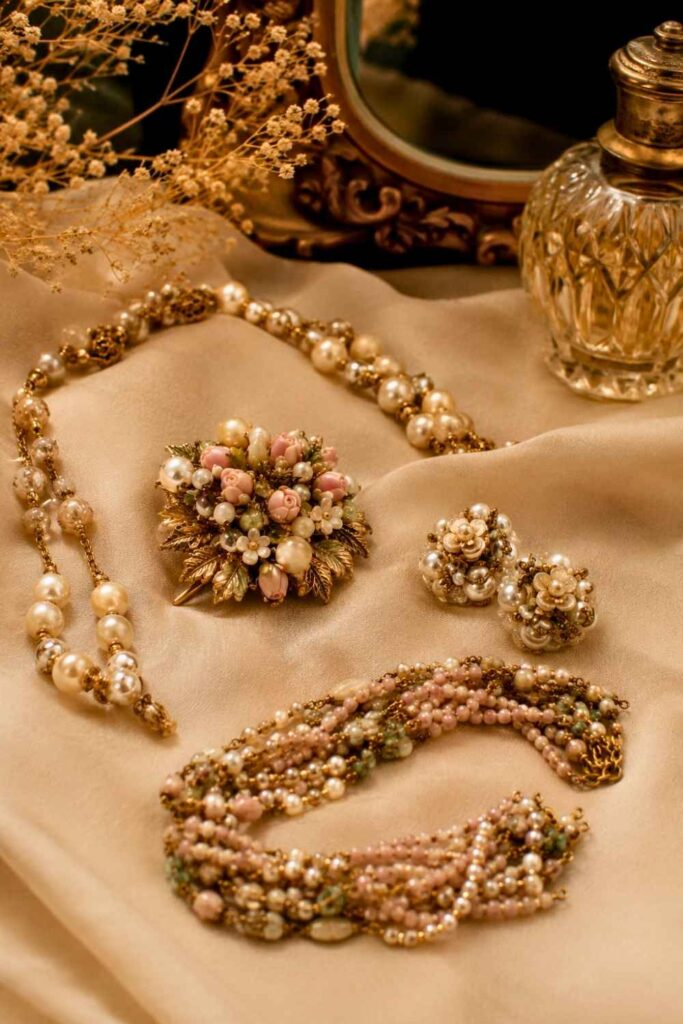
Determining age helps establish value.
1920s–1930s Pieces
Characteristics:
- Usually unsigned
- Handcrafted construction
- Art Deco influence
- Rare availability
These early pieces are often the most valuable.
1940s Pieces
Features include:
- Floral motifs
- Military-era material adaptations
- Increased popularity
Many collectors focus specifically on 1940s production.
1950s Pieces
This period is often considered the company’s golden age.
Characteristics:
- Elaborate designs
- High craftsmanship
- Signature plaques
- Extensive pearl use
1960s and Later
Later pieces may feature:
- Contemporary styling
- Modern materials
- Simplified construction
While collectible, they often command lower prices than earlier examples.
Current Market Values for Vintage Miriam Haskell Jewelry
Values vary significantly based on rarity, condition, age, and demand.
Average Price Ranges
| Jewelry Type | Typical Value Range |
|---|---|
| Clip Earrings | $50–$250 |
| Brooches | $75–$600 |
| Bracelets | $100–$500 |
| Necklaces | $150–$1,500 |
| Rare Early Pieces | $1,000–$5,000+ |
| Museum-Level Examples | $5,000+ |
Exceptional provenance can increase prices substantially.
Factors That Affect Value

Several variables influence market prices.
Condition
Collectors prefer pieces with:
- Intact pearls
- Original finishes
- Working clasps
- Minimal wear
Rarity
Limited-production designs often command higher prices.
Original Components
Missing stones or replaced parts can significantly reduce value.
Documentation
Original boxes, receipts, and historical records may increase market value.
Common Reproductions and Look-Alikes
The popularity of Miriam Haskell jewelry has inspired numerous reproductions.
Common warning signs include:
- Lightweight construction
- Cheap metal finishes
- Plastic components
- Modern glue techniques
- Incorrect signatures
Collectors should compare questionable pieces with verified examples whenever possible.
Key Highlights
- Miriam Haskell founded her jewelry company in 1926 and quickly became a leading name in costume jewelry.
- Handcrafted construction is one of the strongest indicators of authenticity.
- Floral motifs, faux pearls, seed beads, and Russian gold filigree are signature design elements.
- Many early authentic pieces are completely unsigned.
- Mid-century pieces often feature oval cartouche or horseshoe marks.
- Condition, rarity, and originality strongly affect market value.
- Exceptional examples can sell for several thousand dollars.
FAQs
Is all Miriam Haskell jewelry signed?
No. Many early pieces from the 1920s, 1930s, and early 1940s were unsigned. Collectors often identify them through construction methods and design characteristics.
What is the most valuable Miriam Haskell jewelry?
Rare early handcrafted pieces, elaborate floral brooches, and museum-quality necklaces are generally the most valuable.
How can I tell if my Miriam Haskell pearls are original?
Original Haskell pearls usually have a rich luster, even aging, and a distinctive creamy appearance. Excessive peeling or plastic-looking surfaces may indicate replacements.
Are Miriam Haskell brooches collectible?
Yes. Floral brooches, rhinestone bouquets, and layered botanical designs are among the most sought-after Haskell collectibles.
Does missing a signature mean a piece is fake?
Not necessarily. Many authentic early Haskell pieces were never signed.
Where can I sell vintage Miriam Haskell jewelry?
Collectors commonly sell through antique dealers, specialty jewelry auctions, vintage jewelry marketplaces, and reputable online auction platforms.
What condition issues reduce value?
Missing stones, damaged pearls, broken clasps, repairs, and replaced components can significantly lower market value.
Why is Miriam Haskell jewelry still popular today?
Its handcrafted quality, timeless design, historical significance, and strong collector demand continue to make it one of the most respected names in vintage costume jewelry.
Final Words
Vintage Miriam Haskell jewelry represents one of the finest achievements in twentieth-century costume jewelry design. From its intricate hand-wired beadwork and luxurious faux pearls to its unmistakable floral artistry, every authentic piece tells a story of craftsmanship and fashion history. Whether you are a beginner collector searching flea markets or an experienced enthusiast building a curated collection, understanding signature styles, construction methods, hallmarks, and market values is essential. With demand remaining strong and exceptional examples becoming increasingly difficult to find, authentic vintage Miriam Haskell jewelry continues to be both a beautiful collectible and a valuable investment in the world of antique fashion accessories.