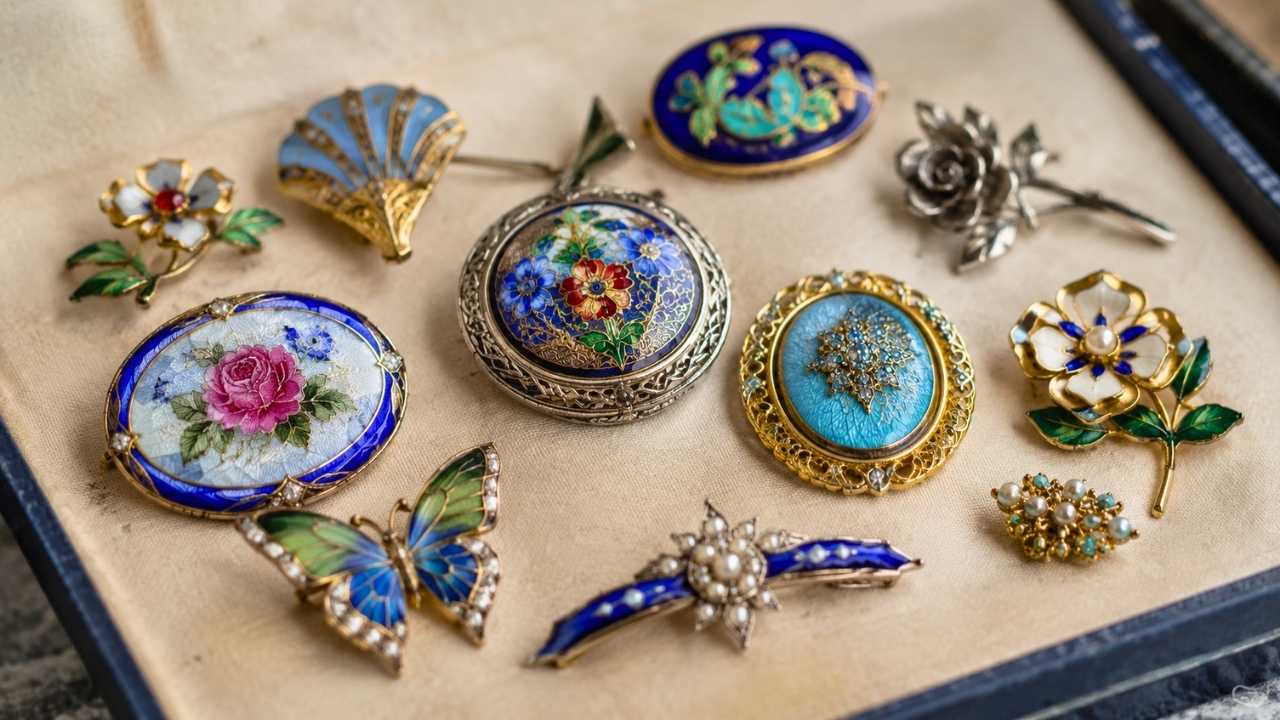
Vintage Enamel Brooches Worth Collecting: Vintage enamel brooches have captivated collectors, jewelry enthusiasts, and antique lovers for generations. These intricate decorative accessories are more than just beautiful pieces of jewelry—they represent centuries of craftsmanship, artistic innovation, and cultural history. From the delicate wirework of cloisonné enamel to the mesmerizing engine-turned patterns hidden beneath translucent guilloché enamel, vintage enamel brooches hold a special place in the world of collectible jewelry.
The growing popularity of antique and vintage jewelry has significantly increased interest in enamel brooches. Collectors appreciate their unique artistic value, rarity, and potential investment opportunities. Whether discovered at estate sales, antique shops, flea markets, or inherited through family collections, enamel brooches can range from modest decorative items to highly valuable treasures worth thousands of dollars.
Understanding how to identify valuable enamel brooches requires knowledge of different enamel techniques, historical periods, makers’ marks, materials, and condition factors. This guide explores everything collectors need to know about vintage enamel brooches, including cloisonné, guilloché, champlevé, plique-à-jour, and other rare enamel styles.
What Are Vintage Enamel Brooches?
Enamel brooches are decorative jewelry pieces created by fusing powdered glass onto metal surfaces using high temperatures. The result is a durable, colorful finish that can remain vibrant for centuries when properly preserved.
Unlike painted jewelry, enamel is actually glass that has been melted and bonded to metal. This process creates remarkable depth, brilliance, and durability that distinguishes enamel jewelry from other decorative techniques.
Vintage enamel brooches generally refer to pieces produced between the late 1800s and the mid-20th century. Many examples originate from artistic movements such as:
| Period | Approximate Years | Characteristics |
|---|---|---|
| Victorian Era | 1837–1901 | Floral motifs, sentimental themes |
| Art Nouveau | 1890–1910 | Nature-inspired designs, flowing lines |
| Edwardian Era | 1901–1915 | Elegant and delicate craftsmanship |
| Art Deco | 1920–1939 | Geometric patterns and bold colors |
| Mid-Century Modern | 1940–1960 | Abstract and contemporary designs |
Understanding Different Types of Enamel Work
Cloisonné Enamel
Cloisonné is among the most recognizable and collectible enamel techniques. The term comes from the French word “cloison,” meaning compartment.
In this method, artisans create tiny compartments using thin metal wires attached to a metal base. These compartments are then filled with colored enamel before firing.
Characteristics of Cloisonné Brooches:
- Visible metal wire outlines
- Rich, vibrant colors
- Intricate patterns
- Exceptional craftsmanship
- Strong collector demand
Authentic vintage cloisonné brooches often display remarkable detail, especially those originating from France, China, Russia, and Japan.
Guilloché Enamel
Guilloché enamel is one of the most sought-after forms of enamel jewelry.
This technique involves engraving repetitive patterns onto metal using specialized engine-turning machines. Transparent enamel is then applied over the engraved surface, creating a luminous effect.
Features of Guilloché Enamel:
| Feature | Description |
| Surface Appearance | Radiant and reflective |
| Pattern Visibility | Visible beneath enamel |
| Transparency | Semi-transparent finish |
| Value | Often highly collectible |
| Popularity | Extremely desirable among collectors |
The technique became particularly famous through the creations of Peter Carl Fabergé and other master jewelers.
Champlevé Enamel
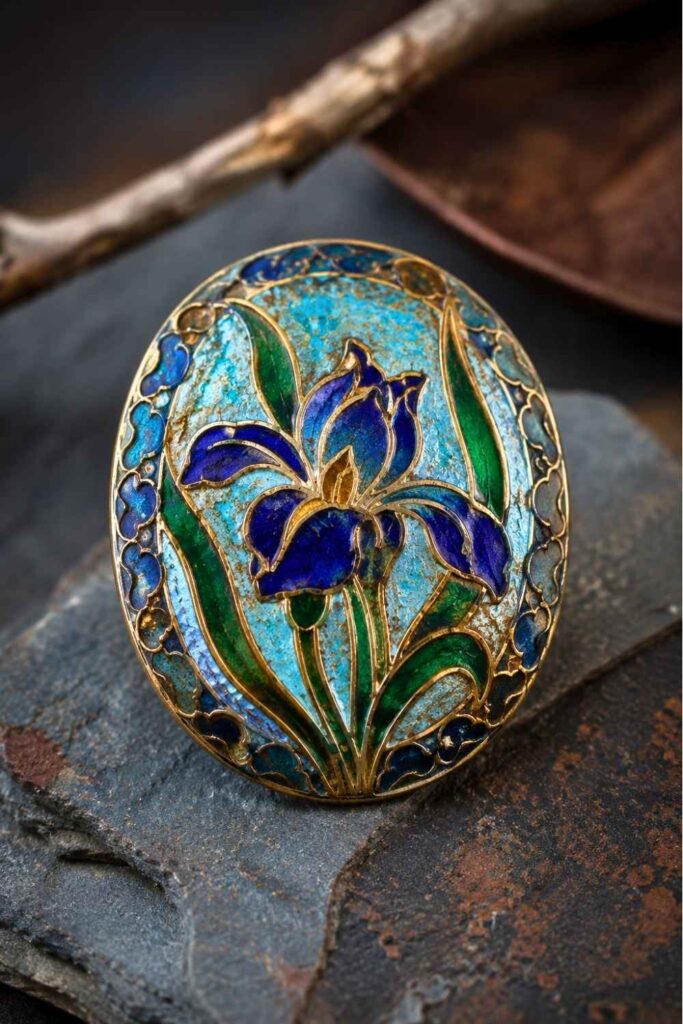
Champlevé involves carving recesses directly into the metal surface before filling them with enamel.
Unlike cloisonné, no wires are used to create compartments.
Benefits of Champlevé:
- Smooth appearance
- Greater durability
- Rich color saturation
- Historical significance
Many antique European brooches feature this technique.
Plique-à-Jour Enamel
Often compared to miniature stained glass, plique-à-jour is one of the rarest enamel techniques.
The enamel is suspended without a backing, allowing light to pass through the design.
Collectors value these pieces because:
- They are extremely difficult to create.
- Few artisans mastered the technique.
- Surviving examples are rare.
Exceptional plique-à-jour brooches often command premium prices.
Most Valuable Vintage Enamel Brooch Styles
Art Nouveau Enamel Brooches
Art Nouveau jewelry emphasized natural forms and organic beauty.
Popular motifs include:
- Butterflies
- Dragonflies
- Orchids
- Peacocks
- Female figures
René Lalique remains one of the most celebrated names associated with Art Nouveau enamel jewelry.
Art Deco Enamel Brooches
Art Deco enamel brooches showcase:
- Geometric shapes
- Bold color contrasts
- Streamlined designs
- Modern aesthetics
Collectors continue to seek high-quality Art Deco examples due to their timeless appeal.
Russian Enamel Brooches
Russian enamel work gained international recognition during the late Imperial era.
Valuable examples often feature:
- Guilloché backgrounds
- Precious gemstones
- Gold settings
- Detailed craftsmanship
Pieces associated with Fabergé-inspired workshops can be exceptionally valuable.
Scandinavian Enamel Brooches
Mid-century Scandinavian designers produced colorful and innovative enamel jewelry.
Notable characteristics include:
- Minimalist design
- Nature themes
- Bright enamel colors
- Sterling silver construction
These brooches remain highly collectible among modern jewelry enthusiasts.
How to Identify Valuable Vintage Enamel Brooches
Examine the Enamel Quality
High-quality enamel should display:
- Smooth surfaces
- Rich coloration
- Even application
- Minimal imperfections
Signs of quality craftsmanship often indicate greater value.
Look for Maker’s Marks
Maker’s marks can dramatically affect value.
Common locations include:
- Pin backs
- Hinges
- Edges
- Reverse surfaces
Researching marks can reveal:
| Information Found | Importance |
| Manufacturer | High |
| Country of Origin | High |
| Production Date | Medium |
| Metal Content | High |
| Authenticity | Very High |
Check Metal Content
Brooches made from precious metals generally command higher prices.
Common materials include:
- Sterling silver
- Gold-filled metal
- 14K gold
- 18K gold
- Platinum
Hallmarks often help identify precious metal content.
Evaluate Condition
Condition significantly influences market value.
Factors to inspect:
- Chips
- Cracks
- Repairs
- Missing enamel
- Tarnish
- Broken clasps
Excellent condition pieces usually attract the strongest collector interest.
Rare Enamel Brooch Motifs Worth Collecting
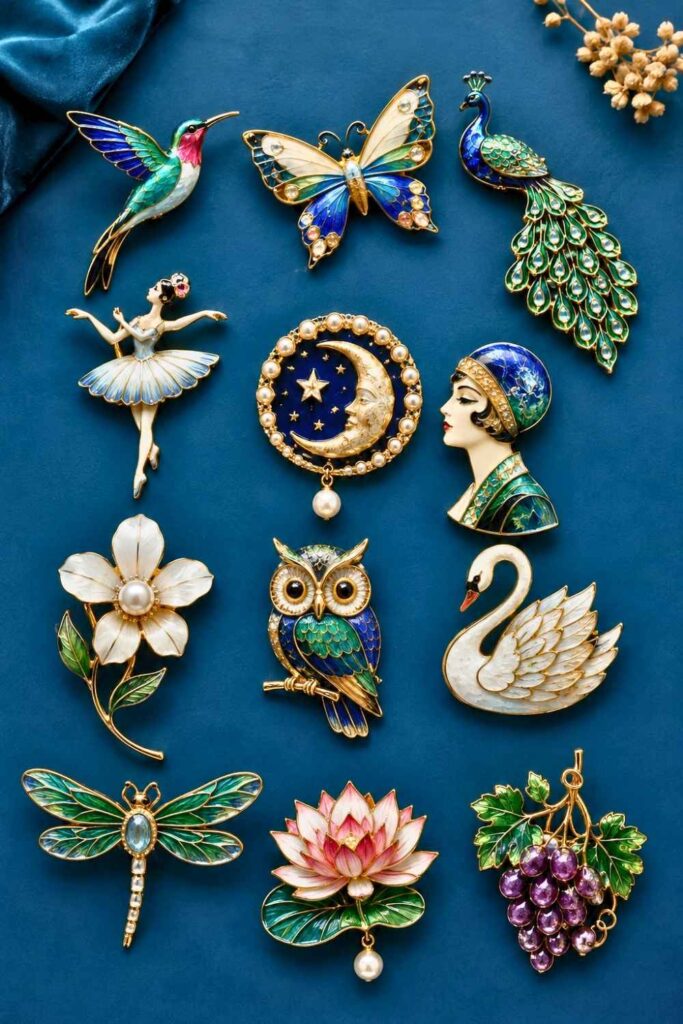
Animal-Themed Brooches
Popular examples include:
- Birds
- Butterflies
- Cats
- Dogs
- Horses
- Exotic wildlife
Floral Designs
Floral brooches remain consistently popular among collectors.
Highly desirable flowers include:
- Roses
- Lilies
- Orchids
- Poppies
- Irises
Royal and Historical Themes
Brooches depicting:
- Crowns
- Heraldic symbols
- Historical figures
- Royal emblems
often command premium values.
Factors That Determine Value
Age
Older pieces often attract greater collector interest.
Rarity
Limited production numbers increase desirability.
Artist Reputation
Pieces from renowned makers often outperform generic examples.
Craftsmanship
Exceptional workmanship remains one of the strongest indicators of value.
Market Demand
Collector trends continuously influence pricing.
Approximate Value Guide
| Type of Brooch | Typical Value Range |
| Vintage Cloisonné | $50–$800 |
| Guilloché Enamel | $150–$5,000+ |
| Art Nouveau Enamel | $300–$10,000+ |
| Plique-à-Jour | $1,000–$20,000+ |
| Scandinavian Enamel | $40–$1,500 |
| Signed Designer Pieces | $500–$25,000+ |
Values vary based on condition, rarity, and provenance.
Tips for New Collectors
Buy What You Love
Personal enjoyment should remain the primary motivation for collecting.
Learn Maker Signatures
Knowledge of makers often separates successful collectors from casual buyers.
Study Auction Results
Auction records provide insight into current market trends.
Purchase from Reputable Sources
Consider:
- Antique dealers
- Established auction houses
- Specialty jewelry dealers
- Estate sales
Keep Documentation
Maintain records of:
- Purchase dates
- Provenance
- Appraisals
- Photographs
Caring for Vintage Enamel Brooches
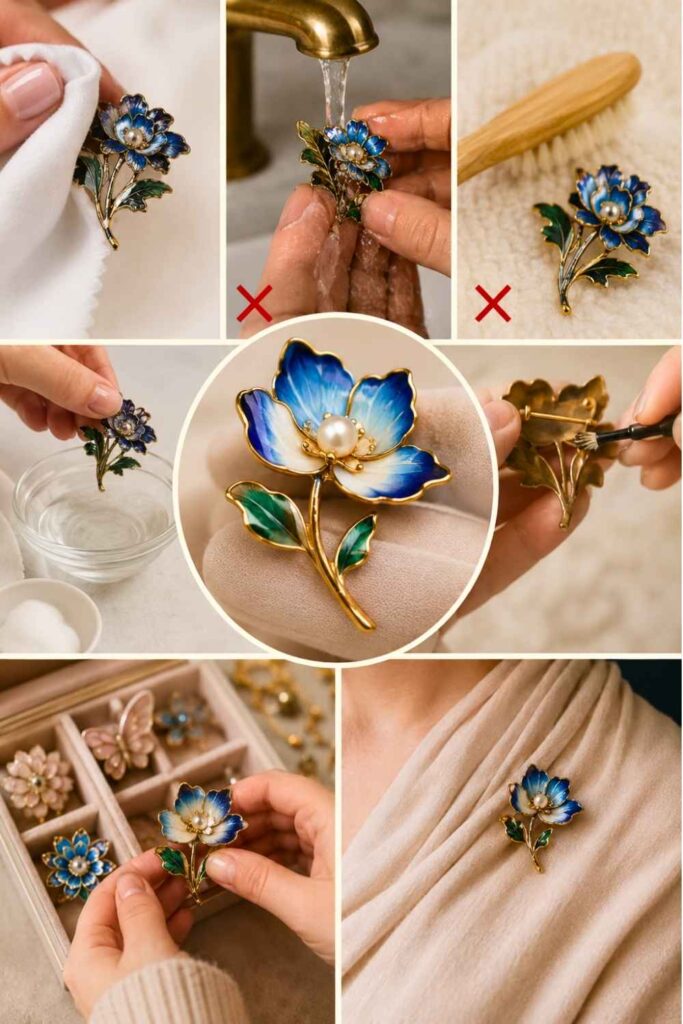
Proper care preserves both beauty and value.
Recommended practices:
- Store separately from other jewelry.
- Avoid harsh chemicals.
- Keep away from extreme temperatures.
- Use soft cloths for cleaning.
- Handle carefully to prevent impact damage.
Never use abrasive cleaners on enamel surfaces.
Building a Valuable Collection
Successful collectors often focus on:
- A specific era
- A particular enamel technique
- Designer pieces
- Regional styles
- Rare motifs
Specialization can improve expertise and long-term collection quality.
Key Highlights
- Vintage enamel brooches combine artistic beauty with collectible value.
- Cloisonné and guilloché remain among the most sought-after enamel techniques.
- Maker’s marks play a crucial role in determining authenticity and value.
- Condition significantly impacts market prices.
- Art Nouveau, Art Deco, Russian, and Scandinavian enamel brooches attract strong collector demand.
- Rare techniques such as plique-à-jour can command premium prices.
- Proper storage and maintenance help preserve long-term value.
- Knowledge of historical periods improves buying decisions.
FAQs
What is the most valuable type of enamel brooch?
Plique-à-jour, Fabergé-style guilloché, and rare Art Nouveau enamel brooches are generally among the most valuable.
How can I tell if an enamel brooch is vintage?
Check for maker’s marks, clasp styles, craftsmanship, metal hallmarks, and signs of age consistent with the production period.
Are chipped enamel brooches still valuable?
Yes, but damage usually reduces value. Rare signed pieces may still retain significant worth despite minor flaws.
Which enamel technique is best for collectors?
Guilloché and cloisonné are often considered the most desirable due to their craftsmanship and strong collector demand.
Do signed enamel brooches have higher value?
Generally yes. Signed pieces from respected makers often command considerably higher prices than unsigned examples.
Can enamel brooches be repaired?
Professional jewelers specializing in enamel restoration can repair some damage, though restoration may affect value.
What metals are commonly found in vintage enamel brooches?
Sterling silver, gold-filled metal, 14K gold, 18K gold, and occasionally platinum are commonly used.
Where can I buy authentic vintage enamel brooches?
Reputable antique dealers, estate sales, specialty jewelry auctions, and established online vintage jewelry marketplaces are good sources.
Final Words
Vintage enamel brooches represent an extraordinary blend of artistry, history, and craftsmanship. Whether you are drawn to the intricate wirework of cloisonné, the luminous beauty of guilloché, or the rarity of plique-à-jour, these miniature works of art offer endless opportunities for discovery and collecting. By understanding enamel techniques, identifying maker’s marks, evaluating condition, and researching historical contexts, collectors can make informed purchasing decisions and build collections that are both personally meaningful and potentially valuable. As interest in vintage jewelry continues to grow, rare enamel brooches remain among the most fascinating and rewarding treasures in the world of antiques.